
Evidence-Based Therapies at ZorbaCare in Mumbai, India.
Recovery is never one-size-fits-all. At ZorbaCare, we bring together the most effective, evidence-based therapies — from CBT, DBT, REBT and EMDR to group, mind-body and expressive approaches — and match the right combination to you. Every therapy here is chosen because research shows it works, delivered by qualified clinicians as part of complete mental health and addiction care in Mumbai, Pune and across India. Explore our therapies below.


The right therapy, matched to you
No two people arrive with the same story — so no two treatment plans should be the same. Some difficulties respond best to structured, practical work like CBT or DBT. Trauma often needs a specialised approach like EMDR. Others heal most through connection, movement, creativity or honest reflection. Most people benefit from a thoughtful combination.
That is why we begin with a careful assessment, then draw on the full range of therapies below — always guided by the best evidence, and always tailored to you. Science and compassion, working together.
Evidence-based therapies we offer
Each therapy below is proven, purposeful and delivered by qualified clinicians. Explore any of them to learn how it works — and how it could help you.
Cognitive Behavioural Therapy (CBT)
The world’s most-researched talk therapy — first-line for depression, anxiety, OCD and more.
Learn more → Skills TherapyDialectical Behaviour Therapy (DBT)
The gold-standard for borderline personality disorder, self-harm and intense emotions.
Learn more → Trauma TherapyEMDR Therapy
A WHO-recommended, first-line treatment for trauma and PTSD — without reliving it.
Learn more → Talk TherapyRational Emotive Behaviour Therapy (REBT)
The original CBT — challenging the irrational beliefs behind emotional distress.
Learn more → Talk TherapyPsychotherapy
Proven talk therapy for deeper, longer-standing emotional difficulties.
Learn more → Group SupportGroup Therapy
As effective as individual therapy — with the added power of shared connection.
Learn more → Mind-BodyYoga & Meditation
Evidence-based mind-body practices that calm the nervous system and steady the mind.
Learn more → ExpressiveMusic & Cathartic Writing
Creative, expressive therapies that release what words alone cannot.
Learn more → ReflectivePersonal Inventories & Reflection
Honest self-reflection — the oldest, most powerful tool in recovery.
Learn more → PsychoeducationInput Sessions
Educational group discussions that help you understand your condition and recovery.
Learn more → Our ApproachEvidence-Based Therapy
Every therapy we use is proven in research — treatment that is proven, not promised.
Learn more →See where recovery happens
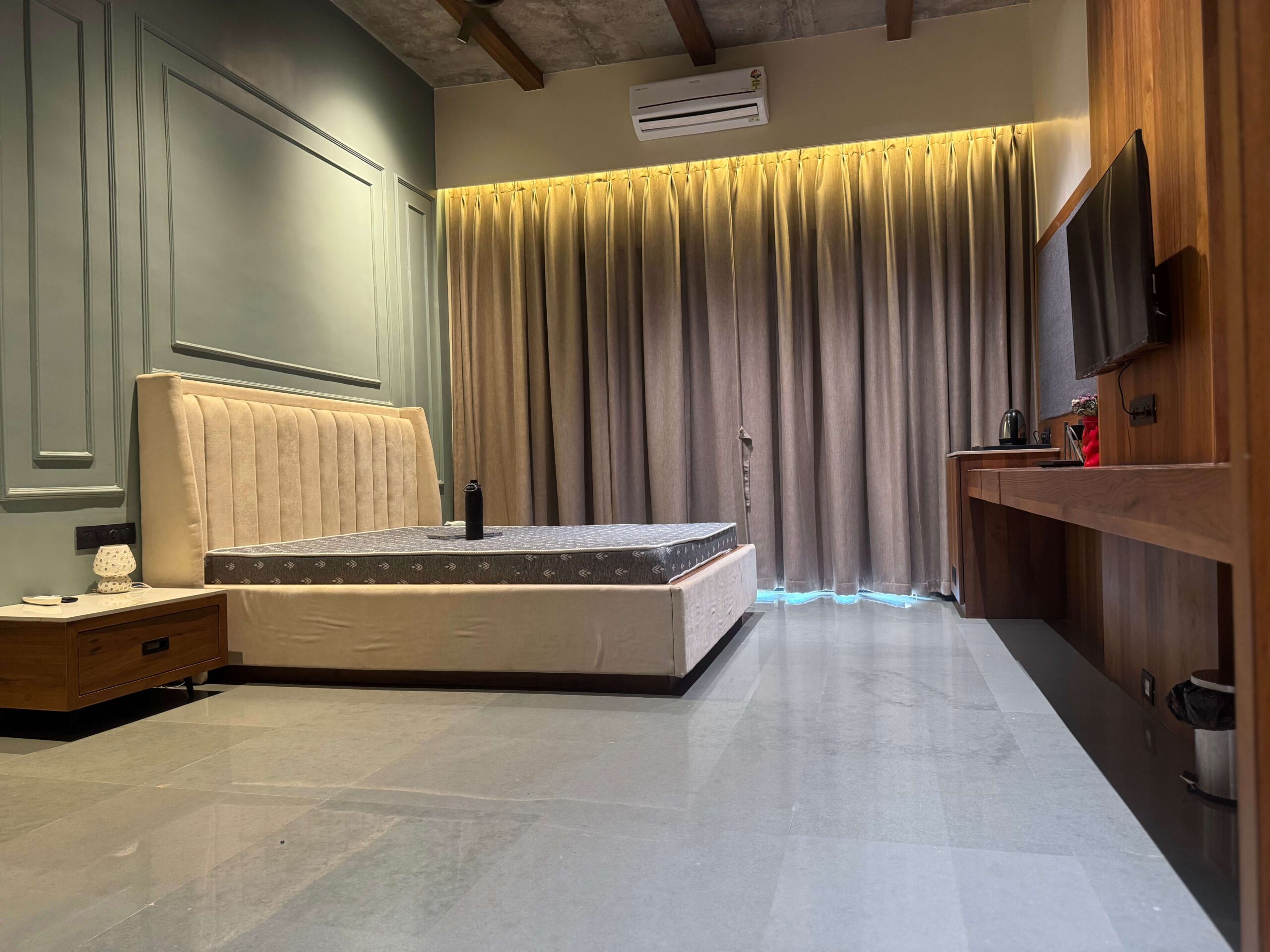
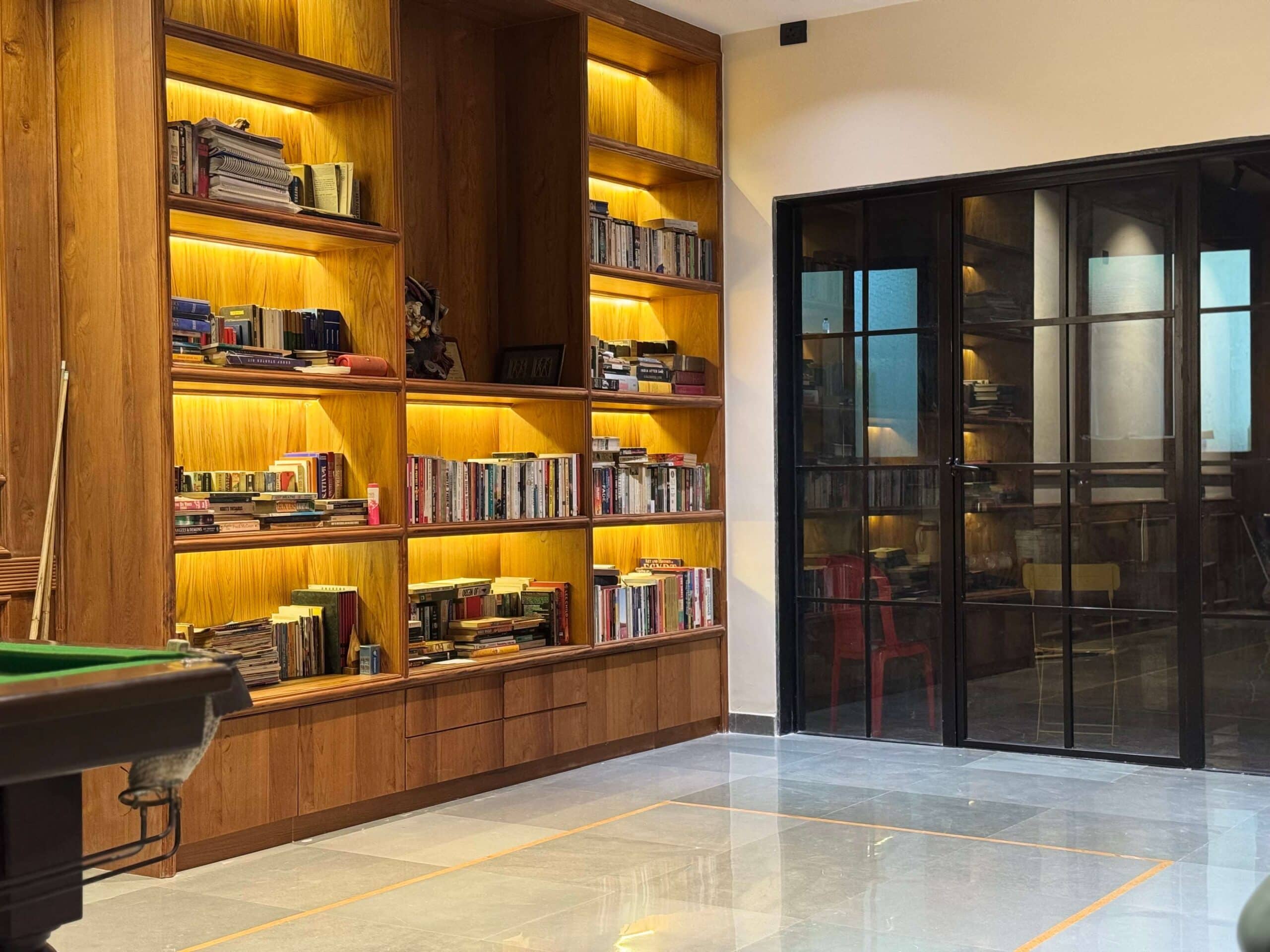
A private residential estate in the Sahyadri hills — the environment is part of the treatment, not a backdrop to it.
A calm space to do the work
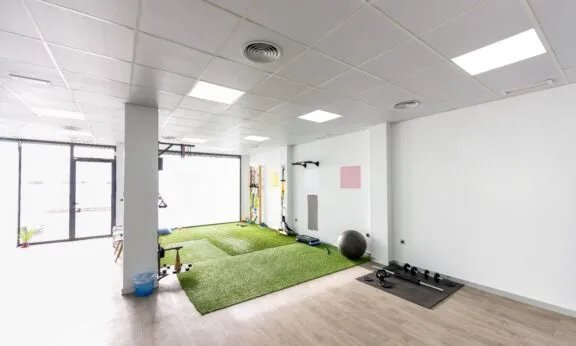
Therapy works best in a calm, private setting. Quiet rooms, open green space and an unhurried environment make it easier to reflect, focus and do the real work of change.



Why our approach to treatment works
Choosing where to seek help is one of the most important decisions you will make. Here is what sets our therapy apart.
Proven, Not Promised
- Evidence-based — every therapy is backed by real research.
- Measured progress — we track what is actually working.
- Guideline-led — aligned with WHO, NICE and APA.
- Honest — realistic expectations, no false promises.
Tailored To You
- Careful assessment — we understand you before we treat.
- The right match — the therapy proven for your needs.
- Combined care — therapies blended when it helps.
- Adjusted over time — changed if it is not working.
Expert & Human
- Qualified clinicians — psychologists and therapists.
- Psychiatrist-led — overseen by consultant psychiatrists.
- Genuine warmth — care delivered with real compassion.
- Confidential — private, judgement-free, always.
Finding the right therapy for you
Getting the right treatment is simpler than you think. This is how it begins.
A confidential conversation
It starts with a simple, private call. We listen without judgement and understand what you are going through — with no pressure and no obligation.
A careful assessment
We take time to understand your history, your difficulties and your goals — so we can recommend the therapies most likely to help you.
Your personal plan
We match you with the right therapy, or combination of therapies, from the range above — tailored to you, guided by the evidence.
Ongoing, adjusted care
We track your progress and adapt as you grow — because the best treatment is the one that keeps working for you.
You do not need to know which therapy you need. That is our job. Your only first step is to reach out — we will help you understand your options and find the right path forward.
The conditions we treat
These therapies come together to treat a full range of mental health and addiction conditions. Explore where they make the biggest difference.
Mental Health Treatment
Depression, anxiety, bipolar, OCD, PTSD, schizophrenia and more — treated with proven therapy.
Learn more → AddictionAddiction Treatment
Alcohol, drugs and behavioural addictions — treated with therapy at the core of lasting recovery.
Learn more → ProgrammesOur Programmes
Residential rehab, aftercare, family recovery and more — the structure that holds therapy together.
Learn more → ProgrammesDestination Treatment
Personalised Addiction Reovery & Mental Health treatment brought to your home. 100% Private & Proven.
Learn more →Care delivered by qualified clinicians
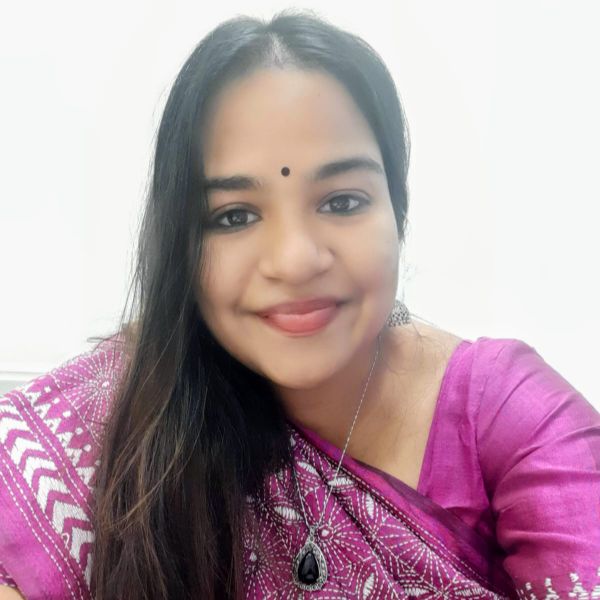
Every therapy at ZorbaCare is delivered by experienced clinical psychologists and therapists, overseen by consultant psychiatrists — the training and skill that make evidence-based treatment genuinely effective.



Not sure which therapy is right for you?
You do not have to figure it out alone. Talk to our team — confidentially, with no pressure — and we will help you find the right path forward.
Common questions about our therapies
The best therapy depends on what you are dealing with. As a general guide: CBT is the first-line, most-researched choice for depression, anxiety, OCD and stress; DBT is the gold-standard for borderline personality disorder, self-harm and intense emotions; EMDR is a WHO-recommended first-line treatment for trauma and PTSD; psychotherapy suits deeper, longer-standing difficulties; and group therapy is proven as effective as individual work for many conditions. Most people do best with a thoughtful combination. Rather than guessing, we start with a proper assessment and match you to the therapy the evidence supports for your specific situation — and adjust as you progress.
They overlap, but each has a focus. Counselling is usually shorter-term support to talk through a specific problem or life event. CBT (Cognitive Behavioural Therapy) is a structured, practical therapy that changes unhelpful thought and behaviour patterns — ideal for anxiety and depression. DBT (Dialectical Behaviour Therapy) is a skills-based form of CBT built for intense emotions, self-harm and borderline personality disorder. Psychotherapy is broader and often deeper, exploring underlying patterns and past experiences over a longer period. There is no single “best” one — the right choice depends on your needs, and many people benefit from more than one working together. You can also combine them: individual therapy, group support, input sessions and mind-body work often reinforce each other.
Yes — therapy genuinely works, and there is decades of research to prove it. “Evidence-based” means we only use treatments that have been tested in rigorous scientific studies (usually randomised controlled trials) and shown to help, rather than approaches based on opinion or tradition. Every therapy we offer — CBT, DBT, EMDR and others — has a strong track record across many studies and is recommended by trusted bodies like the WHO, NICE and the APA. Research also shows that the warm, trusting relationship between you and your therapist is itself one of the strongest predictors of a good outcome. So evidence-based care and genuine human compassion work together — and choosing a provider that uses proven methods means you are not leaving your recovery to chance.
The cost of therapy in India varies widely depending on the therapy, the therapist’s experience, and whether care is outpatient, online or residential. Individual therapy is usually charged per session; residential treatment is a fuller programme. Because evidence-based therapy is efficient — the right treatment matched from the start — it often avoids the wasted time and cost of trial and error. Many health insurance policies in India now include mental health cover, following regulations that require insurers to treat mental illness on par with physical illness, though what is covered varies by policy — residential treatment is more often covered than outpatient sessions. At ZorbaCare we are always transparent about costs up front, with no hidden charges, and can talk you through what your programme would involve. The best first step is a confidential call.
You do not have to be admitted. We offer three levels of care so treatment fits your life. Outpatient therapy lets you have sessions while living at home and carrying on with work or study — ideal for many mental health difficulties. Online therapy gives you the same care from Pune or anywhere across India, wherever you are. Residential treatment, at our estate near Mumbai, is for those who need intensive, round-the-clock support and a complete change of environment to heal — often the case with serious addiction or severe mental illness. Which is right depends on what you are facing and how much support you need day to day, and we will talk it through honestly with you before you decide.
Getting started is simple: reach out for a confidential conversation by phone or WhatsApp. That first call is completely private and comes with no pressure or obligation — it is simply a chance to talk about what you are going through and understand your options. You do not need a diagnosis, a referral, or any idea of which therapy you need; helping you work that out is our job. If you or a loved one may be struggling, the hardest part is often simply reaching out — and early support makes recovery easier. In a crisis, you can call Tele-MANAS on 14416, any time.
Ready to find the right therapy for you? Speak with a qualified professional — you do not need to face this alone.
Medically reviewed & evidence-based. This page is for general information and is not a substitute for professional medical advice, diagnosis or treatment. Every therapy we offer is supported by peer-reviewed research and recognised clinical guidelines. If you or a loved one is struggling, speak with a qualified professional — early support makes recovery easier. In a crisis, call Tele-MANAS on 14416 (24×7, India).
View research citations & sources →
Research Citations & A Note On Safety
- American Psychological Association. APA Policy Statement on Evidence-Based Practice in Psychology (2006) — defines evidence-based practice as the integration of the best available research with clinical expertise and patient values.
- National Institute for Health and Care Excellence (NICE). Clinical guidelines for depression, anxiety, PTSD and related conditions — independent reviews recommending CBT, EMDR and other therapies as first-line treatments.
- World Health Organization. mhGAP Intervention Guide and Guidelines for the Management of Conditions Specifically Related to Stress (2013) — evidence-based recommendations for mental, neurological and substance-use conditions, including EMDR and CBT for PTSD.
- Storebø OJ, et al. Psychological therapies for people with borderline personality disorder. Cochrane Database of Systematic Reviews, 2020 — DBT recommended as a first-line treatment for BPD.
- Wampold BE. How important are the common factors in psychotherapy? An update. World Psychiatry, 2015;14(3):270–277 — the therapeutic relationship is one of the strongest predictors of outcome.
This page is for general information and is not a substitute for professional medical advice, diagnosis or treatment. If you or a loved one may be struggling, reach out to a qualified professional — early support makes recovery easier. In a crisis, call Tele-MANAS on 14416 (24×7, India).