
EMDR Therapy in Mumbai, India.
EMDR — Eye Movement Desensitisation and Reprocessing — is a powerful, evidence-based therapy for trauma and PTSD. Instead of talking through a painful memory in detail, EMDR uses guided eye movements (or other gentle left-right stimulation) to help the brain reprocess the memory, so it loses its emotional charge. Developed by Dr Francine Shapiro in 1989, it is now backed by more than 30 randomised controlled trials and recommended as a first-line PTSD treatment by the World Health Organization and the UK’s NICE.[1][2] ZorbaCare provides EMDR therapy in Mumbai, Pune and across India, delivered by trained clinicians as part of complete mental health and addiction care.

How EMDR works: helping the brain reprocess trauma
When something overwhelming happens, the brain can fail to process the memory properly. Instead of being filed away as something in the past, the trauma stays “stuck” — frozen with all its original images, emotions and body sensations. That is why a trigger can make it feel like the event is happening all over again, years later. EMDR helps the brain do what it could not do at the time: fully process the memory, so it settles into the past where it belongs.
It does this using bilateral stimulation — usually side-to-side eye movements guided by the therapist, but sometimes gentle taps or sounds that alternate left and right. While you briefly hold the memory in mind, this back-and-forth stimulation appears to mimic what the brain does naturally during REM (dream) sleep, when it processes the day’s experiences. The memory is not erased — but it loses its intense emotional charge, and the beliefs attached to it (“it was my fault,” “I’m not safe”) can shift to something healthier and truer.
One of the reasons people find EMDR more bearable than some other trauma therapies is that you do not have to describe the trauma in detail or relive it out loud. You hold the memory in mind, but the reprocessing does the work. At ZorbaCare, EMDR is delivered by trained clinicians as part of how we treat trauma and PTSD and related mental health conditions, in Mumbai, Pune and across India.

What EMDR therapy can help you with
EMDR was created for trauma — but its ability to reprocess painful memories helps across a range of conditions rooted in difficult experiences. These are the areas we use it for most.
Trauma & PTSD
EMDR is a first-line, WHO-recommended treatment for trauma and PTSD — reprocessing the memories that keep you stuck in the past.[1][2]
Anxiety & panic
When anxiety and panic are rooted in past experiences, EMDR can reduce their grip by reprocessing the memories that feed them.[3]
Childhood trauma
Abuse, neglect or frightening early experiences leave deep marks. EMDR gently reprocesses these old wounds — often the root of adult difficulties.
Depression
Where depression is linked to trauma or loss, EMDR shows real promise — meta-analysis reports a moderate effect on depressive symptoms.[4]
Addiction & trauma
Trauma often drives addiction. By healing the underlying pain, EMDR can reduce the emotional triggers that fuel using and relapse.
Grief, phobias & distress
EMDR also helps with complicated grief, phobias, distressing memories and the painful beliefs about yourself that hard experiences leave behind.
What actually happens in EMDR
EMDR follows a structured eight-phase protocol, but you are never rushed. Preparation comes first, and you stay in control throughout. Here is how it unfolds.
History & preparation
Your therapist takes a careful history and, crucially, teaches you grounding and calming techniques first — so you feel safe and resourced before any trauma work begins. This stage is never skipped.
Identifying the target
Together you choose a specific memory to work on, along with the negative belief attached to it (“I’m powerless”) and the positive belief you would rather hold (“I’m safe now”).
Reprocessing
You briefly bring the memory to mind while following the therapist’s guided eye movements (or taps/tones). In short sets, the memory is reprocessed — its distress steadily fading. You do not have to describe it in detail.
Installing the positive
As the distress settles, the healthier belief is strengthened, and any leftover tension in the body is cleared. Each memory processed makes the next one easier — and the past finally feels like the past.
You stay in control. Nothing happens without your consent, you can pause at any moment, and you are never forced to relive or narrate the trauma. Preparation and safety always come before reprocessing.
See where recovery happens
A private residential estate in the Sahyadri hills — the environment is part of the treatment, not a backdrop to it.
What the evidence shows about EMDR
EMDR is one of the most researched trauma therapies in the world. Here is what the evidence shows — honestly, including where experts still debate.
Strongly Recommended
- WHO first-line — recommended for PTSD in adults and children.[1]
- NICE approved — a recommended PTSD treatment in the UK.[1]
- 30+ trials — a robust evidence base built over 30 years.[2]
- Shapiro, 1989 — a mature, well-established therapy.
What Trials Show
- Reduces PTSD — a meta-analysis of 26 trials found a significant effect.[2]
- Eases depression & anxiety — alongside PTSD symptoms.[2]
- As good as TF-CBT — comparable to trauma-focused CBT, often in fewer sessions.[3]
- Lasting — benefits maintained at follow-up.[3]
An Honest Note
- Effect sizes vary — some newer reviews report smaller effects.[5]
- Mechanism debated — exactly why the eye movements help is still studied.
- Therapist matters — results are best with an experienced, trained clinician.[2]
- Not for everyone — we assess whether it’s right for you first.
The key elements of EMDR
EMDR combines several elements into one structured method. These are the core parts a trained EMDR therapist works with.
Bilateral stimulation
The signature of EMDR — guided side-to-side eye movements, or alternating taps or tones, that support the brain in reprocessing a stuck memory.
Resourcing & safe place
Before any trauma work, you build calming, grounding “resources” — including a mental “safe place” you can return to whenever you need to feel steady.
Target memory work
Working through a specific distressing memory — the image, the emotion, the body sensation and the belief attached to it — until its charge fades.
Belief reprocessing
Shifting the negative self-belief the trauma created (“it was my fault”) toward a truer, healthier one (“I did what I could”) — and strengthening it.
Body scan
Trauma is stored in the body, not just the mind. A gentle body scan checks for and clears any leftover physical tension linked to the memory.
Integration & stability
Closing each session safely and steadily, so you leave grounded — and integrating the healing so the past stays firmly in the past.
A calm space to do the work
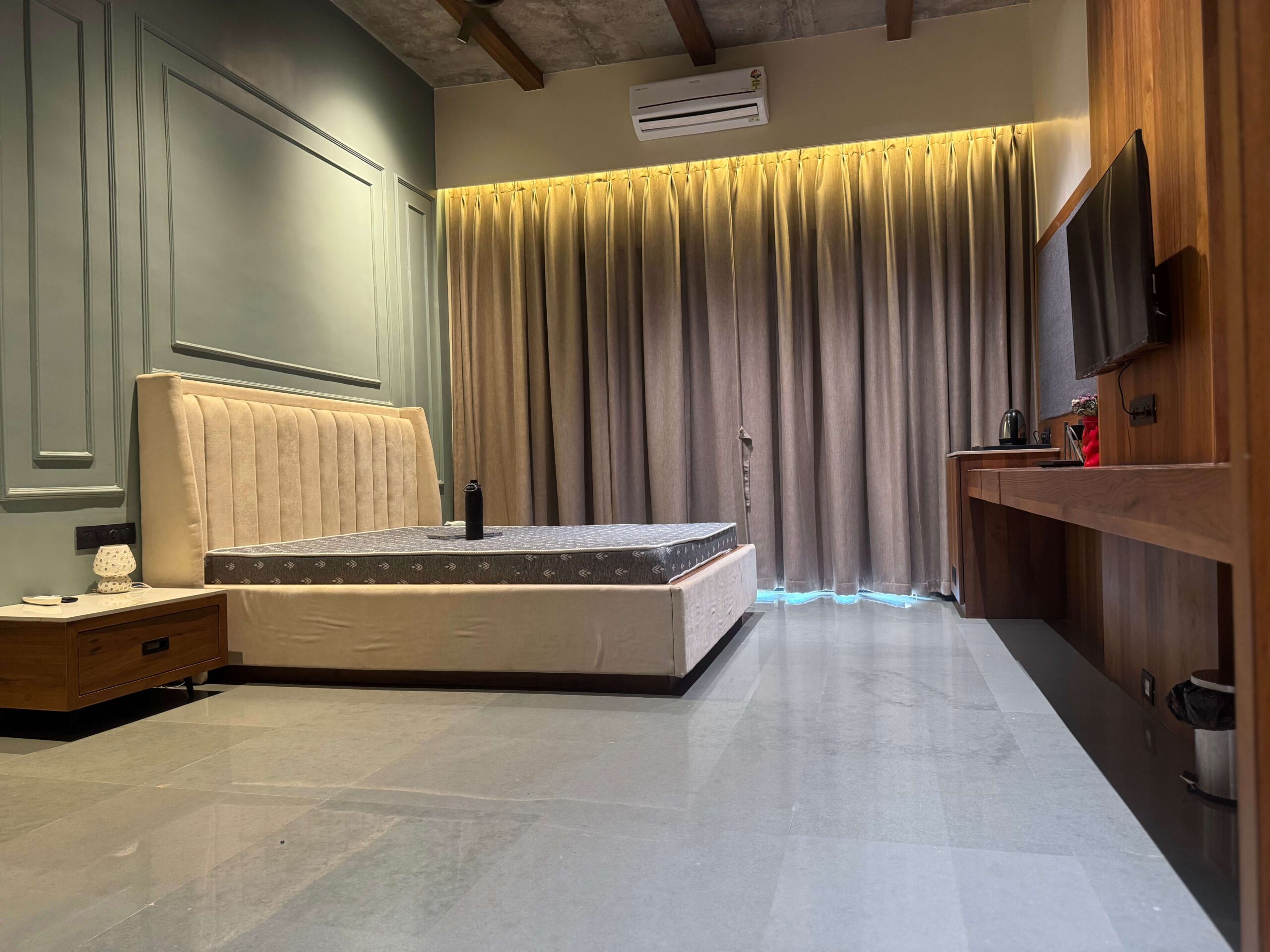
Therapy works best in a calm, private setting. Quiet rooms, open green space and an unhurried environment make it easier to reflect, focus and do the real work of change.





Living with it vs. treating it
An unprocessed trauma keeps the past alive in the present — in flashbacks, triggers and painful beliefs. EMDR helps the memory finally settle. This is the difference reprocessing makes.
- Flashbacks and intrusive memories feel present and real
- Everyday triggers set off intense fear or panic
- Painful beliefs: “it was my fault,” “I’m not safe”
- Hypervigilance, poor sleep and a body always on alert
- Avoiding people, places and reminders of the trauma
- The memory feels like the past, not the present
- Triggers lose their power over you
- Healthier beliefs: “it’s over,” “I’m safe now”
- Calmer body, better sleep, less on edge
- You reclaim the life the trauma took from you
Self-help vs. EMDR with a trained therapist
You may have seen “do-it-yourself EMDR” videos online. For real trauma, that is not only ineffective — it can be unsafe. Here is why a trained therapist matters.
Trained EMDR clinicians
Recovery stories, in their own words
Some journeys are best heard from the people who lived them. Real stories from people whose lives changed through therapy at ZorbaCare.
After losing his wife suddenly, he struggled with alcohol addiction as a way to cope with grief. But over time, he chose to face his pain, seek support, and rebuild his life.
How does a normal working person end up homeless addicted to drugs. That is what happened to me.
I have lost my love, my job, my family, everything because of my addiction. I thought I would never heal, but now i am more than a year sober.
Started in college as a fun activity from beer to regular frequency drinking. From a life that i loved to out of control drinking.
Starting EMDR is simpler than you think
You do not need to have every detail figured out to begin EMDR. From your first call, the process is clear, confidential and judgement-free — in Mumbai, Pune, or anywhere in India.
One confidential call
Tell us what you are struggling with. We listen without judgement and explain how EMDR could help — with no pressure.
Assessment & goal-setting
Your therapist assesses whether EMDR is right for you and prepares you carefully — so it is safe from the very first session.
We arrange everything
Admission is confirmed and the whole journey is arranged door to door — travel, timing and settling in, all handled for you.
Treatment begins
Your care team takes over from the moment you arrive — with family kept informed and involved throughout.
If there is any risk to life, act now. For thoughts of self-harm or suicide, call Tele-MANAS on 14416 (24×7) or reach us directly — please do not wait.
EMDR delivered by trained clinicians
Your EMDR is delivered by trained, experienced clinicians and overseen by consultant psychiatrists — the specialist training that makes trauma therapy both safe and effective.




Trusted by families across India
Real words from people who completed the programme with ZorbaCare. More than 250 five-star reviews on Google.
Our family is deeply grateful to ZorbaCare for the care and support they provided throughout our loved one’s recovery. The team was compassionate, professional, and always approachable. Dr. Sayantani Mukherjee ensured that every stage of treatment was clearly explained. Recovery coaches Sandy and Mel provided constant motivation, while psychologist Shamika helped address the emotional challenges behind the addiction. The positive changes have been remarkable.
Recovery is never easy, but my four months at Zorba gave me a strong foundation for a healthier and more positive future. I am grateful for the guidance, support, and encouragement I received throughout my stay. I would highly recommend Zorba to anyone seeking professional help for addiction recovery. Thank you, Zorba, for helping me start a new chapter in my life. 🙏
Zorbacare truly changed my life. The care, support, and guidance I received throughout my recovery journey were exceptional. The staff is compassionate, professional, and genuinely committed to helping people rebuild their lives. I am grateful for the positive impact they have had on me and my family. Thank you, Zorbacare, for giving me a new direction and a fresh start.
It has been 17 months now, i have been sober because of them and they still take regular updates and check ins. Can’t thank them enough specially Sandeep sir. They have been there for me in ways i couldn’t believe. I stayed there for 3 months and still being a part of AA and their aftercare program. They have become a family now.
Where we use EMDR
EMDR is central to how we treat trauma. Explore the areas where it makes the biggest difference — and the other therapies we combine it with.
Trauma & PTSD
EMDR is a first-line, WHO-recommended treatment for trauma and PTSD.
Learn more → ConditionDepression
Unresolved trauma often underlies depression. We treat the root, not just the symptom.
Learn more → ConditionAnxiety & Panic
When anxiety is rooted in past experiences, EMDR helps reprocess the memories behind it.
Learn more → ProgrammeDual Diagnosis
Healing underlying trauma reduces the emotional triggers that fuel addiction and relapse.
Learn more →The programmes behind your recovery
Depression is treated within our wider clinical programmes. Explore the levels of care that support it.
Residential Care
Immersive, structured treatment in a calm setting — ideal for moderate to severe depression.
Learn more → Level of CareDual Diagnosis
Integrated treatment for addiction alongside depression, anxiety or trauma.
Learn more → Continuing CareAftercare & Alumni
Relapse prevention and lifelong community support after the programme ends.
Learn more → SupportFamily Programme
Structured therapy and guidance so families heal alongside their loved one.
Learn more →Common questions about EMDR therapy
Honest answers to what people most often ask us. Anything else — just reach out.
EMDR — Eye Movement Desensitisation and Reprocessing — is a therapy that helps your brain reprocess memories that got “stuck” after a traumatic event. When something overwhelming happens, the brain sometimes fails to file the memory away properly, so it stays raw — and small triggers can make it feel like it’s happening again. In EMDR, you briefly hold the memory in mind while the therapist guides your eyes side to side (or uses gentle taps or tones). This bilateral stimulation appears to mimic what the brain does in dream sleep, helping the memory finally process. It doesn’t erase the memory — it takes away its painful charge.
No — and for many people this is the biggest relief about EMDR. Unlike some trauma therapies, you don’t have to describe what happened in detail, relive it out loud, or write it all down. You hold the memory in mind privately while the reprocessing does the work. You can share as much or as little as you wish. This is often why people who found other approaches too painful are able to manage EMDR — you process the trauma without having to narrate it.
It is genuinely evidence-based. EMDR is backed by more than 30 randomised controlled trials and is recommended as a first-line PTSD treatment by the World Health Organization and the UK’s NICE. Meta-analyses show it significantly reduces PTSD, depression and anxiety symptoms, and works about as well as trauma-focused CBT — often in fewer sessions. We’ll also be honest: some newer reviews report smaller effects, and researchers still debate exactly why the eye movements help. What’s clear is that, delivered by a trained clinician, it is a safe and effective trauma therapy for many people.
EMDR is safe when delivered by a properly trained clinician — which is exactly why we don’t recommend the DIY versions you might see online. It’s normal to feel some emotion during or shortly after a session, as memories are being processed; this usually settles quickly, and your therapist prepares you with grounding skills beforehand and makes sure you leave each session calm and steady. For people with complex trauma or dissociation, we take extra care and go slowly. We assess whether EMDR is right for you first, and never rush the process.
It varies. For a single traumatic event, some people feel significant relief in just a few reprocessing sessions — EMDR is often more efficient than other trauma therapies. For complex or repeated trauma, especially from childhood, it usually takes longer, because there are more memories to work through and preparation matters even more. Your therapist will give you a realistic sense of this after the initial assessment, and progress is reviewed with you throughout. If you are ever in crisis, call Tele-MANAS on 14416, any time.
EMDR is usually charged per session. Because it can be efficient — especially for single-event trauma — the total course is often shorter than open-ended therapy. We offer EMDR in Mumbai and Pune, across India, and as part of residential care, with sessions available in person and, where appropriate, online. We give a clear breakdown of costs up front, with no hidden charges. The best first step is a confidential call to talk through whether EMDR is right for you.
Completely. Confidentiality is central to how we operate, from the first call through admission and aftercare. For many families, that anonymity is the main reason they choose to travel for treatment.
EMDR & mental health care across India
Our mental health and rehabilitation programmes serve every major Indian city. Wherever you are, admission and travel are fully coordinated for you.
Medically reviewed & evidence-based. This page is for general information and is not a substitute for professional medical advice, diagnosis or treatment. Efficacy figures and guideline recommendations are drawn from the WHO, NICE and peer-reviewed meta-analyses. If you think EMDR could help you, speak with a qualified professional — trauma is treatable, and recovery is real. In a crisis, call Tele-MANAS on 14416 (24×7, India).
View research citations & sources →
Research Citations & A Note On Safety
- [1] World Health Organization. Guidelines for the Management of Conditions Specifically Related to Stress (2013) & National Institute for Health and Care Excellence (NICE). Post-traumatic stress disorder (NG116) (2018) — both recommend EMDR as a first-line treatment for PTSD in adults and children.
- [2] Chen YR, Hung KW, Tsai JC, et al. Efficacy of Eye-Movement Desensitization and Reprocessing for Patients with Posttraumatic-Stress Disorder: A Meta-Analysis of Randomized Controlled Trials. PLOS ONE, 2014;9(8):e103676 — meta-analysis of 26 RCTs; EMDR significantly reduced PTSD (g = −0.66), depression, anxiety and subjective distress.
- [3] de Jongh A, et al.; and Wilson G, et al. The Status of EMDR Therapy in the Treatment of PTSD 30 Years After Its Introduction. Journal of EMDR Practice and Research, 2019 — 30+ RCTs; EMDR equally effective as trauma-focused CBT, often more efficient, with benefits maintained at follow-up.
- [4] Seok JW, Kim JI. The Efficacy of EMDR Treatment for Depression: A Meta-Analysis and Meta-Regression of Randomized Controlled Trials. Journal of Clinical Medicine, 2024;13(18):5633 — 25 studies, 1,042 participants; moderate effect on depression (Hedges’ g ≈ 0.75).
- [5] Cuijpers P, et al. (2020) and later reviews note that some trials report smaller effect sizes and that the role of the eye-movement component is still debated — included here for balance.
- Shapiro F. Eye Movement Desensitization and Reprocessing (EMDR) Therapy: Basic Principles, Protocols, and Procedures. The foundational text; EMDR was developed by Dr Francine Shapiro in 1989.
This page is for general information and is not a substitute for professional medical advice, diagnosis or treatment. If you think EMDR could help you, speak with a qualified professional — trauma is treatable, and recovery is real. In a crisis, call Tele-MANAS on 14416 (24×7, India).