
Personal Inventories & Reflection in Addiction Recovery.
Personal inventories and reflection are among the oldest and most powerful tools in recovery. A personal inventory is an honest, written look at your own thoughts, feelings, behaviours and relationships — the resentments, fears and patterns that keep you stuck. Made famous by the 12-step tradition and echoed in modern therapy, structured self-reflection turns vague guilt and confusion into something you can actually see, understand and change. ZorbaCare guides personal inventory and reflection work in Mumbai, Pune and across India, as part of complete mental health and addiction care — always with a therapist beside you, never alone.

How personal inventory work helps you heal
Much of what keeps us stuck lives in the dark — half-remembered guilt, buried resentment, patterns we repeat without noticing. A personal inventory brings it into the light. By writing it down honestly, you stop carrying it as a vague weight and start seeing it clearly: what happened, your part in it, the fear or hurt underneath, and the patterns that keep repeating. What is seen can be understood; what is understood can be changed.
The practice has deep roots. In the 12-step tradition, the “searching and fearless moral inventory” is a turning point in recovery. Modern therapy uses the same principle through journaling, self-monitoring and reflective writing — all shown to reduce distress and build self-awareness. The power is the same across both: honest reflection, put into words, loosens shame’s grip and creates the space to choose differently.
Crucially, at ZorbaCare you never do this alone. Inventory work can stir up difficult feelings, so a therapist guides the process — helping you stay safe, make sense of what surfaces, and turn insight into real change. It is a core part of how we treat addiction and support mental health recovery, in Mumbai, Pune and across India.

What inventory & reflection work helps with
Honest self-reflection supports healing across many areas — wherever old patterns, guilt or resentment keep a person stuck. These are where we use it most.
Addiction recovery
A cornerstone of addiction recovery — facing the past honestly is how many people finally break free of it.
Guilt & shame
Writing down what weighs on you loosens the grip of guilt and shame — turning a vague heaviness into something you can face and release.
Resentment & anger
An inventory of resentments reveals the anger you carry — and where you may be holding on to hurt that is quietly harming you.
Repeating patterns
Reflection reveals the patterns you repeat in relationships, work and coping — the first step to finally changing them.
Self-awareness
Beyond any diagnosis, reflection builds the self-awareness that underpins every kind of lasting personal growth and change.
Low self-worth
An honest inventory includes your strengths, not just your struggles — helping rebuild a fairer, kinder and truer sense of self.
What personal inventory work involves
Inventory work is a gentle, guided process — never rushed, always supported. This is how it usually unfolds.
Building safety first
Before looking inward, you and your therapist establish trust and grounding skills — so that whatever surfaces, you feel steady and supported.
Writing it down honestly
Using a simple structure, you write an honest inventory — resentments, fears, harms, and your own part — getting what is inside you onto the page where you can see it.
Sharing & making sense
You talk it through with your therapist — the relief of being heard without judgement, and the insight of seeing patterns and their roots clearly, often for the first time.
Letting go & moving forward
With insight comes release. You make amends where helpful, let go of what you can, and carry forward a lighter, clearer, more honest sense of yourself.
You are never alone in it. Inventory work can stir up strong feelings, which is exactly why a therapist guides every step — keeping you safe, at your own pace, and never pushing you further than you are ready to go.
See where recovery happens
A private residential estate in the Sahyadri hills — the environment is part of the treatment, not a backdrop to it.
What honest reflection reveals
A personal inventory brings hidden things to the surface. These are the areas structured reflection helps you see clearly — the first step to freedom from them.
Resentments & Fears
- Old resentments — the anger you still carry, and who it is really hurting.
- Hidden fears — the worries quietly driving your choices and reactions.
- Buried hurt — pain you have never fully faced or put into words.
- What you avoid — the feelings and truths you have been running from.
Patterns & Your Part
- Repeating cycles — the same situations and reactions, again and again.
- Your own part — honestly, without blame, seeing your role in what happened.
- Harms done — where your actions hurt others, and what you can put right.
- Triggers — what sets off the patterns you want to change.
Strengths & Growth
- Your strengths — the good in you that guilt and shame have hidden.
- What you value — the person you actually want to be.
- What to release — the weight you no longer need to carry.
- A way forward — clear, honest and lighter than before.
The tools of reflection we use
Reflection takes many forms — these are the practical tools a therapist may use with you, matched to where you are.
The written inventory
A structured, honest written list — of resentments, fears, harms and your own part — that brings what is inside you into the light where it can be understood.
Reflective journaling
Regular, free writing about your thoughts and feelings — a proven way to reduce distress, process experiences and build steady self-awareness.
Gratitude & strengths lists
Deliberately noting what is good — your strengths, and what you are grateful for — to balance an honest look at the harder truths.
Guided self-questions
Simple, powerful prompts — “what was my part?”, “what am I afraid of?” — that gently open up honest reflection when you are not sure where to start.
Sharing with a therapist
Reading your inventory aloud to a trusted therapist — the relief of being fully heard without judgement, which is often where real release begins.
Making amends
Where helpful and safe, putting right the harms you have identified — the step that turns private insight into real, freeing action.
A calm space to do the work
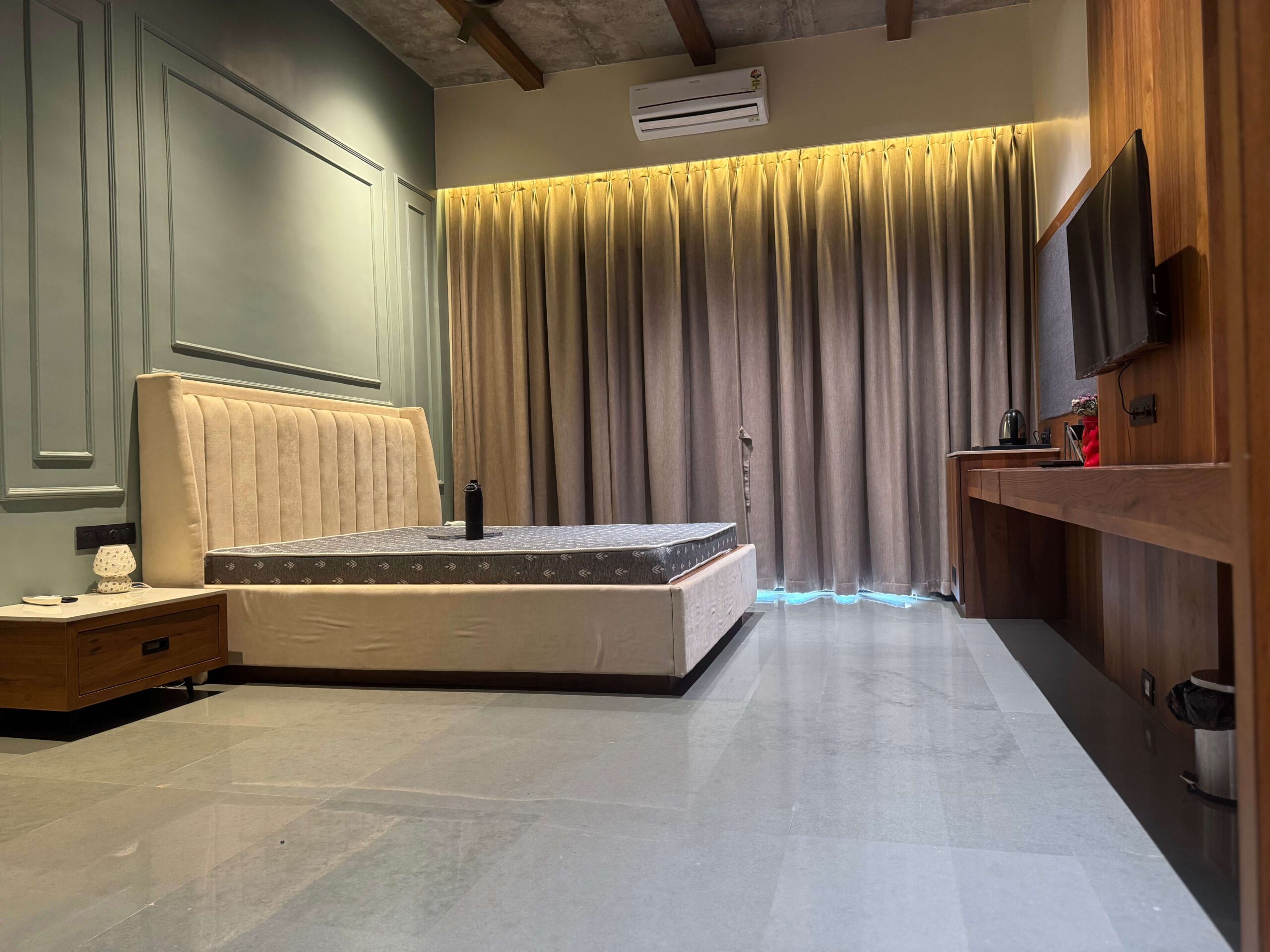
Therapy works best in a calm, private setting. Quiet rooms, open green space and an unhurried environment make it easier to reflect, focus and do the real work of change.





Living with it vs. treating it
Left unexamined, the past runs quietly beneath the surface — in guilt, resentment and repeating patterns. Honest reflection brings it into the light. This is the difference it makes.
- A vague, heavy sense of guilt you cannot name
- Resentments you carry without realising the cost
- The same patterns repeat, and you cannot see why
- Shame keeps the hardest truths hidden, even from yourself
- The past feels like a weight you cannot put down
- You can name and face what was weighing on you
- You let go of resentments that were holding you back
- You see your patterns clearly — and can change them
- Honesty replaces shame, and self-respect grows
- You move forward lighter, clearer and more free
Journaling alone vs. guided reflection with a therapist
Writing on your own has real value — but for a deep, honest inventory, a therapist’s guidance makes it safe and truly transformative. Here is why.
Therapist-guided reflection
Recovery stories, in their own words
Some journeys are best heard from the people who lived them. Real stories from people whose lives changed through therapy at ZorbaCare.
After losing his wife suddenly, he struggled with alcohol addiction as a way to cope with grief. But over time, he chose to face his pain, seek support, and rebuild his life.
How does a normal working person end up homeless addicted to drugs. That is what happened to me.
I have lost my love, my job, my family, everything because of my addiction. I thought I would never heal, but now i am more than a year sober.
Started in college as a fun activity from beer to regular frequency drinking. From a life that i loved to out of control drinking.
Starting reflection work is simpler than you think
You do not need to be in recovery or in crisis to benefit from honest reflection. From your first call, the process is clear, confidential and judgement-free — in Mumbai, Pune, or anywhere in India.
One confidential call
Tell us what you are struggling with. We listen without judgement and explain how reflection could help — with no pressure.
Assessment & goal-setting
Your therapist builds trust and safety with you first — so reflection is gentle and supported from the very first session.
We arrange everything
Admission is confirmed and the whole journey is arranged door to door — travel, timing and settling in, all handled for you.
Treatment begins
Your care team takes over from the moment you arrive — with family kept informed and involved throughout.
If there is any risk to life, act now. For thoughts of self-harm or suicide, call Tele-MANAS on 14416 (24×7) or reach us directly — please do not wait.
Reflection guided by qualified therapists
Your inventory and reflection work is guided by experienced therapists and counsellors, overseen by consultant psychiatrists — so that whatever surfaces is held safely and used well.




Trusted by families across India
Real words from people who completed the programme with ZorbaCare. More than 250 five-star reviews on Google.
Our family is deeply grateful to ZorbaCare for the care and support they provided throughout our loved one’s recovery. The team was compassionate, professional, and always approachable. Dr. Sayantani Mukherjee ensured that every stage of treatment was clearly explained. Recovery coaches Sandy and Mel provided constant motivation, while psychologist Shamika helped address the emotional challenges behind the addiction. The positive changes have been remarkable.
Recovery is never easy, but my four months at Zorba gave me a strong foundation for a healthier and more positive future. I am grateful for the guidance, support, and encouragement I received throughout my stay. I would highly recommend Zorba to anyone seeking professional help for addiction recovery. Thank you, Zorba, for helping me start a new chapter in my life. 🙏
Zorbacare truly changed my life. The care, support, and guidance I received throughout my recovery journey were exceptional. The staff is compassionate, professional, and genuinely committed to helping people rebuild their lives. I am grateful for the positive impact they have had on me and my family. Thank you, Zorbacare, for giving me a new direction and a fresh start.
It has been 17 months now, i have been sober because of them and they still take regular updates and check ins. Can’t thank them enough specially Sandeep sir. They have been there for me in ways i couldn’t believe. I stayed there for 3 months and still being a part of AA and their aftercare program. They have become a family now.
Where we use reflection
Reflection supports healing across our programmes. Explore where it makes the biggest difference — and the other therapies we combine it with.
Addiction Recovery
A cornerstone of recovery — facing the past honestly is how many finally break free.
Learn more → ConditionTrauma & PTSD
Unresolved trauma often underlies depression. We treat the root, not just the symptom.
Learn more → ConditionDepression
Reflection helps make sense of low mood and rebuild a fairer, kinder sense of self.
Learn more → ProgrammePersonal Growth
Beyond any diagnosis, reflection builds the self-awareness behind all lasting change.
Learn more →The programmes behind your recovery
Depression is treated within our wider clinical programmes. Explore the levels of care that support it.
Residential Care
Immersive, structured treatment in a calm setting — ideal for moderate to severe depression.
Learn more → Level of CareDual Diagnosis
Integrated treatment for addiction alongside depression, anxiety or trauma.
Learn more → Continuing CareAftercare & Alumni
Relapse prevention and lifelong community support after the programme ends.
Learn more → SupportFamily Programme
Structured therapy and guidance so families heal alongside their loved one.
Learn more →Common questions about personal inventories & reflection
Honest answers to what people most often ask us. Anything else — just reach out.
A personal inventory is an honest, written look at your own life — your resentments, fears, the harms you may have caused, and your part in the patterns that keep repeating. It helps because so much of what holds us back stays hidden and vague, felt only as guilt, anxiety or a heaviness we cannot name. Writing it down brings it into the light: what happened, why, and what you can do about it. What you can see, you can understand; what you understand, you can begin to change. It is one of the oldest tools in recovery for a reason — honesty on paper loosens the grip of shame.
The idea of a “searching and fearless moral inventory” comes from the 12-step tradition, and it remains powerful there — but the practice itself is not religious, and you do not need to follow any programme to benefit. The same principle runs through mainstream psychology as journaling, self-monitoring and reflective writing, all shown to reduce distress and build self-awareness. At ZorbaCare we adapt it to you — secular or faith-based, structured or gentle, part of addiction recovery or simply personal growth. It is about honesty with yourself, in whatever form helps you most.
It is a fair worry — and the answer is in how it is done. Reflection is not about wallowing in the past or reliving pain for its own sake. Done well, and with a therapist guiding you, it is the opposite: naming something honestly, once, so you can finally set it down — rather than carrying it unspoken forever. Research on reflective writing shows it tends to reduce distress, not increase it, precisely because it turns a swirling, overwhelming feeling into something clear and finite. And you are never pushed further than you are ready to go. If something heavy surfaces, your therapist is right there to help you hold it safely.
That is entirely your choice. Much of the value of an inventory comes simply from writing it honestly for yourself. That said, many people find that reading it aloud to a trusted therapist is where the real release happens — being fully heard, without judgement, often lifts a weight that private writing alone cannot. You decide how much to share and when, and anything you do share is completely confidential. There is no pressure. The process moves at your pace, and your privacy is always respected.
Being honest with yourself can bring up difficult feelings at first — that is normal, and it is exactly why we never do this work alone or all at once. Your therapist builds safety and grounding with you first, goes at your pace, and helps you make sense of whatever surfaces. For most people, the short-term discomfort gives way to a real and lasting sense of relief and lightness — the weight of carrying things unspoken finally lifts. If at any point it feels like too much, you and your therapist simply slow down. If you are ever in crisis, call Tele-MANAS on 14416, any time.
Reflection and inventory work is usually part of your wider therapy or recovery programme rather than a separate cost, though it can also be a focus of individual sessions charged per session. We offer it in Mumbai and Pune, across India, and as part of residential care, in person and online. We are always transparent about costs up front, with no hidden charges. The best first step is a confidential call to talk through what would help you most.
Completely. Confidentiality is central to how we operate, from the first call through admission and aftercare. For many families, that anonymity is the main reason they choose to travel for treatment.
Reflection & mental health care across India
Our mental health and rehabilitation programmes serve every major Indian city. Wherever you are, admission and travel are fully coordinated for you.
Reviewed & evidence-informed. This page is for general information and is not a substitute for professional medical advice, diagnosis or treatment. The benefits of reflective and expressive writing are supported by peer-reviewed research. If honest reflection could help you, speak with a qualified therapist — you do not need to face the past alone. In a crisis, call Tele-MANAS on 14416 (24×7, India).
View research citations & sources →
Research Citations & A Note On Safety
- Pennebaker JW, Beall SK. Confronting a traumatic event: Toward an understanding of inhibition and disease. Journal of Abnormal Psychology, 1986 — the foundational expressive-writing studies showing that honestly writing about difficult experiences improves psychological and physical health.
- Frattaroli J. Experimental disclosure and its moderators: A meta-analysis. Psychological Bulletin, 2006;132(6):823–865 — meta-analysis of 146 studies confirming that structured written disclosure produces small-to-moderate improvements in wellbeing.
- Baikie KA, Wilhelm K. Emotional and physical health benefits of expressive writing. Advances in Psychiatric Treatment, 2005;11(5):338–346 — review of the mechanisms by which reflective writing reduces distress and builds self-awareness.
- Alcoholics Anonymous. Twelve Steps and Twelve Traditions. The “searching and fearless moral inventory” (Steps 4 and 10) — the recovery tradition from which structured personal inventory work originates.
This page is for general information and is not a substitute for professional medical advice, diagnosis or treatment. If honest reflection could help you, speak with a qualified therapist — you do not need to face the past alone. In a crisis, call Tele-MANAS on 14416 (24×7, India).