
Bipolar Disorder Treatment in India.
Bipolar disorder — once called manic depression — brings extreme shifts between emotional highs (mania or hypomania) and lows (depression). It is frequently misdiagnosed as ordinary depression, which is why accurate diagnosis matters so much. ZorbaCare provides psychiatrist-led bipolar disorder treatment in India as part of complete, compassionate mental health care — with the right diagnosis, mood-stabilising treatment, and continuous monitoring. With proper care, most people achieve real, lasting stability — for themselves and their family.

Two poles — and why it is so often missed
Bipolar disorder causes the mind to swing between two poles: mania or hypomania — periods of abnormally high energy, elevated or irritable mood, racing thoughts and reduced need for sleep — and depression, with low mood, exhaustion and hopelessness. Episodes can last days, weeks or months, with steadier periods in between. It is a real medical condition rooted in brain chemistry, not a personality flaw or a lack of willpower.
Here is the trap that makes bipolar so often missed: people usually seek help during the lows, not the highs. The manic or hypomanic phases can feel productive or even good, so they go unreported — and the person is diagnosed with ordinary depression. This matters enormously, because antidepressants given alone, without a mood stabiliser, can actually trigger mania. Getting the diagnosis right is the single most important step.
The reassuring truth is that bipolar disorder is very manageable. With proper bipolar disorder treatment in India — the right diagnosis, mood-stabilising medication, psychotherapy and continuous monitoring — most people reach lasting stability and live full lives. Family is central: loved ones often spot an emerging episode first, so we involve them from the start. And where bipolar occurs with alcohol or drug use — which is common — our dual-diagnosis programme treats both together.

The two faces of bipolar disorder
Bipolar shows up as episodes at two extremes. Recognising the highs — not just the lows — is what leads to the right diagnosis. These are the signs we see most often.
Mania: elevated or irritable mood
Feeling euphoric, invincible or unusually irritable — a clear, observable shift from the person’s normal self that others notice.
Racing thoughts & fast speech
Thoughts and speech speeding up, jumping between ideas, hard to interrupt — the mind running faster than it can keep up with.
Little need for sleep
During mania, going on very little sleep yet feeling full of energy — a hallmark sign, and often one of the earliest warnings of an episode.
Impulsive, risky behaviour
Reckless spending, risky decisions, impulsive ventures or heightened sexual activity — actions that can cause real financial, social or personal harm.
Depressive lows
The opposite pole: deep sadness, exhaustion, loss of interest and hopelessness — the phase people most often seek help for, which can mask the bipolar pattern.
Suicidal thoughts
Bipolar carries a serious risk of suicidal thinking, especially in depressive or mixed states. This is a medical emergency — please reach out now. In India, call Tele-MANAS on 14416, any time.
Accurate diagnosis, mood stability, built around you
Bipolar is managed, not cured — and managed well, most people live full, stable lives. It starts with getting the diagnosis right. This is how bipolar treatment works at ZorbaCare.
Accurate diagnosis
A psychiatrist reviews your mood history over time — highs as well as lows — to distinguish bipolar from unipolar depression and identify the type. Getting this right changes everything.
Mood-stabilising medication
Mood stabilisers such as lithium form the clinical foundation of treatment, prescribed and carefully monitored by a psychiatrist to even out the highs and lows.
Therapy & psychoeducation
CBT and psychoeducation help you understand the condition, protect a stable sleep and routine, manage stress, and — crucially — recognise your own early warning signs.
Monitoring & relapse prevention
Continuous monitoring is what keeps bipolar stable — catching an emerging episode early. Structured aftercare makes that sustainable for life.
Care is individual. Bipolar treatment is long-term and personal — the right medication and dose vary from person to person. Your plan is always set by a psychiatrist, monitored over time, never assumed.
See where recovery happens
A private residential estate in the Sahyadri hills — the environment is part of the treatment, not a backdrop to it.
The pillars of lasting stability
Managing bipolar well means combining medication with the skills and structure that keep mood steady. These are the evidence-based components we combine.
Mood stabilisers & medication
Lithium and other mood stabilisers are the foundation of bipolar treatment — prescribed, dosed and monitored by a psychiatrist to keep both poles in check.
Cognitive Behavioural Therapy
CBT adapted for bipolar addresses the thought patterns that amplify episodes and builds the relapse-prevention skills that protect long-term stability.
Psychoeducation
Understanding your own condition — its triggers, patterns and early warning signs — is one of the most powerful tools for preventing future episodes.
Routine & sleep protection
Regular sleep and daily rhythm are medicine for bipolar — disrupted sleep is a common trigger for mania, so protecting routine is central to staying well.
Group & peer support
Connecting with others who live with bipolar reduces isolation and shame — and offers real, practical wisdom on staying stable.
Family psychoeducation
Family often notice an episode building before the person does. We help them understand bipolar, spot early warnings, and support stability — through structured family sessions.
A calm, steady place to stabilise
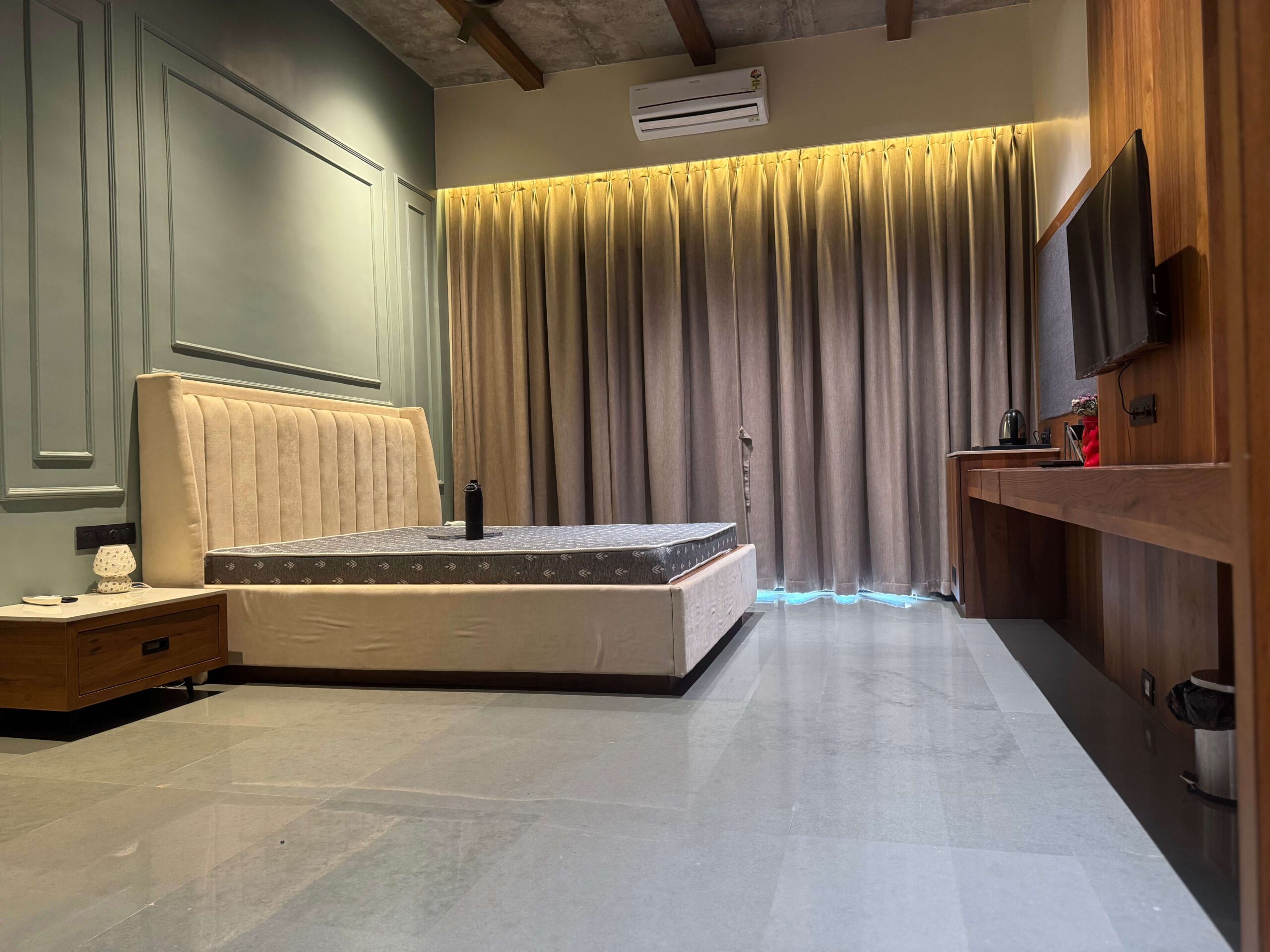
Stability thrives on calm and routine. Private rooms, open green space and quiet, structured days give the steady rhythm bipolar recovery depends on.




Living with it vs. treating it
Untreated, bipolar’s swings grow more frequent and damaging — to health, work, finances and relationships. Treated properly, mood steadies and life stabilises. This is the difference the right care makes.
- Mood swings grow more frequent and extreme
- Manic episodes cause financial and social harm
- High suicide risk in lows and mixed states
- Antidepressants alone can trigger mania
- Years lost to a condition that could be stable
- Mood stabilises; swings become rare and mild
- Sleep and routine steady, protecting stability
- Relationships rebuild on solid, stable ground
- Early warning signs caught before episodes build
- A stable, full life — work, family and future intact
Wrong diagnosis vs. accurate, specialist care
With bipolar, the diagnosis is everything — and it is easy to get wrong. Treating it as ordinary depression can make things worse. These are the differences accurate care makes.
Accurate, specialist bipolar care
Recovery stories, in their own words
Some journeys are best heard from the people who lived them. Real stories from people who found lasting stability with ZorbaCare.
After losing his wife suddenly, he struggled with alcohol addiction as a way to cope with grief. But over time, he chose to face his pain, seek support, and rebuild his life.
How does a normal working person end up homeless addicted to drugs. That is what happened to me.
I have lost my love, my job, my family, everything because of my addiction. I thought I would never heal, but now i am more than a year sober.
Started in college as a fun activity from beer to regular frequency drinking. From a life that i loved to out of control drinking.
Getting the right diagnosis starts here
If mood swings are disrupting life — or a “depression” diagnosis has never quite fit — an accurate assessment changes everything. From your first call, the process is clear and confidential, from anywhere in India.
One confidential call
Tell us about the highs and the lows — the full picture. We listen without judgement and explain how accurate bipolar care works.
Full mood-history assessment
A psychiatrist reviews your mood over time — not just today — to diagnose bipolar accurately and build a mood-stabilising plan around you.
We arrange everything
Admission is confirmed and the whole journey is arranged door to door — travel, timing and settling in, all handled for you.
Treatment begins
Your care team takes over from the moment you arrive — with family kept informed and involved throughout.
If there is any risk to life, act now. For thoughts of self-harm or suicide, call Tele-MANAS on 14416 (24×7) or reach us directly — please do not wait.
Bipolar care led by qualified psychiatrists
Your bipolar treatment is directed by experienced psychiatrists and clinical psychologists — accurate diagnosis and mood-stabilising care depend on that expertise.


Trusted by families across India
Real words from people who completed the programme with ZorbaCare. More than 250 five-star reviews on Google.
Our family is deeply grateful to ZorbaCare for the care and support they provided throughout our loved one’s recovery. The team was compassionate, professional, and always approachable. Dr. Sayantani Mukherjee ensured that every stage of treatment was clearly explained. Recovery coaches Sandy and Mel provided constant motivation, while psychologist Shamika helped address the emotional challenges behind the addiction. The positive changes have been remarkable.
Recovery is never easy, but my four months at Zorba gave me a strong foundation for a healthier and more positive future. I am grateful for the guidance, support, and encouragement I received throughout my stay. I would highly recommend Zorba to anyone seeking professional help for addiction recovery. Thank you, Zorba, for helping me start a new chapter in my life. 🙏
Zorbacare truly changed my life. The care, support, and guidance I received throughout my recovery journey were exceptional. The staff is compassionate, professional, and genuinely committed to helping people rebuild their lives. I am grateful for the positive impact they have had on me and my family. Thank you, Zorbacare, for giving me a new direction and a fresh start.
It has been 17 months now, i have been sober because of them and they still take regular updates and check ins. Can’t thank them enough specially Sandeep sir. They have been there for me in ways i couldn’t believe. I stayed there for 3 months and still being a part of AA and their aftercare program. They have become a family now.
Bipolar rarely travels alone
It is often confused with depression and can co-occur with anxiety or substance use. We treat the whole picture. Explore related conditions we care for.
Depression
Bipolar is often misdiagnosed as depression. Telling them apart is critical to treatment.
Learn more → ConditionTrauma & PTSD
Unresolved trauma often underlies depression. We treat the root, not just the symptom.
Learn more → ConditionBipolar Disorder
Low phases can look like depression. Accurate diagnosis is essential to treat it right.
Learn more → ProgrammeDual Diagnosis
When depression drives alcohol or drug use, we treat both together — the missing piece.
Learn more →The programmes behind your recovery
Depression is treated within our wider clinical programmes. Explore the levels of care that support it.
Residential Care
Immersive, structured treatment in a calm setting — ideal for moderate to severe depression.
Learn more → Level of CareDual Diagnosis
Integrated treatment for addiction alongside depression, anxiety or trauma.
Learn more → Continuing CareAftercare & Alumni
Relapse prevention and lifelong community support after the programme ends.
Learn more → SupportFamily Programme
Structured therapy and guidance so families heal alongside their loved one.
Learn more →Common questions about bipolar disorder
Honest answers to what people most often ask us. Anything else — just reach out.
Both involve mood swings, but the highs differ. Bipolar I includes at least one full manic episode — intense, lasting a week or more, sometimes needing hospital care. Bipolar II involves hypomania, a milder high that does not tip into full mania, alongside episodes of depression. Bipolar II is often mistaken for plain depression because the hypomania goes unnoticed. Only a proper assessment can tell them apart — and it changes the treatment.
Because people seek help during the lows, not the highs. Manic or hypomanic phases can feel productive or even pleasant, so they go unmentioned — and the doctor sees only depression. This is more than a labelling issue: treating bipolar with antidepressants alone, without a mood stabiliser, can trigger mania or rapid cycling. That is why we always review your full mood history, not just how you feel today.
Bipolar is a long-term condition, so “cure” is not the right frame — but it is very manageable. With the right medication, therapy and continuous monitoring, most people achieve lasting stability and live full lives, with rare and mild episodes. The goal is stability and prevention, and that is genuinely achievable. Stopping treatment when feeling well is the most common cause of relapse, so ongoing care matters.
For most people with bipolar I, mood-stabilising medication is a long-term part of staying well — much like ongoing treatment for any chronic condition. The dose can often be optimised so side effects are minimal. Stopping medication because you feel stable is the single biggest cause of relapse. That said, your plan is reviewed regularly by your psychiatrist, and therapy and lifestyle skills reduce how much you rely on medication alone. This is a decision made with your doctor, never alone.
Learn the condition, and learn their early warning signs — family often spots an episode building before the person does. Support their medication and sleep routine without policing, stay calm during mood shifts, and keep communication open. During mania, gently encourage help rather than argue. Bipolar carries a real suicide risk, so take any talk of self-harm seriously and call Tele-MANAS on 14416 (24×7) in a crisis. Family psychoeducation, which we provide, makes a measurable difference.
It depends on the level of care. Ongoing outpatient management — psychiatrist reviews and therapy — is the mainstay for most people; residential care is priced by programme and length of stay, and helps during an acute episode or for accurate diagnosis and stabilisation. Under the Mental Healthcare Act 2017, mental health has insurance parity — worth checking your policy. We give a clear, written breakdown before you commit to anything.
Completely. Confidentiality is central to how we operate, from the first call through admission and aftercare. For many families, that anonymity is the main reason they choose to travel for treatment.
Bipolar & mental health care for families across India
Our mental health and rehabilitation programmes serve every major Indian city. Wherever you are, admission and travel are fully coordinated for you.
Sources & A Note On Safety
- National Institute of Mental Health (NIMH). Bipolar Disorder. / Gururaj G, et al. National Mental Health Survey of India, NIMHANS.
- Gururaj G, et al. National Mental Health Survey of India, 2015–16. National Institute of Mental Health and Neurosciences (NIMHANS), Bengaluru.
- World Health Organization. National Mental Health Survey & NDDTC-AIIMS, India.
This page is for general information and is not a substitute for professional medical advice, diagnosis or treatment. If you or someone you know may have bipolar disorder, please seek an accurate assessment from a psychiatrist — diagnosis shapes everything. In a crisis, call Tele-MANAS on 14416 (24×7, India).