
Cognitive Behavioural Therapy (CBT) in Mumbai, India.
Cognitive Behavioural Therapy — CBT — is the most researched, most widely used form of talk therapy in the world, and a first-line treatment for depression, anxiety, OCD, PTSD and addiction. It works on a simple idea: your thoughts, feelings and behaviours are linked, and by changing unhelpful thought patterns you can change how you feel and act. ZorbaCare provides structured, practical CBT in Mumbai, Pune and across India — delivered by qualified therapists, as part of complete mental health and addiction care. It is goal-focused, time-limited, and it works.

How CBT works: the thought–feeling–behaviour cycle
CBT is built on one powerful insight: it is not events themselves that upset us, but the way we interpret them. A single situation can trigger an automatic thought (“I always fail”), which drives a feeling (hopelessness), which drives a behaviour (giving up) — and that behaviour then seems to confirm the original thought. Round and round it goes. CBT interrupts this cycle by helping you notice those automatic thoughts, test them against reality, and replace them with more balanced, accurate ones.
What makes CBT different from open-ended talk therapy is that it is structured, practical and time-limited. You and your therapist agree clear goals, work on specific problems, and practise real skills — often with “homework” between sessions. It focuses less on the distant past and more on what keeps a problem going in the present, and what you can do about it now. This is why it typically works in a set number of sessions, not years.
The biggest strength of CBT is that it teaches you to become your own therapist. The skills — catching unhelpful thoughts, questioning them, changing your response — stay with you long after therapy ends, which is why CBT is so effective at preventing relapse. At ZorbaCare, CBT is central to how we treat both mental health conditions and addiction, delivered by qualified CBT therapists in Mumbai, Pune and across India.

What CBT can help you with
CBT is one of the most versatile therapies there is — a proven, first-line treatment across a wide range of conditions. These are the areas we use it for most.
Depression
CBT is a first-line treatment for depression — breaking the cycle of negative thinking and rebuilding motivation and hope.
Anxiety & panic
The gold-standard treatment for anxiety and panic attacks — retraining the fear response and calming catastrophic thinking.
OCD
A specialised form of CBT called ERP is the leading treatment for OCD — breaking the obsession-compulsion cycle.
Trauma & PTSD
Trauma-focused CBT helps process PTSD — reshaping the painful beliefs trauma leaves behind.
Addiction & relapse
CBT is central to addiction recovery — identifying triggers, changing patterns and building relapse-prevention skills.
Stress, anger & sleep
CBT also helps with everyday stress, anger management, insomnia (CBT-I), phobias and low self-esteem — practical tools for daily life.
What actually happens in CBT
CBT is a clear, collaborative, step-by-step process — you always understand what you are doing and why. This is how it works, session by session.
Assessment & goals
You and your therapist identify the specific problems you want to work on and set clear, realistic goals — so therapy has direction from the very first session.
Spotting the patterns
You learn to notice your automatic thoughts and the cognitive distortions behind them — catastrophising, all-or-nothing thinking, mind-reading — and see how they drive how you feel and act.
Challenging & changing
You test those thoughts against the evidence, replace them with more balanced ones, and try out new behaviours — often with practical “homework” between sessions to build real-world skills.
Relapse prevention
You consolidate what works into a personal toolkit, so you can keep using the skills long after therapy ends — the reason CBT is so effective at preventing relapse.
CBT is collaborative. You are an active partner, not a passive patient — every step is explained, agreed and practised together. Sessions are structured, but always tailored to you.
See where recovery happens
A private residential estate in the Sahyadri hills — the environment is part of the treatment, not a backdrop to it.
Common thinking traps CBT helps you break
These “cognitive distortions” are the unhelpful thought patterns that fuel anxiety, depression and low self-worth. CBT teaches you to spot them — the first step to changing them.
Distorted Thinking
- All-or-nothing thinking — seeing things in black and white, with no middle ground.
- Catastrophising — assuming the worst possible outcome will happen.
- Mind-reading — believing you know what others think of you, negatively.
- Overgeneralising — treating one setback as a never-ending pattern.
Emotional Traps
- Emotional reasoning — “I feel it, so it must be true.”
- Self-blame — holding yourself responsible for things outside your control.
- “Should” statements — rigid rules that leave you guilty or frustrated.
- Labelling — defining yourself by one mistake (“I’m a failure”).
How CBT Helps
- Notice the thought — catch it as it happens, instead of believing it automatically.
- Question the evidence — is it actually true, or just a familiar habit?
- Find a balanced view — replace it with something fairer and more accurate.
- Act differently — respond in a healthier way, and break the cycle for good.
The core tools of CBT
CBT is a toolkit, not a single method. These are the proven, practical techniques a CBT therapist uses — matched to what you are working on.
Cognitive restructuring
The heart of CBT — learning to catch distorted thoughts, question them against real evidence, and reframe them into something more balanced and accurate.
Behavioural activation
Depression and low mood shrink your world. Behavioural activation gently rebuilds activity and routine — doing first, so motivation and mood can follow.
Exposure work
For anxiety, phobias and OCD, facing feared situations gradually and safely — at your own pace — retrains the brain that they are not dangerous.
Thought records & homework
Practical between-session exercises — tracking thoughts, testing predictions, trying new responses — that turn insight in the room into change in real life.
Relaxation & grounding
Breathing, relaxation and grounding techniques calm the body’s stress response — practical skills to manage anxiety, anger and panic in the moment.
Relapse-prevention planning
Mapping your triggers and early warning signs, and rehearsing responses in advance — the skill that keeps progress intact long after therapy ends.
A calm space to do the work
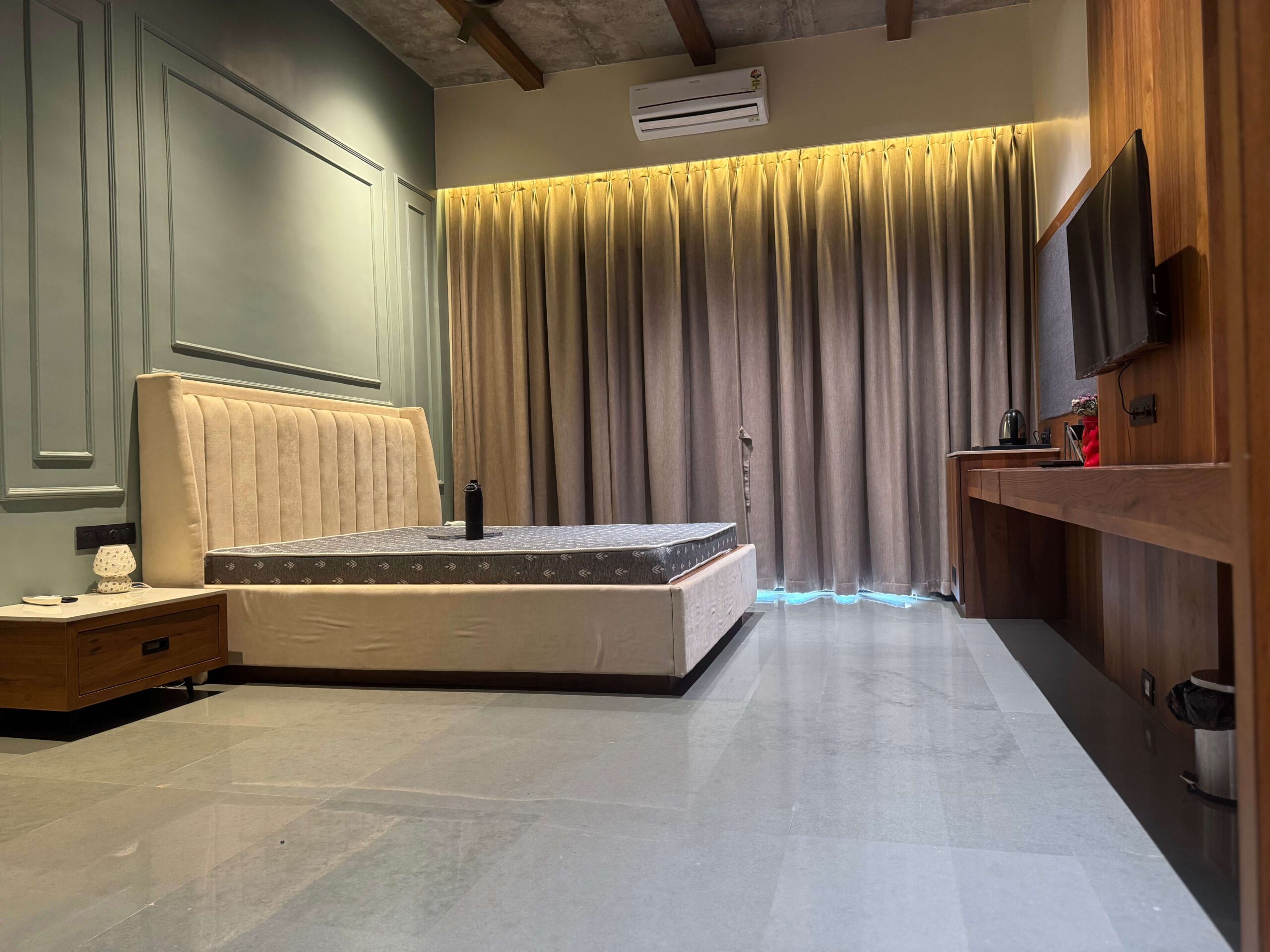
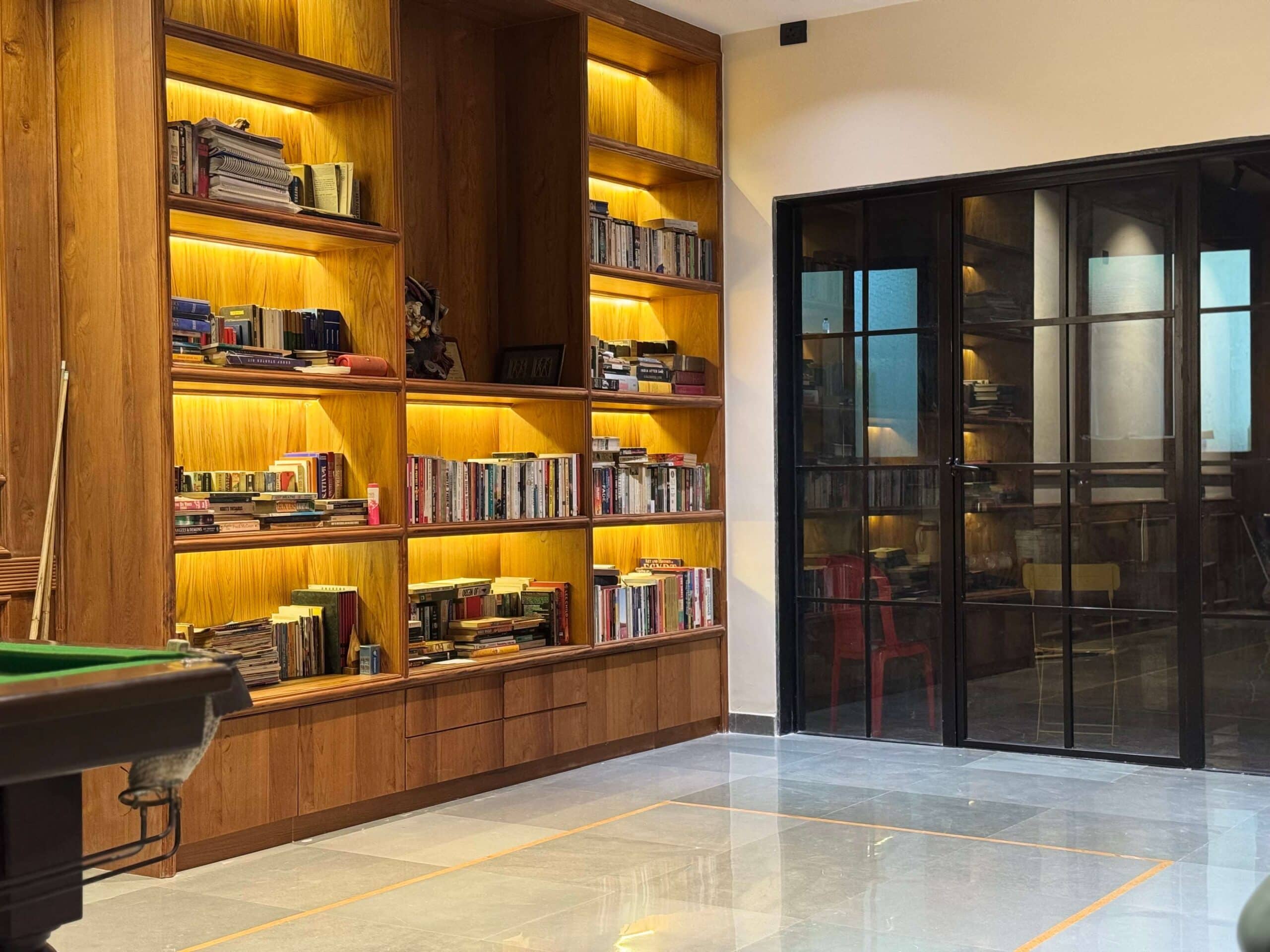
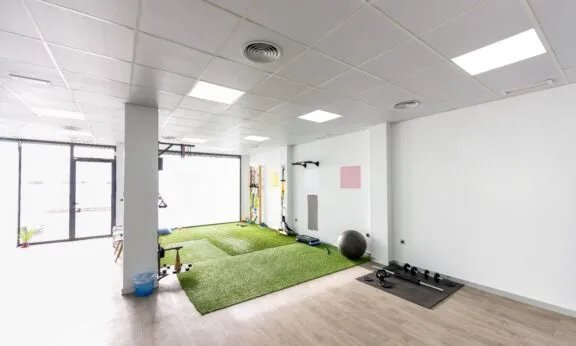
Therapy works best in a calm, private setting. Quiet rooms, open green space and an unhurried environment make it easier to reflect, focus and do the real work of change.



Living with it vs. treating it
Left unexamined, unhelpful thought patterns quietly run your life — shaping how you feel, react and cope. CBT hands the controls back to you. This is the difference the skills make.
- Automatic negative thoughts feel like simple facts
- Emotions feel like they come from nowhere
- The same unhelpful reactions repeat on loop
- Problems feel overwhelming and outside your control
- Coping means avoiding, numbing or bottling up
- You catch unhelpful thoughts before they take over
- You understand what drives your emotions
- You have practical tools to respond differently
- Problems feel manageable and broken into steps
- You cope in healthier, more effective ways
CBT apps & self-help vs. a qualified CBT therapist
Self-help books and apps have their place, but for real, lasting change — especially with a diagnosable condition — a trained therapist makes the difference. Here is why.
Qualified CBT therapists
Recovery stories, in their own words
Some journeys are best heard from the people who lived them. Real stories from people whose lives changed through therapy at ZorbaCare.
After losing his wife suddenly, he struggled with alcohol addiction as a way to cope with grief. But over time, he chose to face his pain, seek support, and rebuild his life.
How does a normal working person end up homeless addicted to drugs. That is what happened to me.
I have lost my love, my job, my family, everything because of my addiction. I thought I would never heal, but now i am more than a year sober.
Started in college as a fun activity from beer to regular frequency drinking. From a life that i loved to out of control drinking.
Starting CBT is simpler than you think
You do not need a diagnosis or a crisis to benefit from CBT. From your first call, the process is clear, confidential and judgement-free — in Mumbai, Pune, or anywhere in India.
One confidential call
Tell us what you are struggling with. We listen without judgement and explain how CBT could help — with no pressure.
Assessment & goal-setting
Your therapist understands what you want to work on and sets clear goals with you — so CBT is focused from the first session.
We arrange everything
Admission is confirmed and the whole journey is arranged door to door — travel, timing and settling in, all handled for you.
Treatment begins
Your care team takes over from the moment you arrive — with family kept informed and involved throughout.
If there is any risk to life, act now. For thoughts of self-harm or suicide, call Tele-MANAS on 14416 (24×7) or reach us directly — please do not wait.
CBT delivered by qualified therapists
Your CBT is delivered by experienced clinical psychologists and therapists, overseen by consultant psychiatrists — the training and skill that make CBT genuinely effective.


Trusted by families across India
Real words from people who completed the programme with ZorbaCare. More than 250 five-star reviews on Google.
Our family is deeply grateful to ZorbaCare for the care and support they provided throughout our loved one’s recovery. The team was compassionate, professional, and always approachable. Dr. Sayantani Mukherjee ensured that every stage of treatment was clearly explained. Recovery coaches Sandy and Mel provided constant motivation, while psychologist Shamika helped address the emotional challenges behind the addiction. The positive changes have been remarkable.
Recovery is never easy, but my four months at Zorba gave me a strong foundation for a healthier and more positive future. I am grateful for the guidance, support, and encouragement I received throughout my stay. I would highly recommend Zorba to anyone seeking professional help for addiction recovery. Thank you, Zorba, for helping me start a new chapter in my life. 🙏
Zorbacare truly changed my life. The care, support, and guidance I received throughout my recovery journey were exceptional. The staff is compassionate, professional, and genuinely committed to helping people rebuild their lives. I am grateful for the positive impact they have had on me and my family. Thank you, Zorbacare, for giving me a new direction and a fresh start.
It has been 17 months now, i have been sober because of them and they still take regular updates and check ins. Can’t thank them enough specially Sandeep sir. They have been there for me in ways i couldn’t believe. I stayed there for 3 months and still being a part of AA and their aftercare program. They have become a family now.
Where we use CBT
CBT is central to how we treat many conditions. Explore the areas where it makes the biggest difference — and the other therapies we combine it with.
Anxiety & Panic
CBT is the gold-standard treatment for anxiety and panic — retraining the fear response.
Learn more → ConditionTrauma & PTSD
Unresolved trauma often underlies depression. We treat the root, not just the symptom.
Learn more → ConditionBipolar Disorder
CBT adapted for bipolar builds the relapse-prevention skills that protect stability.
Learn more → ProgrammeAddiction Recovery
CBT is central to addiction recovery — identifying triggers and preventing relapse.
Learn more →The programmes behind your recovery
Depression is treated within our wider clinical programmes. Explore the levels of care that support it.
Residential Care
Immersive, structured treatment in a calm setting — ideal for moderate to severe depression.
Learn more → Level of CareDual Diagnosis
Integrated treatment for addiction alongside depression, anxiety or trauma.
Learn more → Continuing CareAftercare & Alumni
Relapse prevention and lifelong community support after the programme ends.
Learn more → SupportFamily Programme
Structured therapy and guidance so families heal alongside their loved one.
Learn more →Common questions about CBT
Honest answers to what people most often ask us. Anything else — just reach out.
CBT — Cognitive Behavioural Therapy — is a structured, practical form of talk therapy based on a simple idea: your thoughts, feelings and behaviours are connected. When you interpret a situation negatively, it drives difficult emotions and unhelpful actions, which then reinforce the original thought. CBT works by helping you notice those automatic thoughts, test them against reality, and replace them with more balanced ones — changing how you feel and act. It is goal-focused, time-limited, and among the most researched, effective therapies in the world.
CBT is designed to be short-term. Many people see meaningful improvement within around 8 to 20 sessions, though the exact number depends on the condition and its severity — simpler issues may need fewer, complex or long-standing ones more. Unlike open-ended therapy that can run for years, CBT has a clear structure and endpoint. Your therapist will give you a realistic estimate early on, and review progress with you along the way.
CBT is remarkably versatile. It is a first-line, evidence-based treatment for depression, anxiety and panic disorders, OCD, PTSD and trauma, insomnia, phobias, and stress and anger problems. It is also central to addiction recovery and relapse prevention. Beyond diagnosable conditions, many people use CBT simply to manage everyday stress, build confidence, or change unhelpful patterns. If a problem is driven by how you think and behave, CBT can usually help.
It is not either/or. For many conditions like anxiety and mild-to-moderate depression, CBT alone works very well — and unlike medication, it has no side effects and its benefits last after treatment ends, which helps prevent relapse. For more severe conditions, the combination of CBT and medication often works best. Medication can ease symptoms enough to engage in therapy; CBT provides the lasting skills. A psychiatrist and therapist will recommend what fits your situation, and explain why.
Yes — CBT is one of the most extensively studied and proven therapies there is, backed by hundreds of trials. It does ask something of you: it is active, involves practising skills between sessions, and can feel challenging when you first face difficult thoughts or situations. But that effort is exactly why it works so well and lasts. Most people find it empowering rather than draining, because they leave with real tools they can use for life. If you are ever in crisis, call Tele-MANAS on 14416, any time.
CBT is usually charged per session, which makes it one of the more affordable and time-limited forms of therapy — because it is short-term, the total cost is often lower than open-ended options. We offer CBT in Mumbai and Pune, across India, and as part of residential care, with sessions available in person and online. We give a clear breakdown of costs up front, with no hidden charges. The best first step is a confidential call.
Completely. Confidentiality is central to how we operate, from the first call through admission and aftercare. For many families, that anonymity is the main reason they choose to travel for treatment.
CBT & mental health care across India
Our mental health and rehabilitation programmes serve every major Indian city. Wherever you are, admission and travel are fully coordinated for you.
Sources & A Note On Safety
- Beck Institute for Cognitive Behavior Therapy; Hofmann SG et al., The Efficacy of Cognitive Behavioral Therapy: A Review of Meta-analyses; Indian Journal of Psychiatry, CBT for depression.
- Gururaj G, et al. National Mental Health Survey of India, 2015–16. National Institute of Mental Health and Neurosciences (NIMHANS), Bengaluru.
- World Health Organization. National Mental Health Survey & NDDTC-AIIMS, India.
This page is for general information and is not a substitute for professional medical advice, diagnosis or treatment. If you think CBT could help you, speak with a qualified therapist — you do not need a diagnosis to benefit. In a crisis, call Tele-MANAS on 14416 (24×7, India).