
Rational Emotive Behaviour Therapy (REBT) in India.
Rational Emotive Behaviour Therapy — REBT — is the original cognitive therapy, developed by Dr. Albert Ellis in 1955. It rests on a powerful idea: it is not events that disturb us, but the rigid, irrational beliefs we hold about them. Change those beliefs and you change how you feel and act. Using its famous ABC model, REBT helps you spot the demands and self-judgements driving your distress, dispute them, and replace them with healthier, more flexible thinking. ZorbaCare provides structured REBT in Mumbai, Pune and across India — delivered by qualified therapists, as part of complete mental health and addiction care.

How REBT works: the ABC model
REBT is built around a simple, memorable framework called the ABC model. An Activating event happens (a setback, a rejection, a craving). We then hold a Belief about it — and it is this belief, not the event, that creates the emotional and behavioural Consequence. Two people can face the same event and feel completely differently, because their beliefs differ. When the belief is rigid and irrational (“I must not fail,” “I can’t stand this”), the consequence is unhealthy distress. REBT works by adding a D and an E: we Dispute the irrational belief, and arrive at an Effective new one.
What makes REBT distinctive is its focus on a small number of core irrational beliefs that sit beneath most emotional suffering — usually rigid demands (“musts” and “shoulds”) we place on ourselves, other people and the world. Ellis called this “musturbatory” thinking. REBT is direct and active: your therapist will warmly but firmly challenge these demands, help you see they are neither true nor helpful, and coach you toward flexible preferences instead (“I would strongly prefer to succeed” rather than “I must”).
At the heart of REBT is one of its most freeing ideas: unconditional self-acceptance. Rather than rating yourself as a “success” or a “failure,” you learn to accept yourself as a fallible human being who does not need to be perfect to be worthy. This is especially powerful in recovery, where shame and self-judgement fuel relapse. At ZorbaCare, REBT is part of how we treat both mental health conditions and addiction, delivered by qualified therapists in Mumbai, Pune and across India.

What REBT can help you with
REBT is remarkably versatile — wherever rigid beliefs, self-judgement and low frustration-tolerance drive distress, it helps. These are the areas we use it for most.
Depression
REBT tackles the harsh self-judgements behind depression — replacing “I am worthless” with genuine, unconditional self-acceptance.
Anxiety & panic
REBT dismantles the “what if” catastrophising behind anxiety and panic — challenging the demand for certainty and control.
Anger & frustration
REBT is especially strong with anger and low frustration-tolerance — softening the rigid demands (“people must treat me fairly”) that fuel resentment and conflict.
Guilt & shame
REBT is powerful against the crippling guilt and shame that follow trauma and addiction — separating “I did a bad thing” from “I am bad.”
Addiction & relapse
REBT strengthens addiction recovery — building the frustration-tolerance to sit with cravings and the self-acceptance that breaks the shame-relapse loop.
Stress & self-esteem
REBT also helps with everyday stress, procrastination, performance anxiety and low self-esteem — giving you a clear, portable framework for staying rational under pressure.
What actually happens in REBT
REBT follows the ABCDE model — a clear, teachable process you can use for yourself long after therapy ends. This is how it works.
Find the belief
You and your therapist identify the Activating event and, crucially, the Belief you hold about it — getting past the surface story to the rigid demand or self-judgement underneath.
See the consequence
You connect that belief to its emotional and behavioural Consequence — seeing clearly how a “must” or “can’t stand it” belief, not the event itself, is producing the distress.
Dispute the belief
You actively Dispute the irrational belief — asking “Is it true? Is it logical? Is it helpful?” Your therapist challenges it directly but warmly, until its grip starts to loosen.
Effective new belief
You replace the demand with a flexible Effective belief — a preference rather than a must — and practise it with homework, until rational thinking becomes your natural default.
REBT is active and empowering. Your therapist is direct — challenging beliefs rather than simply listening — but always with warmth and respect. The goal is to make you your own therapist.
See where recovery happens
A private residential estate in the Sahyadri hills — the environment is part of the treatment, not a backdrop to it.
The irrational beliefs REBT helps you break
Albert Ellis found that most emotional suffering traces back to a few rigid, irrational beliefs — usually absolute “musts.” REBT teaches you to spot them, dispute them, and hold healthier beliefs instead.
The Three Core “Musts”
- “I must do well” — a rigid demand for success and approval that fuels anxiety and depression.
- “You must treat me well” — a demand on others that breeds anger and resentment.
- “Life must be easy” — a demand on the world that drives low frustration-tolerance.
- “Musturbation” — Ellis’s term for turning strong preferences into absolute demands.
What They Lead To
- Awfulising — “This is the worst thing ever” — blowing setbacks out of proportion.
- “I can’t stand it” — low frustration-tolerance that fuels avoidance and relapse.
- Self-downing — rating your whole self as a failure over one mistake.
- Damning others — condemning people entirely for their behaviour.
How REBT Disputes Them
- Is it true? — where is the evidence that you must, rather than would prefer?
- Is it logical? — does “I want this” really mean “therefore I must have it”?
- Is it helpful? — does holding this belief get you closer to your goals, or further away?
- Prefer, don’t demand — swap the “must” for a flexible, realistic preference.
The core tools of REBT
REBT is a practical toolkit built around disputing irrational beliefs and building emotional resilience. These are the core techniques a qualified REBT therapist uses.
Disputing (the “D”)
The heart of REBT — actively challenging irrational beliefs by testing whether they are true, logical and helpful, until rigid demands give way to flexible preferences.
Rational coping statements
Short, believable phrases you rehearse to replace the old demand — “I’d prefer this, but I don’t need it” — until the healthier belief becomes automatic under pressure.
Unconditional self-acceptance
Learning to accept yourself as a fallible human being — worthy without having to be perfect. This is REBT’s antidote to the shame that fuels depression and relapse.
ABC worksheets & homework
Practical between-session exercises — mapping Activating events, Beliefs and Consequences, then disputing them on paper — that turn insight in the room into change in real life.
Shame-attacking exercises
One of Ellis’s signature techniques — deliberately doing small, harmless things you fear being judged for, to prove that others’ disapproval is uncomfortable, not unbearable.
Building frustration-tolerance
Deliberately practising sitting with discomfort — cravings, boredom, setbacks — without acting on them, so “I can’t stand it” becomes “I can tolerate this.” Vital for recovery.
A calm space to do the work
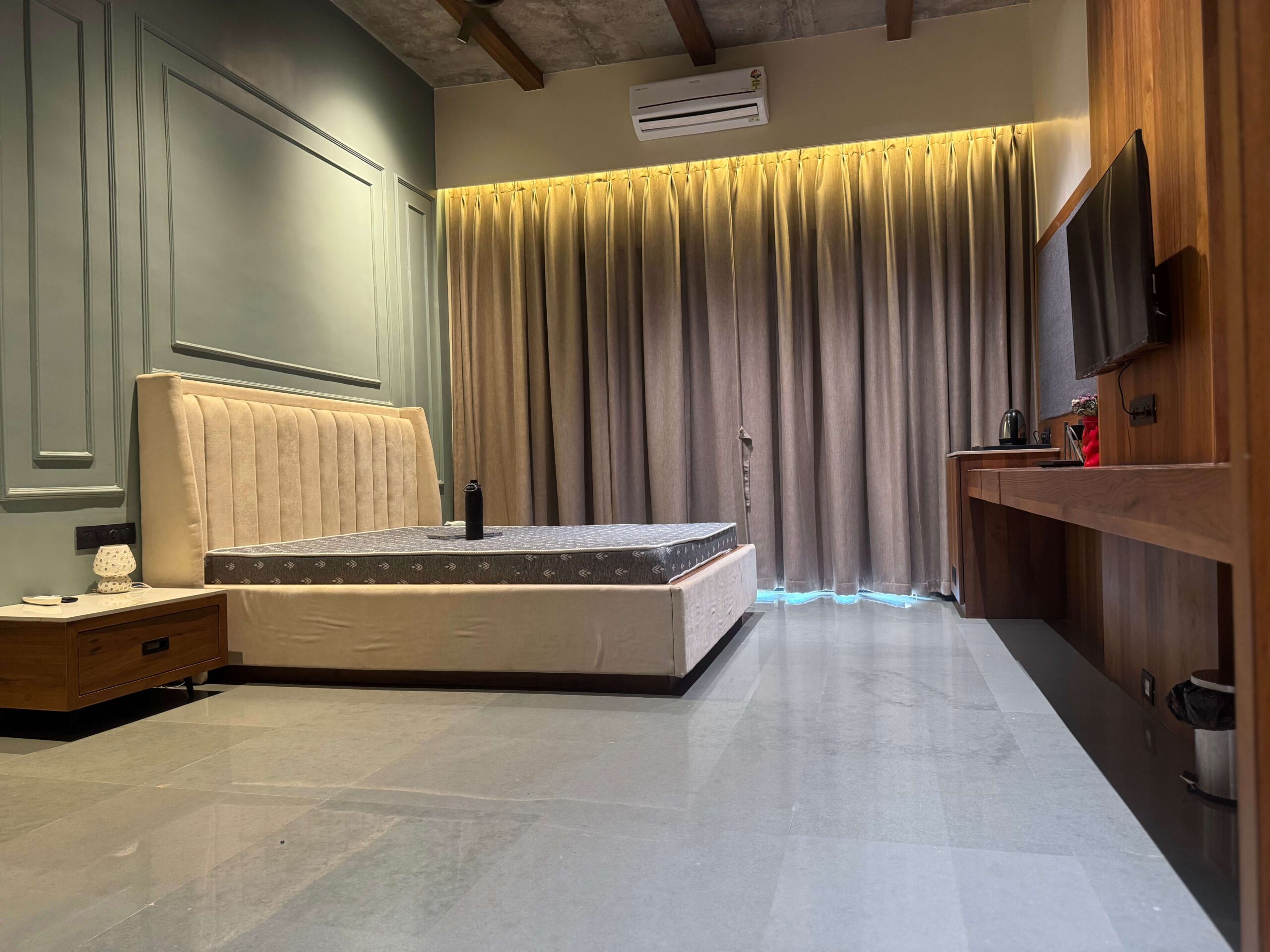
Therapy works best in a calm, private setting. Quiet rooms, open green space and an unhurried environment make it easier to reflect, focus and do the real work of change.





Living with it vs. treating it
Left unexamined, rigid beliefs quietly run your life — shaping how you feel, react and cope. REBT hands the controls back to you. This is the difference the skills make.
- Rigid “musts” feel like simple truths
- Emotions feel like they come from nowhere
- The same unhelpful reactions repeat on loop
- Problems feel overwhelming and outside your control
- Coping means avoiding, numbing or bottling up
- You catch rigid demands and turn them into preferences
- You understand what drives your emotions
- You have practical tools to respond differently
- Problems feel manageable and broken into steps
- You cope in healthier, more effective ways
REBT self-help vs. a qualified REBT therapist
Self-help books and apps have their place, but for real, lasting change — especially with a diagnosable condition — a trained therapist makes the difference. Here is why.
Qualified REBT therapists
Recovery stories, in their own words
Some journeys are best heard from the people who lived them. Real stories from people whose lives changed through therapy at ZorbaCare.
After losing his wife suddenly, he struggled with alcohol addiction as a way to cope with grief. But over time, he chose to face his pain, seek support, and rebuild his life.
How does a normal working person end up homeless addicted to drugs. That is what happened to me.
I have lost my love, my job, my family, everything because of my addiction. I thought I would never heal, but now i am more than a year sober.
Started in college as a fun activity from beer to regular frequency drinking. From a life that i loved to out of control drinking.
Starting REBT is simpler than you think
You do not need a diagnosis or a crisis to benefit from REBT. From your first call, the process is clear, confidential and judgement-free — in Mumbai, Pune, or anywhere in India.
One confidential call
Tell us what you are struggling with. We listen without judgement and explain how REBT could help — with no pressure.
Assessment & goal-setting
Your therapist understands what you want to work on and sets clear goals with you — so REBT is focused from the first session.
We arrange everything
Admission is confirmed and the whole journey is arranged door to door — travel, timing and settling in, all handled for you.
Treatment begins
Your care team takes over from the moment you arrive — with family kept informed and involved throughout.
If there is any risk to life, act now. For thoughts of self-harm or suicide, call Tele-MANAS on 14416 (24×7) or reach us directly — please do not wait.
REBT delivered by qualified therapists
Your REBT is delivered by experienced clinical psychologists and therapists, overseen by consultant psychiatrists — the training and skill that make REBT genuinely effective.




Trusted by families across India
Real words from people who completed the programme with ZorbaCare. More than 250 five-star reviews on Google.
Our family is deeply grateful to ZorbaCare for the care and support they provided throughout our loved one’s recovery. The team was compassionate, professional, and always approachable. Dr. Sayantani Mukherjee ensured that every stage of treatment was clearly explained. Recovery coaches Sandy and Mel provided constant motivation, while psychologist Shamika helped address the emotional challenges behind the addiction. The positive changes have been remarkable.
Recovery is never easy, but my four months at Zorba gave me a strong foundation for a healthier and more positive future. I am grateful for the guidance, support, and encouragement I received throughout my stay. I would highly recommend Zorba to anyone seeking professional help for addiction recovery. Thank you, Zorba, for helping me start a new chapter in my life. 🙏
Zorbacare truly changed my life. The care, support, and guidance I received throughout my recovery journey were exceptional. The staff is compassionate, professional, and genuinely committed to helping people rebuild their lives. I am grateful for the positive impact they have had on me and my family. Thank you, Zorbacare, for giving me a new direction and a fresh start.
It has been 17 months now, i have been sober because of them and they still take regular updates and check ins. Can’t thank them enough specially Sandeep sir. They have been there for me in ways i couldn’t believe. I stayed there for 3 months and still being a part of AA and their aftercare program. They have become a family now.
Where we use REBT
REBT is part of how we treat many conditions. Explore the areas where it makes the biggest difference — and the other therapies we combine it with.
Anxiety & Panic
REBT challenges the demand for certainty that drives anxiety and panic.
Learn more → ConditionTrauma & PTSD
Unresolved trauma often underlies depression. We treat the root, not just the symptom.
Learn more → ConditionBipolar Disorder
REBT builds the rational-thinking skills that help protect stability.
Learn more → ProgrammeDual Diagnosis
REBT strengthens recovery — building frustration-tolerance and self-acceptance.
Learn more →The programmes behind your recovery
Depression is treated within our wider clinical programmes. Explore the levels of care that support it.
Residential Care
Immersive, structured treatment in a calm setting — ideal for moderate to severe depression.
Learn more → Level of CareDual Diagnosis
Integrated treatment for addiction alongside depression, anxiety or trauma.
Learn more → Continuing CareAftercare & Alumni
Relapse prevention and lifelong community support after the programme ends.
Learn more → SupportFamily Programme
Structured therapy and guidance so families heal alongside their loved one.
Learn more →Common questions about REBT
Honest answers to what people most often ask us. Anything else — just reach out.
REBT — Rational Emotive Behaviour Therapy — is the original form of cognitive therapy, developed by Dr. Albert Ellis in 1955. It is built on the insight that it is not events that disturb us, but our beliefs about them. Using the ABC model — Activating event, Belief, Consequence — REBT helps you find the rigid, irrational beliefs behind your distress (usually absolute “musts”), dispute them, and replace them with flexible, rational preferences. It is direct, practical and time-limited, and it teaches skills you keep for life.
REBT is actually the forerunner of CBT — Ellis developed it years before CBT emerged, and CBT grew out of its ideas. Both work on the link between thoughts and feelings, but REBT goes deeper to the core philosophical beliefs beneath a problem, especially rigid demands (“musts”) and self-rating. REBT is more direct and confrontational (warmly so), places strong emphasis on unconditional self-acceptance, and focuses on building frustration-tolerance. In practice, our therapists often blend both — choosing what best fits you.
REBT is versatile and effective for depression, anxiety and panic, anger and frustration problems, guilt and shame, low self-esteem, procrastination and performance anxiety. It is especially valuable in addiction recovery, where low frustration-tolerance and self-judgement fuel relapse. Because it targets the core beliefs beneath many problems at once, many people find it produces broad, lasting change. If your distress is driven by rigid demands on yourself, others or the world, REBT can help.
REBT is direct — your therapist will actively challenge beliefs rather than simply listen — but it is never harsh or unkind. A good REBT therapist disputes the belief, never the person, and does so with warmth, respect and often humour. In fact, the whole philosophy is built on unconditional acceptance: you are always treated as a worthy, fallible human being. Most people find this directness refreshing and empowering — it gives them something concrete to work with, rather than going round in circles.
Yes — REBT is well-researched and has decades of evidence behind it. It does ask something of you: it is active, involves practising disputing and homework between sessions, and can feel challenging when you first question beliefs you have held for years. But that effort is exactly why it works and lasts. Most people find it empowering, because they leave with a clear, portable framework they can apply to any future setback. If you are ever in crisis, call Tele-MANAS on 14416, any time.
REBT is usually charged per session, which makes it one of the more affordable and time-limited forms of therapy — because it is short-term, the total cost is often lower than open-ended options. We offer REBT in Mumbai and Pune, across India, and as part of residential care, with sessions available in person and online. We give a clear breakdown of costs up front, with no hidden charges. The best first step is a confidential call.
Completely. Confidentiality is central to how we operate, from the first call through admission and aftercare. For many families, that anonymity is the main reason they choose to travel for treatment.
REBT & mental health care across India
Our mental health and rehabilitation programmes serve every major Indian city. Wherever you are, admission and travel are fully coordinated for you.
Sources & A Note On Safety
- Albert Ellis Institute; Ellis A, Reason and Emotion in Psychotherapy; David D et al., A Synopsis of Rational-Emotive Behavior Therapy, Journal of Cognitive Psychotherapy; Indian Journal of Psychiatry.
- Gururaj G, et al. National Mental Health Survey of India, 2015–16. National Institute of Mental Health and Neurosciences (NIMHANS), Bengaluru.
- World Health Organization. National Mental Health Survey & NDDTC-AIIMS, India.
This page is for general information and is not a substitute for professional medical advice, diagnosis or treatment. If you think REBT could help you, speak with a qualified therapist — you do not need a diagnosis to benefit. In a crisis, call Tele-MANAS on 14416 (24×7, India).