
The Dual Diagnosis Programme.
Our dual diagnosis programme treats addiction and mental illness together — because when depression, anxiety or trauma sit beneath a substance problem, treating one without the other almost always fails. Delivered within one of the most trusted rehabilitation centres in India, it brings psychiatric care and addiction treatment under a single integrated plan, led by a consultant psychiatrist. For anyone who has relapsed again and again, this is often the missing piece.

When addiction and mental illness feed each other
A dual diagnosis — also called a co-occurring disorder — is when a substance addiction exists alongside a mental health condition such as depression, anxiety, bipolar disorder, PTSD or unresolved trauma. The two are rarely separate problems. One drives the other in a loop: people drink or use to quiet the symptoms, and the substance in turn deepens the illness.
This is why so many people relapse after treatment that only addressed the substance. Rehab that ignores the depression underneath, or psychiatry that ignores the drinking, each leaves half the problem intact. Effective drug addiction treatment and alcohol addiction treatment for these cases has to treat both at once.
At ZorbaCare — a leading de-addiction and rehabilitation centre in India — dual diagnosis care is integrated into the full residential programme, led by a consultant psychiatrist. Families searching for the right rehab centre in India, from Bangalore and Mumbai to Delhi, come here for exactly this depth of care.

Signs a dual diagnosis is being missed
Dual diagnosis is easy to overlook — treated as "just addiction" or "just depression." These are the signs both conditions are in play and need treating together.
Relapse despite real effort
Treatment worked for a while, then failed — again. Often the missing piece is an untreated mental health condition pulling the person back.
Using to cope, not to party
When alcohol or drugs are used to manage anxiety, low mood, sleep or painful memories, the substance is treating a symptom — and the cause needs care too.
A prior mental health diagnosis
Depression, anxiety, bipolar disorder, PTSD or ADHD alongside substance use is the textbook picture of dual diagnosis — and needs integrated treatment.
Mood swings when sober
If getting clean brings crushing lows, agitation or panic rather than relief, an underlying condition is surfacing that treatment must address.
Self-medicating trauma
Where substance use traces back to trauma, grief or abuse, the wound underneath has to be treated — or the using tends to return.
Nothing has worked yet
When multiple rehabs or therapists have not held, it is often because the two conditions were treated apart. Integrated care is what changes that.
Two conditions, one coordinated plan
Dual diagnosis fails when care is split between separate teams who never speak. Here, one clinical team treats both conditions in step, from assessment to aftercare.
Dual assessment
A consultant psychiatrist assesses both the addiction and the mental health picture together — because a plan built on half the story treats half the problem. Detox, where needed, is managed under medical supervision.
Integrated treatment
Psychiatric care and addiction therapy run side by side — medication where appropriate, plus CBT, trauma work and group therapy — all coordinated by one team, never working in silos.
Stability & skills
As mood and cravings settle, the focus shifts to coping tools for both conditions, relapse prevention, and structured family therapy so home supports recovery.
Ongoing psychiatric aftercare
Mental health does not end at discharge. A structured aftercare plan keeps both conditions monitored and supported through the vulnerable first year.
One team, one plan. The balance of psychiatric and addiction care is set for each person after assessment — never split across teams that do not talk to each other.
See where recovery happens
A private residential estate in the Sahyadri hills — the environment is part of the treatment, not a backdrop to it.
The mental health conditions behind addiction
Addiction rarely travels alone. These are the co-occurring conditions we most often treat as part of a dual diagnosis plan.
Depression
When drinking or using is a way to cope with persistent low mood, treating the depression is essential to breaking the cycle for good.
Anxiety disorders
Chronic anxiety and panic often drive self-medication. We treat the anxiety directly so the substance is no longer the only relief.
Trauma & PTSD
For substance use rooted in trauma, grief or abuse, trauma-focused therapy addresses the wound underneath, not just the behaviour.
Bipolar disorder
Mood instability and substance use amplify each other. Psychiatric stabilisation and addiction care together are what make recovery possible.
ADHD
Undiagnosed ADHD is a common driver of self-medication. Proper assessment and management remove a powerful, often hidden, trigger.
Stress & burnout
For high-functioning professionals, chronic stress and burnout often sit beneath the drinking. Both are treated as part of the plan.
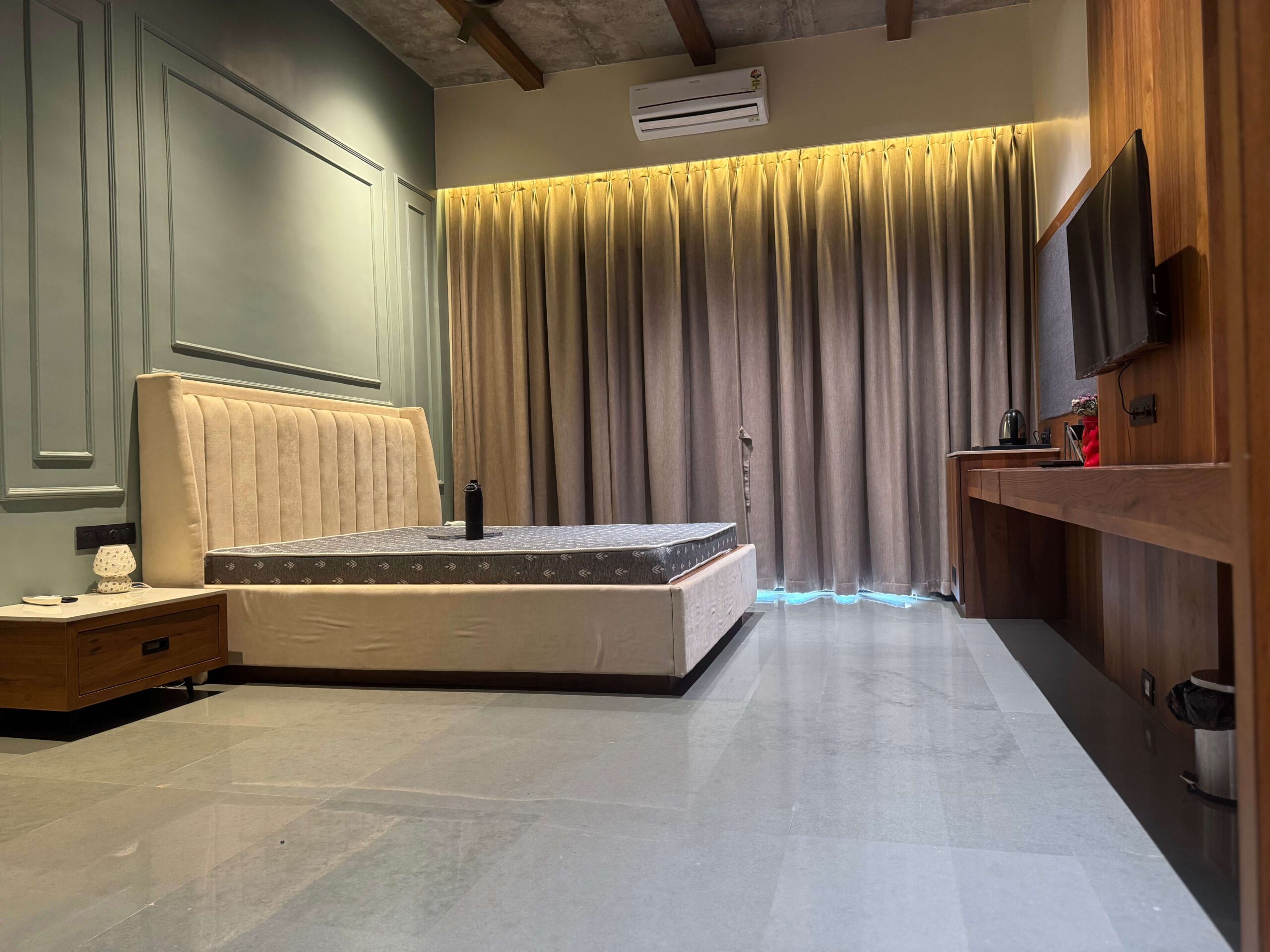
A calm setting for deep work
Healing two conditions at once is demanding. Private rooms and quiet surroundings give people the space and stability that real psychological work requires.




Treating one condition vs. treating both
The same person, two approaches. Treating the addiction alone leaves the engine of relapse running. Treating both is what finally holds.
- The depression or anxiety underneath left untreated
- Sobriety brings the buried symptoms rushing back
- The reason for using is still there on discharge
- Care split across teams who never coordinate
- Relapse follows, often blamed on willpower
- The mental health condition properly diagnosed and treated
- Medication and therapy managed by one psychiatric team
- Coping tools for cravings and for symptoms alike
- The real driver of relapse addressed, not ignored
- Recovery that finally holds — because both halves healed
Standard rehab vs. dual diagnosis care
Many centres treat the addiction and refer the mental health elsewhere — or ignore it. For a co-occurring disorder, these differences decide the outcome.
Truly integrated care
Recovery stories from the programme
Some journeys are best heard from the people who lived them. Real stories from people who found recovery when both conditions were finally treated.
After losing his wife suddenly, he struggled with alcohol addiction as a way to cope with grief. But over time, he chose to face his pain, seek support, and rebuild his life.
How does a normal working person end up homeless addicted to drugs. That is what happened to me.
I have lost my love, my job, my family, everything because of my addiction. I thought I would never heal, but now i am more than a year sober.
Started in college as a fun activity from beer to regular frequency drinking. From a life that i loved to out of control drinking.
How admission works
Reaching out is the hardest part. Admission for dual diagnosis care is handled clearly, discreetly and without pressure — from anywhere in India.
One confidential call
No judgement, no pressure. We listen first and help you understand whether a dual diagnosis may be part of the picture.
Psychiatric assessment
A consultant psychiatrist assesses both the addiction and the mental health picture, then answers every question about treatment, length and cost.
We arrange the journey
Admission is confirmed and the entire journey is arranged door to door — pickup, transfer and timing, all handled for you.
Integrated treatment begins
Care for both conditions starts the day you arrive, with regular updates to family throughout — so you are never left wondering how recovery is progressing.
Same-day admission is often possible. If the situation is urgent, call us and we will tell you honestly what can be arranged today.
Trusted by families across India
Real words from people who completed the programme with ZorbaCare. More than 250 five-star reviews on Google.
Our family is deeply grateful to ZorbaCare for the care and support they provided throughout our loved one’s recovery. The team was compassionate, professional, and always approachable. Dr. Sayantani Mukherjee ensured that every stage of treatment was clearly explained. Recovery coaches Sandy and Mel provided constant motivation, while psychologist Shamika helped address the emotional challenges behind the addiction. The positive changes have been remarkable.
Recovery is never easy, but my four months at Zorba gave me a strong foundation for a healthier and more positive future. I am grateful for the guidance, support, and encouragement I received throughout my stay. I would highly recommend Zorba to anyone seeking professional help for addiction recovery. Thank you, Zorba, for helping me start a new chapter in my life. 🙏
Zorbacare truly changed my life. The care, support, and guidance I received throughout my recovery journey were exceptional. The staff is compassionate, professional, and genuinely committed to helping people rebuild their lives. I am grateful for the positive impact they have had on me and my family. Thank you, Zorbacare, for giving me a new direction and a fresh start.
It has been 17 months now, i have been sober because of them and they still take regular updates and check ins. Can’t thank them enough specially Sandeep sir. They have been there for me in ways i couldn’t believe. I stayed there for 3 months and still being a part of AA and their aftercare program. They have become a family now.
Addictions that often carry a dual diagnosis
Co-occurring mental health conditions cut across every kind of addiction. Explore treatment for the dependencies we most often see them with.
Alcohol Addiction
Medically supervised alcohol detox followed by the full therapeutic programme.
Learn more → TreatmentDrug Addiction
Structured residential care for dependence on prescription and illicit drugs.
Learn more → TreatmentHeroin & Opioids
Safe, supervised opioid withdrawal and long-term relapse prevention.
Learn more → TreatmentBehavioural Addiction
Gambling and gaming dependence — real, treatable conditions treated with therapy.
Learn more →The wider system of care
Dual diagnosis care runs inside the residential programme and connects to every level around it. Explore how the pieces fit together.
Medical Detox
The supervised first phase — safe withdrawal management before the therapeutic programme.
Learn more → Level of CareDual Diagnosis
Integrated treatment for addiction alongside depression, anxiety or trauma.
Learn more → Continuing CareAftercare & Alumni
Relapse prevention and lifelong community support after the programme ends.
Learn more → SupportFamily Programme
Structured therapy and guidance so families heal alongside their loved one.
Learn more →What families ask about dual diagnosis
The questions we hear most before treatment begins. Anything else — just reach out.
A dual diagnosis, or co-occurring disorder, is when a substance addiction exists alongside a mental health condition such as depression, anxiety, bipolar disorder, PTSD or trauma. The two interact — each making the other worse — which is why they must be treated together rather than one at a time.
It varies, and it often does not matter. Sometimes a mental health condition leads to self-medication; sometimes heavy substance use triggers or deepens one. What matters is that by the time someone needs help, both are present and feeding each other — so both are treated together.
Where clinically appropriate, yes. A consultant psychiatrist directs medication as part of the integrated plan and monitors it throughout — always alongside therapy, never as a substitute for it. Every case is assessed individually.
Very often because an underlying mental health condition was never treated. When rehab addresses only the substance, sobriety brings the buried depression, anxiety or trauma to the surface — and the reason for using is still there. Treating both together is what breaks that pattern.
It is integrated into our full residential programme rather than sold separately. Everyone is assessed for co-occurring conditions on admission, and where a dual diagnosis is present, psychiatric care is built into the same plan led by one team.
Yes. Trauma, grief and PTSD are among the most common drivers of substance use. Trauma-focused therapy is part of our dual diagnosis care, addressing the wound underneath rather than just the behaviour on the surface.
Completely. Confidentiality is central to how we operate, from the first call through admission and aftercare. For many families, that anonymity is the main reason they choose to travel for treatment.
Families come to us from across India
Our dual diagnosis and rehabilitation programmes serve every major Indian city. Wherever you are, admission and travel are fully coordinated for you.
Sources & References
- Ambekar A, et al. Magnitude of Substance Use in India 2019. National Drug Dependence Treatment Centre, AIIMS, for the Ministry of Social Justice & Empowerment, Government of India.
- Gururaj G, et al. National Mental Health Survey of India, 2015–16. National Institute of Mental Health and Neurosciences (NIMHANS), Bengaluru.
- World Health Organization. National Mental Health Survey & NDDTC-AIIMS, India.
This page is for general information and is not a substitute for professional medical advice. If you or someone you know needs help with substance dependence, please speak with a qualified clinician.
