
Vagus Nerve Balancing Therapy in Mumbai, India.
When anxiety, trauma, burnout or addiction keep your body stuck in fight-or-flight, talking about it is only half the work — the nervous system itself has to learn to feel safe again. Vagus nerve balancing retrains your body’s natural calm-down system through slow resonance breathing, humming and chanting, carefully guided cold exposure and heart rate variability (HRV) biofeedback. ZorbaCare offers vagus nerve therapy as part of our residential programmes in Mumbai, Pune, Bangalore and across India — measured, medically supervised and completely drug-free.

How vagus nerve balancing works
Your nervous system has two modes. One prepares you to fight or flee — racing heart, shallow breath, tense muscles, a mind scanning for danger. The other, run largely by the vagus nerve, brings you back: the heart slows, breathing deepens, digestion and sleep return, and the brain registers that you are safe. Healthy people move between the two easily. Vagal tone is how well that “return to calm” works.
Chronic stress, anxiety, trauma, depression and addiction wear that system down. The body forgets how to switch off — which is why people in early recovery often describe feeling wired, restless and unable to sleep, and why cravings and panic can feel physical before they feel mental. Because around 80% of vagal fibres carry signals from the body to the brain,[6] changing what the body does — how you breathe, what you hear, the temperature of your skin — is one of the most direct ways to change how you feel.
At ZorbaCare we measure vagal tone through heart rate variability (HRV), then train it with three well-researched pathways: slow resonance breathing with humming and chanting, carefully progressed cold exposure, and HRV biofeedback. It sits alongside psychiatric care and talk therapies such as CBT, DBT and yoga & meditation — treating the body and the mind together.

What vagus nerve balancing can help with
Wherever the body is stuck in survival mode, vagus nerve work helps it settle. We use it most often alongside treatment for these conditions.
Anxiety & panic
Slow breathing and HRV training calm the physical storm of anxiety and panic attacks — giving you a tool that works within minutes.[1]
Trauma & PTSD
For trauma, the body often stays on high alert long after danger has passed. Vagus work helps it learn safety again.
Addiction & cravings
In addiction recovery, it gives a fast, drug-free way to ride out cravings and the restlessness of early sobriety.[4]
Depression
As an add-on to treatment for depression, HRV biofeedback has been shown to reduce depressive symptoms.[2]
Sleep problems
A calmer nervous system at night helps with insomnia and broken sleep — one of the most common struggles in early recovery.
Stress & burnout
For high-pressure professionals running on adrenaline, it rebuilds the ability to switch off — and makes that ability measurable.
What actually happens in vagus nerve balancing
It is structured, measured and built up gradually within your residential programme — never a one-off session or a wellness trend.
Screening & baseline HRV
A medical check confirms which practices are safe for you, and a short HRV reading gives a clear baseline of how your nervous system is coping today.
Breath & sound, every day
Guided resonance breathing, long slow exhales, humming and chanting — short daily sessions that steadily strengthen the vagal “brake”.
Guided cold exposure
Where it is medically suitable, gentle cool-water practices on the face and body, increased slowly and always supervised — never forced, never extreme.
HRV biofeedback & a home routine
You watch your heart rhythm respond in real time, learn your own calming rhythm, and leave with a 10–15 minute daily routine that needs no equipment.
Measured, not guessed. Your HRV is tracked through treatment, so you and your clinical team can see your nervous system becoming steadier — not just hope it is.
See where recovery happens
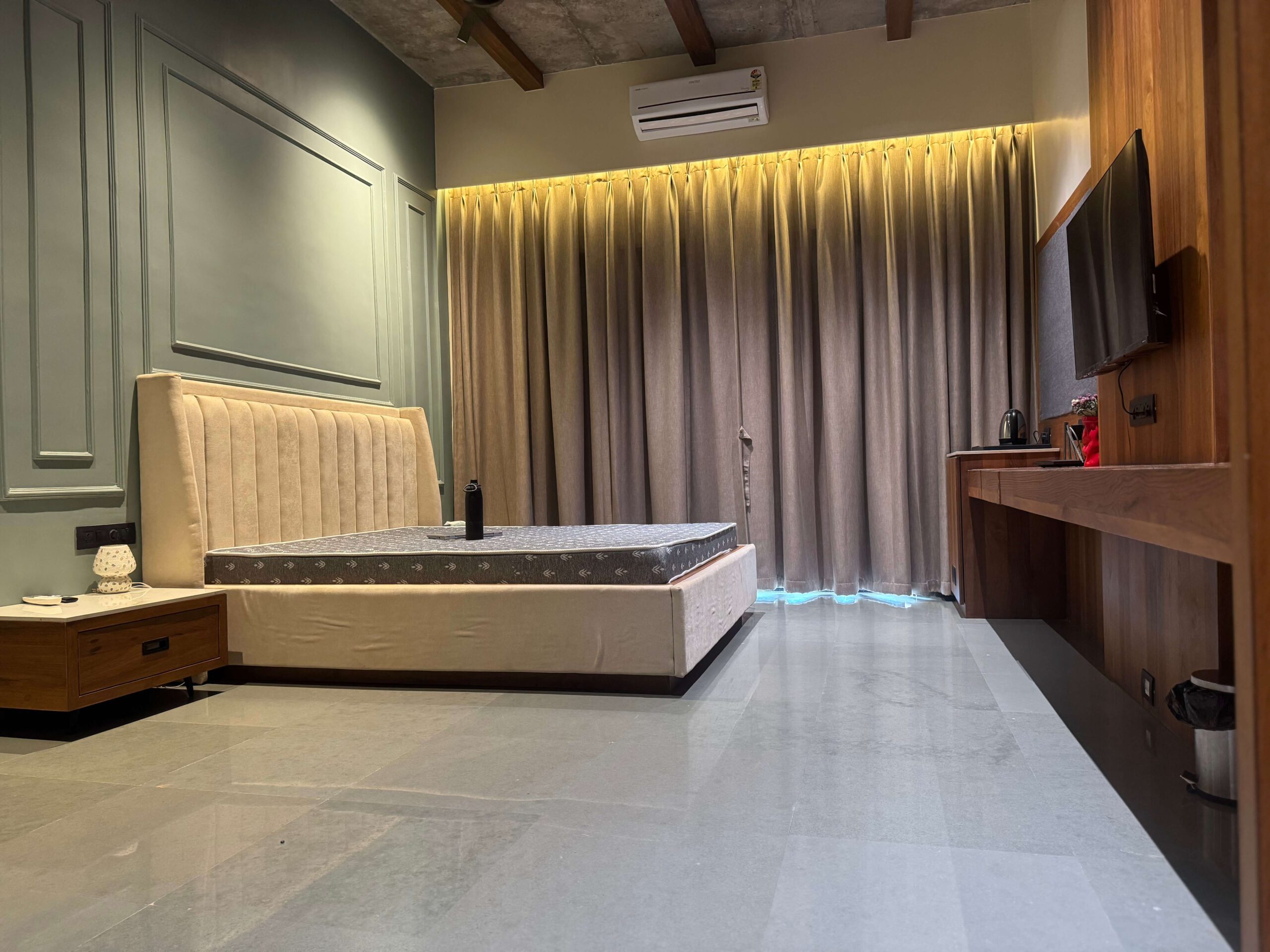
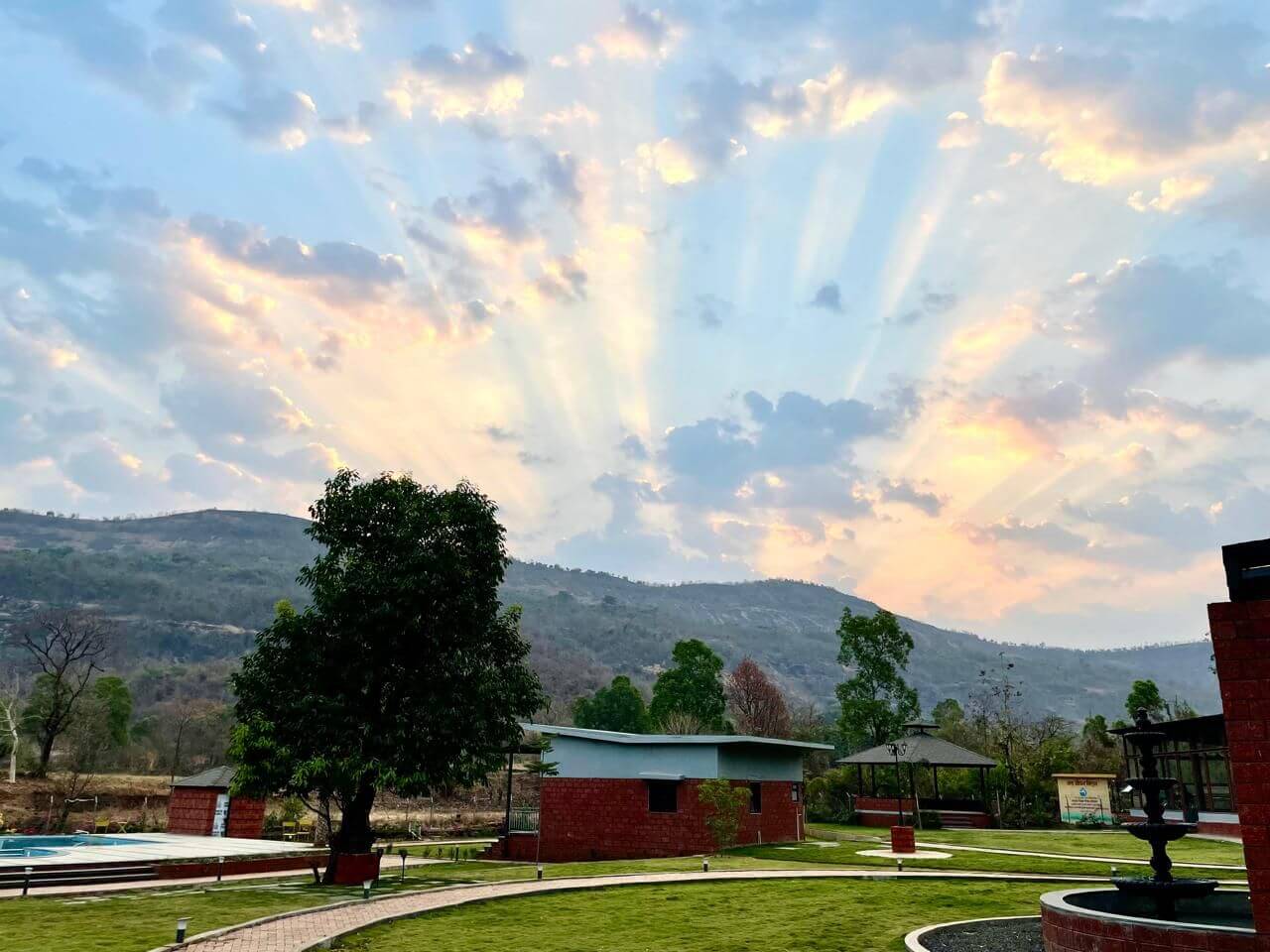
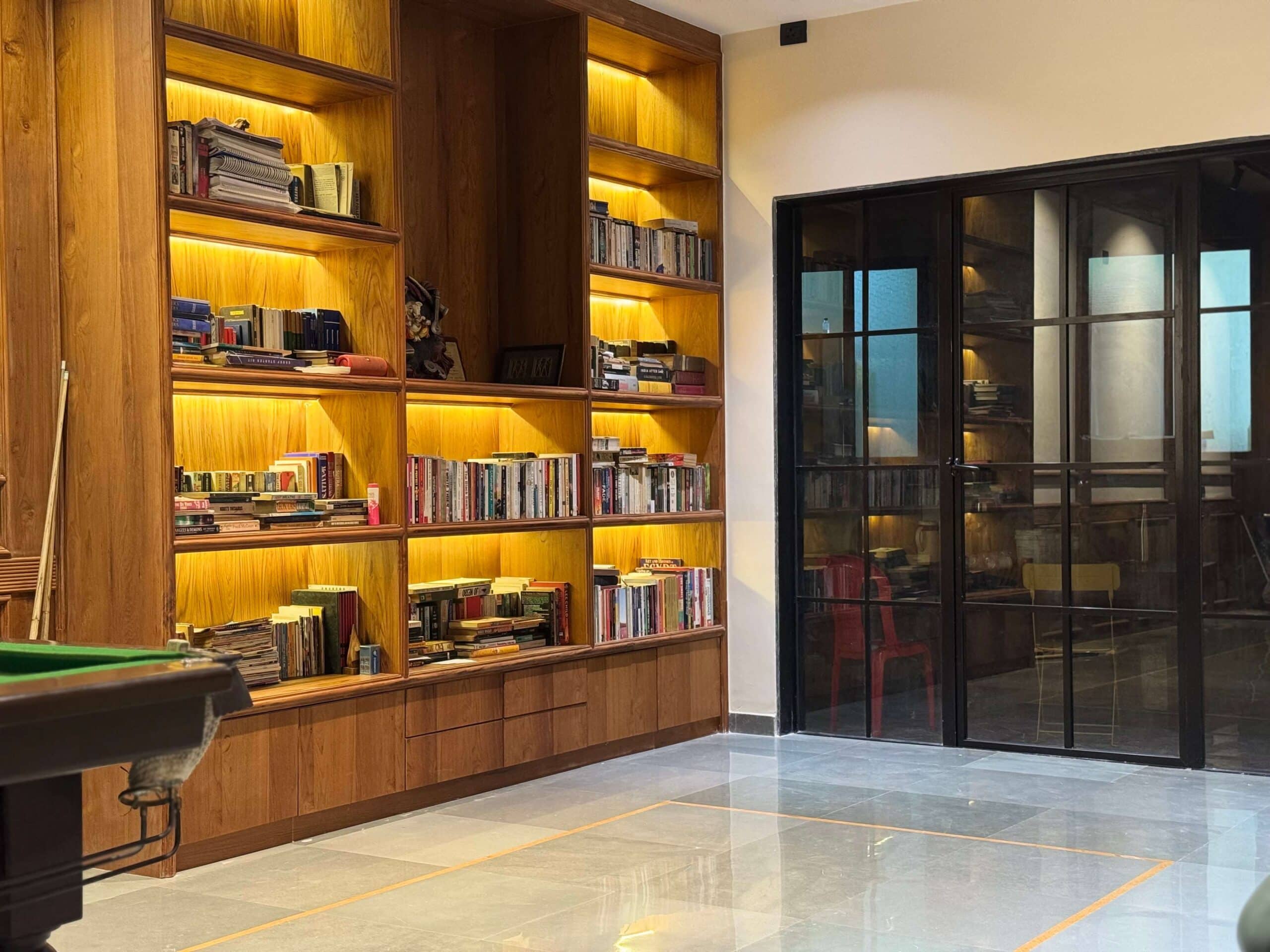
Private residential estates in Mumbai and Bangalore — calm, green and quiet. Here, the environment is part of the treatment, not a backdrop to it.
The three ways we train the vagus nerve
Each pathway reaches the vagus nerve in a different way. Together, they rebuild your ability to come back to calm — on your own, whenever you need it.
Breath & Sound
- Resonance breathing — around six slow breaths a minute, the rhythm that most boosts heart rate variability.
- Longer exhales — breathing out for longer than you breathe in, which signals the heart to slow.
- Bhramari humming — the gentle humming breath of yoga, which vibrates the throat where the vagus nerve runs.
- Chanting — slow, rhythmic Om chanting that naturally lengthens the out-breath.
Guided Cold Exposure
- The diving reflex — cool water on the face slows the heart through the vagus nerve within seconds.
- Gradual progression — from a cool face splash to short cool showers, increased step by step.
- Medically screened — only where it is safe for your heart, health and stage of recovery.
- Always supervised — calm and controlled — never ice-bath bravado or endurance tests.
HRV Biofeedback
- Live heart-rhythm feedback — a sensor shows how your heart responds to each breath, in real time.
- Finding your rhythm — identifying the breathing pace that calms your nervous system best.
- Tracking progress — HRV readings over weeks show your stress resilience genuinely improving.
- Building confidence — seeing your body calm on screen proves you can do it — anywhere.
Simple tools you’ll use every day
The best part of vagus nerve work is how portable it is. These are the techniques you will learn, practise and take home.
Resonance breathing
Five to ten minutes of slow, even breathing at about six breaths a minute — the foundation of daily practice.[3]
The long exhale
A quick reset for any moment of stress or craving: a short in-breath, a long slow out-breath, repeated for a minute.
Bhramari & Om chanting
Humming and chanting from the yogic tradition that calm the mind and lengthen the breath — ancient practice, modern science.[7]
Cold face splash
Cool water on the face triggers the diving reflex and slows the heart — a fast tool for panic or overwhelm, where medically suitable.[5]
HRV biofeedback sessions
Guided sessions where you see your heart rhythm respond live, and learn the breathing pace that steadies you most.
Your take-home routine
A 10–15 minute daily routine that needs no equipment — reviewed through aftercare so the progress holds.
A calm space to do the work
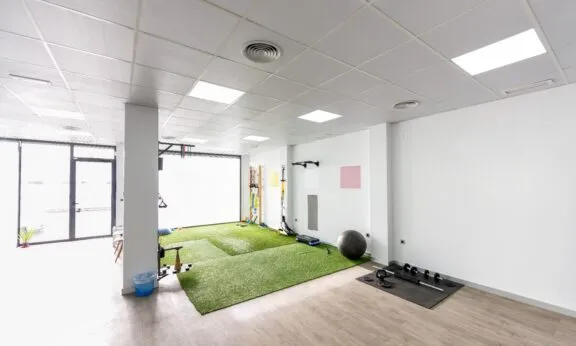
A nervous system cannot settle in chaos. Quiet rooms, open green space and an unhurried rhythm at our estates in Mumbai and Bangalore give the body the safety it needs to slow down.


Living in survival mode vs. a regulated nervous system
When your body is stuck on high alert, everything feels harder. Training the vagus nerve gives you back the ability to switch off. This is the difference it makes.
- A racing heart and shallow breathing, even at rest
- Cravings and panic that feel physical and urgent
- Restless nights and waking up exhausted
- Small stresses trigger big reactions
- No reliable way to calm down without a substance
- You can slow your heart and breath in minutes
- Cravings and anxiety pass without taking over
- Deeper sleep and steadier energy
- You respond to stress instead of reacting to it
- A drug-free tool for calm that stays with you for life
Social-media ice baths vs. clinically guided vagus nerve work
“Vagus nerve hacks” are everywhere online. Some help, some are risky, and none are built around your health or your recovery. Here is the difference.
Clinically guided
Recovery stories, in their own words
Some journeys are best heard from the people who lived them. Real stories from people whose lives changed through therapy at ZorbaCare.
After losing his wife suddenly, he struggled with alcohol addiction as a way to cope with grief. But over time, he chose to face his pain, seek support, and rebuild his life.
How does a normal working person end up homeless addicted to drugs. That is what happened to me.
I have lost my love, my job, my family, everything because of my addiction. I thought I would never heal, but now i am more than a year sober.
Started in college as a fun activity from beer to regular frequency drinking. From a life that i loved to out of control drinking.
Getting started is simpler than you think
You do not need to have it all figured out. From your first call, the process is clear, confidential and judgement-free — whether you are in Mumbai, Pune, Bangalore, anywhere in India or abroad.
One confidential call
Tell us what you are struggling with. We listen without judgement and explain how our programme, including vagus nerve balancing, could help — with no pressure.
Assessment & goal-setting
A psychiatric and medical assessment shapes your personalised plan — including which nervous-system practices are safe and right for you.
We arrange everything
Admission is confirmed and the whole journey is arranged door to door — travel, timing and settling in, all handled for you.
Treatment begins
Your care team takes over from the moment you arrive — with family kept informed and involved throughout.
If there is any risk to life, act now. For thoughts of self-harm or suicide, call Tele-MANAS on 14416 (24×7) or reach us directly — please do not wait.
Guided by a medical and clinical team
Vagus nerve balancing is part of a care plan led by consultant psychiatrists and psychologists — so every practice is medically screened, safely paced and connected to the rest of your treatment.




Trusted by families around the world
Real words from people who completed the programme with ZorbaCare. More than 250 five-star reviews on Google.
Our family is deeply grateful to ZorbaCare for the care and support they provided throughout our loved one’s recovery. The team was compassionate, professional, and always approachable. Dr. Sayantani Mukherjee ensured that every stage of treatment was clearly explained. Recovery coaches Sandy and Mel provided constant motivation, while psychologist Shamika helped address the emotional challenges behind the addiction. The positive changes have been remarkable.
Recovery is never easy, but my four months at Zorba gave me a strong foundation for a healthier and more positive future. I am grateful for the guidance, support, and encouragement I received throughout my stay. I would highly recommend Zorba to anyone seeking professional help for addiction recovery. Thank you, Zorba, for helping me start a new chapter in my life. 🙏
Zorbacare truly changed my life. The care, support, and guidance I received throughout my recovery journey were exceptional. The staff is compassionate, professional, and genuinely committed to helping people rebuild their lives. I am grateful for the positive impact they have had on me and my family. Thank you, Zorbacare, for giving me a new direction and a fresh start.
It has been 17 months now, i have been sober because of them and they still take regular updates and check ins. Can’t thank them enough specially Sandeep sir. They have been there for me in ways i couldn’t believe. I stayed there for 3 months and still being a part of AA and their aftercare program. They have become a family now.
Where vagus nerve balancing helps most
Nervous-system regulation supports treatment across many conditions. Explore the areas where it makes the biggest difference.
Anxiety & Panic
Calm the physical storm of anxiety with tools that work in minutes.
Learn more → ConditionTrauma & PTSD
Help a body stuck on high alert learn that it is safe again.
Learn more → AddictionAlcohol Addiction
Drug-free tools for cravings, restlessness and sleep in early sobriety.
Learn more → ProgrammeDual Diagnosis
Addiction and mental health treated together — body and mind.
Learn more →Therapies we combine it with
Vagus nerve balancing works best alongside talk therapy and holistic practice. Explore the therapies it pairs with most.
Yoga & Meditation
Breath, movement and stillness that deepen vagal tone.
Learn more → TherapyDBT
Distress-tolerance skills that pair naturally with body-based calming.
Learn more → TherapyCBT
Changing the thoughts that keep the stress response switched on.
Learn more → TherapyEMDR Therapy
Processing trauma once the nervous system feels steady enough.
Learn more →Common questions about vagus nerve balancing
Honest answers to what people most often ask us. Anything else — just reach out.
Vagus nerve balancing is a set of practices that strengthen your body’s natural “calm-down” system. The vagus nerve is the main nerve of the parasympathetic nervous system — the part that slows your heart, steadies your breathing and tells your brain you are safe. Chronic stress, anxiety, trauma and addiction keep the body stuck in fight-or-flight. At ZorbaCare in Mumbai and Bangalore, we use slow resonance breathing, humming and chanting, carefully controlled cold exposure and heart rate variability (HRV) biofeedback to retrain that system, so calm becomes something your body can return to on its own.
No. Medical vagus nerve stimulation (VNS) uses an implanted or external electrical device and is a specialist treatment for conditions such as epilepsy and hard-to-treat depression. ZorbaCare does not use implants or electrical stimulation. Our vagus nerve balancing is entirely non-invasive and drug-free — it works through breath, sound, cold and biofeedback, guided by our clinical team.
The strongest evidence is for slow, paced breathing and HRV biofeedback. A meta-analysis of 24 studies found HRV biofeedback produces a large reduction in self-reported stress and anxiety,[1] and a separate review found a meaningful reduction in depressive symptoms.[2] Breathing at around six breaths a minute is known to increase heart rate variability, a marker of healthy vagal tone.[3] Cold water on the face reliably triggers the “diving reflex”, which slows the heart through the vagus nerve.[5] We are honest that this is a complementary therapy: it strengthens psychiatric care and talk therapy, it does not replace them.
It can be a valuable part of addiction recovery. Early recovery is a period of intense stress, poor sleep and strong cravings, and research links low heart rate variability with craving and relapse risk.[4] Vagus nerve practices give people a fast, drug-free way to calm the body when a craving or wave of anxiety hits — a skill they can use for life. At ZorbaCare, it is used alongside medical detox, therapy and relapse-prevention within our residential programme, never instead of them.
Only when it is done properly, which is why we never treat it as a trend. Every client is medically screened first. Cold exposure is not suitable for everyone — for example, people with heart conditions, uncontrolled blood pressure, Raynaud’s or during pregnancy, or in the early days of alcohol or drug withdrawal. Where it is appropriate, it starts gently with cool water on the face or a short cool shower, increases gradually, and is always supervised. Nobody is pushed into ice baths.
Vagus nerve balancing is offered at both of our residential centres: our luxury estate at Khalapur in Mumbai, which also serves families from Pune, and our centre in Bangalore. It is part of our residential programme, and we welcome clients from across India, NRIs and international clients. Travel and admission are arranged for you from wherever you are.
Yes — that is the point. Before discharge, every client leaves with a simple daily routine of breathing, humming and, where suitable, cold exposure that takes 10–15 minutes and needs no equipment. Progress continues to be reviewed through our aftercare programme, so the calm you build in treatment stays with you at home.
Completely. Confidentiality is central to how we operate, from the first call through admission and aftercare. We regularly treat professionals, NRIs and public figures for whom privacy is essential, and every client is treated with dignity — as a person, not a patient.
Vagus nerve therapy in Mumbai, Pune, Bangalore & across India
Offered at our residential centres in Mumbai and Bangalore, for families from every major Indian city, NRIs and clients from around the world. Wherever you are, admission and travel are fully coordinated for you.
Medically reviewed & evidence-based. This page is for general information and is not a substitute for professional medical advice, diagnosis or treatment. Figures are drawn from peer-reviewed research and meta-analyses. Vagus nerve balancing is a complementary therapy delivered within medically supervised treatment; it does not replace psychiatric care or medication. Cold exposure is offered only after medical screening. In a crisis, call Tele-MANAS on 14416 (24×7, India).
View research citations & sources →
Research Citations & A Note On Safety
- [1] Goessl VC, Curtiss JE, Hofmann SG. The effect of heart rate variability biofeedback training on stress and anxiety: a meta-analysis. Psychological Medicine, 2017;47(15):2578–2586 — 24 studies; large reduction in self-reported stress and anxiety.
- [2] Pizzoli SFM, Marzorati C, Gatti D, et al. A meta-analysis on heart rate variability biofeedback and depressive symptoms. Scientific Reports, 2021;11:6650 — HRV biofeedback associated with a reduction in depressive symptoms.
- [3] Lehrer PM, Gevirtz R. Heart rate variability biofeedback: how and why does it work? Frontiers in Psychology, 2014;5:756 — resonance breathing at roughly six breaths per minute maximises heart rate variability.
- [4] Eddie D, Vaschillo E, Vaschillo B, Lehrer P. Heart rate variability biofeedback: theoretical basis, delivery, and its potential for the treatment of substance use disorders. Addiction Research & Theory, 2015;23(4):266–272.
- [5] Godek D, Freeman AM. Physiology, Diving Reflex. StatPearls, NCBI Bookshelf — cold water on the face triggers vagally mediated slowing of the heart.
- [6] Berthoud HR, Neuhuber WL. Functional and chemical anatomy of the afferent vagal system. Autonomic Neuroscience, 2000;85(1–3):1–17 — the large majority (around 80%) of vagal fibres are afferent.
- [7] Weitzberg E, Lundberg JON. Humming greatly increases nasal nitric oxide. American Journal of Respiratory and Critical Care Medicine, 2002;166(2):144–145 — around a 15-fold increase during humming.
This page is for general information and is not a substitute for professional medical advice, diagnosis or treatment. Vagus nerve balancing at ZorbaCare is non-invasive and does not involve implanted or electrical vagus nerve stimulation. Cold exposure is not suitable for everyone and is offered only after medical screening. In a crisis, call Tele-MANAS on 14416 (24×7, India).