
Rehab in India for NRIs: Complete Support for Families in the USA, UK, Europe and Gulf
Whether a loved one in India needs help while you are abroad, or you live overseas and want treatment in India yourself, this guide covers what you can do from a distance, what rehab in India costs, how visas and travel work, and how to choose a centre you can trust.
- Since 2010
- Psychiatrist-led
- Voluntary, never locked
- 2 centres

Which situation are you in?
Almost every NRI enquiry we receive falls into one of two situations. The right next steps are different for each.
My loved one is in India and I'm abroad
A parent, sibling, spouse or child in India needs help, and you are the decision-maker, coordinator and often the payer, from a distance. The challenge is knowing what's really happening, and getting a reluctant person to accept help.
See the 6 steps ↓ Situation BI live abroad and want treatment in India
You, your spouse or your child live in the USA, UK, Europe or the Gulf and are considering rehab in India. The questions are cost, privacy, travel, and finding care that fits your culture and language.
Why NRIs choose India ↓Arranging rehab in India for a loved one, from abroad
This is the most common NRI situation, and the one where families feel most powerless. You aren't. Here is what you can do, step by step, without boarding a plane until you choose to.
Get the real picture
Family at home will often minimise. Ask specific questions rather than "how is he?": how much is being consumed and how often, whether work, money or health have been affected, whether there have been falls, blackouts, missed days or aggression, and whether there is any talk of hopelessness.
Book a remote assessment
The first conversation can happen by phone or video, with you abroad and your family in India on the same call. A good assessment answers three questions: how severe is this, is there an underlying mental health condition, and what level of care is actually needed?
Choose the right level of care
Medical detox where withdrawal is a risk, residential rehabilitation for moderate to severe addiction or repeated relapse, and dual-diagnosis treatment when a mental health condition sits alongside the addiction. Not everyone needs residential rehab, and an honest centre will tell you.
If they refuse, plan an intervention, never force it
Refusal is normal. A professionally guided intervention, planned with the family and with you joining in person or by video, is far more effective than ultimatums over WhatsApp. Under the Mental Healthcare Act, 2017, patients have clear rights around consent and admission.
Stay involved by video, across time zones
Family involvement is one of the strongest predictors of a good outcome, which is why our family recovery programme is built into treatment. Families abroad join sessions by video, with clinical updates scheduled at times that suit you, whether you're in New Jersey, London, Frankfurt or Dubai.
Plan the return home, before discharge
Recovery doesn't end at discharge; that's when the real test begins. A structured aftercare and relapse-prevention plan, agreed before your loved one leaves, is what protects the progress made in treatment.
A warning NRI families need to hear. Some facilities in India offer to "pick up" a reluctant person and admit them against their will. Forced admission damages trust, often violates the law, and rarely produces lasting recovery. Read can you force someone into rehab? and open vs closed rehab in India before you agree to anything.
You live abroad and are considering rehab in India
A growing number of NRIs, and people of Indian origin born abroad, are choosing to come to India for treatment. Not because it's the only option, but because for many it's the better one. Here's why, and when it isn't.
- Privacy and distance from triggersTreatment away from your workplace, social circle and local community. No one at the office needs to know, and the people, places and routines that sustained the addiction are thousands of miles away.
- Cultural and language fitTherapy works best when you don't have to explain your family, your food, your faith or the weight of expectation. Clinicians who understand Indian family dynamics, and work in English and Hindi, change the depth of the work.
- Family can actually take partIf your parents or siblings are in India, they can join family therapy in person, often for the first time.
- CostComparable clinical quality in a premium residential setting, for a fraction of Western prices.
- Time to healLower cost often means you can stay long enough for treatment to work, rather than leaving at day 28 because the money ran out.
When treatment in India is not the right choice
We'd rather lose an admission than give you bad advice. Treatment in India may not be right if:
- You are in active, heavy withdrawal or medically unstable. Do not fly while withdrawing, particularly from alcohol or benzodiazepines. Seek local medical care first; we can advise on timing.
- You are in immediate danger or having thoughts of suicide. Contact local emergency services now.
- Your treatment is court-ordered or tied to a professional licensing board that requires a local, approved provider.
- Your insurance fully covers an excellent local programme you're genuinely willing to attend.
Rehab in India from the USA, UK, Europe and Gulf
Time difference, flights, visas and cost context, for where you live. India is home to a diaspora of more than 3.5 crore (35 million) overseas Indians worldwide.
Rehab in India for families in the USA
The USA is home to around 54 lakh (5.4 million) people of Indian origin, according to India's Ministry of External Affairs, and it is one of the most expensive places on earth to receive residential addiction treatment. Stigma is a real barrier: Asian American adults were 45% less likely than U.S. adults overall to have received mental health treatment in the past year (12.5% compared with 22.9%), according to SAMHSA's 2024 National Survey on Drug Use and Health.
- Time differenceIndia is 9.5 to 13.5 hours ahead, depending on coast and daylight saving. Family calls are scheduled in your evening, not ours.
- FlightsNonstop and one-stop flights connect major US cities to both Mumbai and Bangalore, the two cities nearest our centres.
- VisaUS passport holders need an Indian e-Medical visa (and accompanying family an e-Medical Attendant visa) unless they hold an OCI card.
- Cost contextUS plans rarely cover overseas residential treatment. Many families find that paying privately in India costs less than their US deductible plus out-of-network charges.
Rehab in India for families in the UK
Around 18.6 lakh (1.86 million) people of Indian origin live in the UK. Publicly funded residential rehab is limited and access can involve long waits, while private UK rehab is expensive.
- Time differenceIndia is 4.5 hours ahead in British Summer Time and 5.5 hours ahead in winter, which makes family calls easy.
- FlightsDirect flights from London to Mumbai and Bangalore take roughly 9 to 10 hours.
- VisaBritish passport holders need an Indian e-Medical visa unless they hold an OCI card.
- Cost contextA single month at a mid-range private UK rehab can exceed the entire cost of a longer stay in premium residential care in India.
Rehab in India for families in Europe
Indian families across Europe, in Germany, the Netherlands, France, Ireland and beyond, face the same problem as those in the UK: residential rehab is expensive, waiting lists can be long, and few programmes understand Indian family dynamics.
- Time differenceIndia is 4.5 hours ahead of Central European Time in winter and 3.5 hours ahead in summer, so family calls fit easily into your evening.
- FlightsSeveral major European hubs, including Frankfurt, Paris and Amsterdam, have direct flights to Mumbai and Bangalore.
- VisaEuropean passport holders need an Indian e-Medical visa unless they hold an OCI card. We provide the medical invitation letter.
- Language and cultureTreatment is in English and Hindi, by clinicians who understand Indian families.
Rehab in India for families in the Gulf
The Gulf is home to the largest concentration of NRIs anywhere: around 35 lakh in the UAE, 24 lakh in Saudi Arabia and close to 10 lakh in Kuwait, with large communities in Qatar, Oman and Bahrain. For Gulf families, the issue is rarely cost. It's discretion.
- DiscretionSubstance use carries serious legal consequences across much of the Gulf, and can affect employment and residency, which is why many families prefer to seek help outside the country. Some Gulf states, including the UAE, have provisions for people who come forward voluntarily for treatment, but these are specific, so take local legal advice.
- FlightsFlights from Dubai, Abu Dhabi, Doha or Muscat to Mumbai or Bangalore take around 2.5 to 4 hours.
- VisaMost Gulf NRIs travel on Indian passports and need no visa at all.
- Time differenceJust 1.5 to 2.5 hours, so family can stay in daily contact.
What rehab in India costs vs the USA and UK
Cost shouldn't be the first filter; clinical quality should. But for NRI families, the difference is large enough that it changes what's possible.
| Setting | Typical cost | Notes |
|---|---|---|
| USA: luxury residential rehab | US$30,000–65,000 per month | Leading US centres such as Passages Malibu and The Dunes East Hampton charge around US$64,500–65,000 for 30 days |
| USA: lower-end residential | Around US$5,000 or less | Often limited clinical depth and shared rooms |
| UK: private residential rehab | Around £1,500–£3,000 per week | Luxury UK centres can reach £10,000 per week |
| ZorbaCare: premium residential care, India | From ₹1.5 lakh | Psychiatrist-led, private residential setting, dual diagnosis; final cost confirmed in writing after assessment |
US and UK figures are indicative ranges from published sources (see Sources below) and vary by provider, programme and insurance. Always confirm current pricing directly. For a full breakdown, read how much rehab costs in India. A low price in India can mean exactly what a low price means anywhere: understaffed, unlicensed or locked facilities. If you have US or UK insurance, check whether it covers overseas treatment; most plans don't, but it's worth asking.
From your call to our door
Complete support from the first call to aftercare. Here is how it works for families travelling from abroad.
- 1
Confidential call
Call or WhatsApp +91 86695 67929, 24/7. We listen first and answer honestly.
- 2
Video assessment
A clinical assessment by phone or video, with family abroad and in India on the same call.
- 3
Visa letter
For foreign passport holders, we issue the medical invitation letter for the Indian e-Medical visa.
- 4
Flight
Travel timing agreed with the clinical team first, especially if there is any risk of withdrawal.
- 5
Airport pickup
We pick you up from Mumbai or Bangalore airport and bring you directly to the centre.
- 6
Admission
A full psychiatric and psychological assessment, with help arranging accommodation for accompanying family.
- 7
Video family sessions
Family abroad join sessions by video, with clinical updates scheduled in your time zone.
- 8
Aftercare back home
A relapse-prevention and aftercare plan built for life back home, wherever that is.
Rehab in Mumbai and Bangalore, close to international airports
ZorbaCare is a voluntary, psychiatrist-led rehabilitation centre in India that has treated addiction since 2010, with two residential centres.

Sahyadri Hills in Mumbai
Our flagship private estate in the Sahyadri Hills in Mumbai, 90 minutes from South Mumbai on the Mumbai–Pune Expressway. Airport pickup from Mumbai airport, directly to the estate.
Rehab in Mumbai →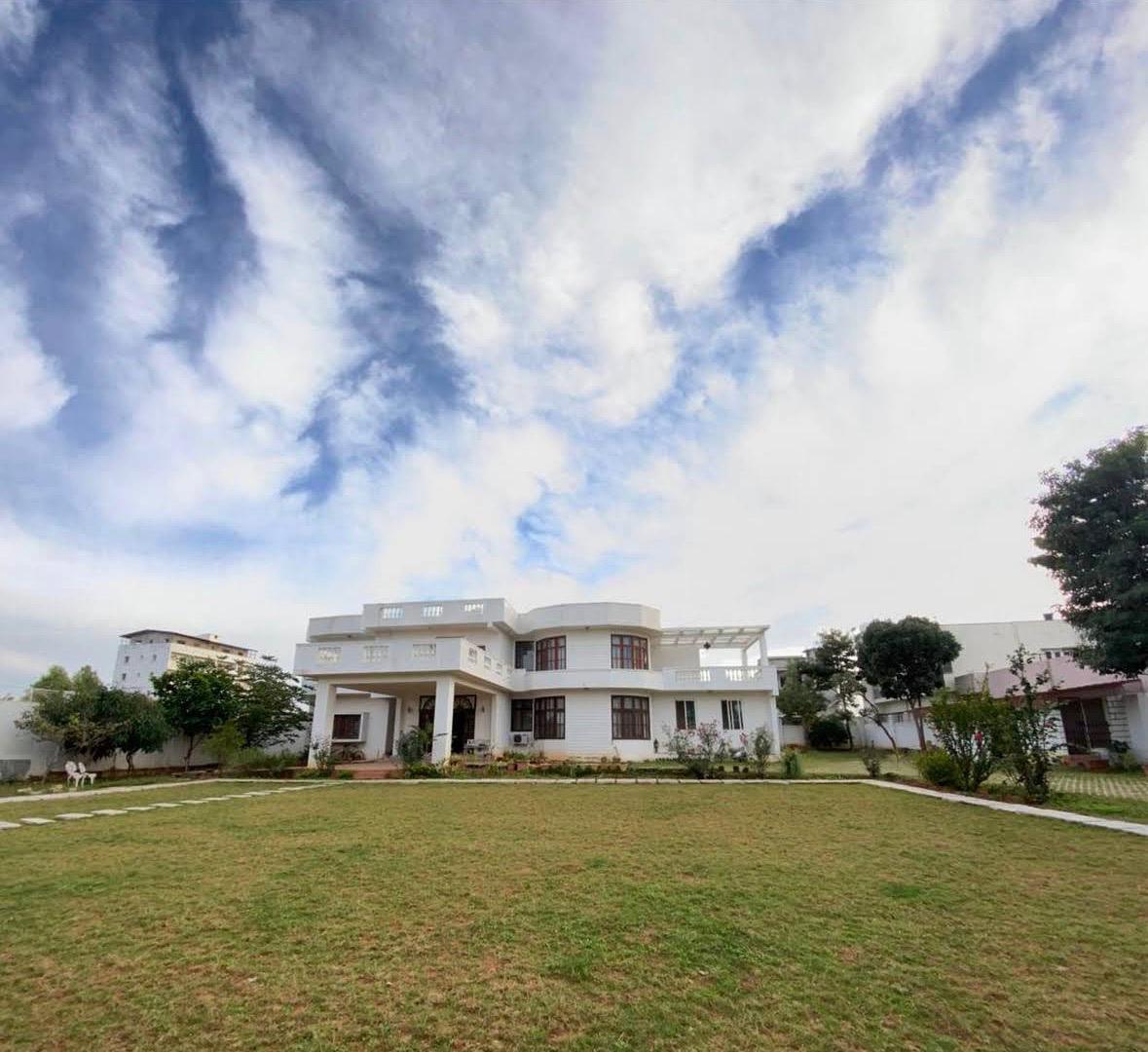
Bangalore
Our residential centre at Sathanur in north Bangalore, near Kempegowda International Airport. Airport pickup from Bangalore airport, directly to the centre.
Rehab in Bangalore →Families in Pune: there is no separate Pune centre. Families from Pune are admitted to our Sahyadri Hills estate on the Mumbai–Pune Expressway. Rehab for families in Pune
Addiction and mental health, treated together
Evidence-based therapy, including CBT, REBT and DBT, built around a diagnosis rather than a template.
Alcohol
Medically supervised detox, therapy and relapse prevention for alcohol dependence.
Alcohol rehab in India →Drugs
Treatment for dependence on opioids, cocaine, cannabis, prescription drugs and more.
Drug rehab in India →Mental health
Depression, anxiety, bipolar disorder, OCD, PTSD and more, with or without addiction.
Mental health care →Other addictions
Gambling and other behavioural addictions, and addiction alongside a mental health condition.
Dual diagnosis →How to choose any rehab in India from abroad
When you can't visit in person, judge a centre on substance, not photographs. Ask every centre these questions, and treat vague answers as an answer.
- Who leads clinical care?Are there qualified psychiatrists and licensed clinical psychologists on the team, not just counsellors and support staff?
- Is admission voluntary?Is the facility open, or locked? Do they offer "pick-up" services for unwilling patients? If yes, walk away.
- Do they treat dual diagnosis?Can they assess and treat depression, anxiety, trauma or bipolar disorder alongside the addiction?
- Which therapies, and why?Look for evidence-based approaches such as CBT, REBT and DBT, matched to diagnosis.
- How will overseas family be involved?How often will you hear from the clinical team, and in your time zone?
- What does aftercare look like?What happens once the patient returns abroad?
- Will they give you the full cost in writing?After assessment, before you commit.
Red flags
- Offers to "pick up" a reluctant person or admit them against their will
- A locked facility rather than open, voluntary care
- No qualified psychiatrist or clinical psychologist leading care
- Won't put the full cost in writing after assessment
- A price so low it suggests an understaffed or unlicensed facility
For a broader view, see our honest list of top rehabilitation centres in India and which addictions are linked to which mental health disorders.
Rehab in India for NRIs: your questions answered
Anything else, just reach out on +91 86695 67929.
Can I arrange rehab in India for a family member while I live abroad?
Yes. Assessment, intervention planning, admission, family sessions and aftercare can all be coordinated remotely. Many NRI families manage the entire process from the USA, UK, Europe or the Gulf and travel to India only when they choose to.
Is rehab in India as good as rehab in the USA or UK?
It depends entirely on the centre. The best Indian centres use the same evidence-based therapies as Western ones — CBT, REBT, DBT and dual-diagnosis care — led by qualified psychiatrists and psychologists. Judge any centre on its clinical team, therapies, voluntary model and aftercare, not its country.
How much does rehab in India cost compared with the USA and UK?
Luxury residential rehab in the USA commonly costs US$30,000–65,000 a month, and private UK rehab typically costs £1,500–£3,000 or more a week. Premium residential care in India costs a fraction of that. At ZorbaCare, residential programmes start from ₹1.5 lakh, with the final cost confirmed in writing after assessment.
Do I need a visa to come to India for treatment?
Indian passport holders and OCI cardholders do not need a visa. Foreign passport holders without OCI, including most US, UK and European citizens, can apply online for an Indian e-Medical visa, and up to two accompanying family members can apply for e-Medical Attendant visas. ZorbaCare provides the medical invitation letter. Always confirm current rules on the official Indian e-Visa portal.
Is treatment confidential? Will my employer or community find out?
At ZorbaCare, confidentiality is protected from the first call through admission and aftercare. Treatment in India also means you are physically away from your workplace and local community, which many NRIs find gives them a level of privacy they couldn't get at home.
What if my loved one in India refuses treatment?
Refusal is common and not the end of the road. A professionally guided intervention, planned with the family and with you joining in person or by video, is far more effective than ultimatums. Avoid any facility that offers to forcibly pick up or lock in a patient — this damages trust and rarely leads to lasting recovery.
Can I travel to India for rehab if I'm still drinking heavily?
Speak to a clinician before you book. Withdrawal from alcohol or sedatives can be medically dangerous, and you should never stop abruptly just before a long flight. Our clinical team can advise on safe timing and whether you need medical stabilisation before travelling.
Where are ZorbaCare's rehab centres in India?
ZorbaCare has two residential rehab centres in India: a flagship estate in the Sahyadri Hills in Mumbai, 90 minutes from South Mumbai, and a residential centre at Sathanur in north Bangalore, near Kempegowda International Airport. Both cities have major international airports with direct flights from the Gulf, the UK and Europe, and good connections from the USA.
Do you offer rehab in Mumbai, Bangalore and Pune for NRI families?
Yes. Our centres are in the Sahyadri Hills in Mumbai and in Bangalore. Families in Pune are admitted to our Sahyadri Hills estate on the Mumbai–Pune Expressway. Whichever city your loved one is in, we coordinate the assessment, travel and admission while you stay involved from abroad.
Do you help with airport pickup, medical visas and family accommodation?
Yes. We pick clients up from Mumbai or Bangalore airport, issue the medical invitation letter needed for an Indian e-Medical visa, and help arrange accommodation for family members who travel with them. Families abroad can join sessions by video, with updates scheduled in their time zone.
Helplines and resources
USA
- 988 Suicide and Crisis Lifeline: call or text 988
- SAMHSA National Helpline: 1-800-662-4357 (free, confidential, 24/7)
UK
- Samaritans: 116 123 (free, 24/7)
- FRANK: confidential drugs information and advice
- NHS addiction support
India
- Tele MANAS: national mental health helpline 14416 or 1-800-891-4416
- The Mental Healthcare Act, 2017: patients' rights in India
- Indian e-Visa portal: e-Medical and e-Medical Attendant visas
Gulf
- Contact local emergency services, or your nearest Indian Embassy or Consulate for help coordinating care in India.
Sources
- Ministry of External Affairs, Government of India: Population of Overseas Indians
- U.S. Department of Health and Human Services, Office of Minority Health: Mental and Behavioral Health, Asian Americans (SAMHSA NSDUH 2024 data)
- Goel N.J. et al. "What will people say?": Mental Health Stigmatization as a Barrier to Treatment-Seeking for South Asian American Women. Asian American Journal of Psychology, 2022
- Becker's Behavioral Health: 10 most expensive rehab centers in the US (2023)
- Abbeycare Foundation: How much does inpatient rehab cost? (UK)
- Gulf News: No criminal case against drug addicts who turn themselves in (UAE)
- Government of India: e-Visa portal
This page is for general information and does not replace professional medical, legal or immigration advice. Visa rules change, so always confirm on the official Indian e-Visa portal before booking. Costs for third-party providers are indicative ranges from public sources and should be confirmed directly.
One confidential conversation, from wherever you are
Whether you're in Houston, Leicester, Frankfurt or Dubai, the hardest part is usually the first call. It doesn't commit you to anything. It gives you a clinician's view of what's happening and what the realistic options are.
Confidential · 24/7 · Contact our admissions team