
Group Therapy in Mumbai, India.
Group therapy brings a small number of people together with a trained therapist to heal, side by side. Its power lies in a truth every person in recovery discovers: you are not alone. Hearing others speak your own unspoken fears, being understood without judgement, and supporting one another’s progress is uniquely healing — and the evidence is striking. A 2021 review of 11 meta-analyses covering 329 studies found group therapy effective across depression, anxiety, PTSD, OCD, eating disorders and substance-use disorders, with outcomes equivalent to individual therapy for the same conditions. ZorbaCare provides professionally led group therapy in Mumbai, Pune and across India, as part of complete mental health and addiction care.

How group therapy works: healing through connection
Mental illness and addiction thrive in isolation and shame. Group therapy breaks both. The moment you hear another person describe the exact struggle you thought was yours alone, something shifts — the psychiatrist Irvin Yalom called this universality, and named it one of the key “therapeutic factors” that make groups heal. Alongside it sit the instillation of hope (seeing others further along in recovery), altruism (the self-worth that comes from helping others), and honest, caring feedback you simply cannot give yourself.
A group also becomes a social microcosm — over time, people relate within the group much as they do in the outside world. This makes patterns visible in real time: the person who always withdraws, the one who deflects with humour, the one who cannot accept support. With a skilled therapist guiding, the group becomes a safe place to notice these patterns and practise new, healthier ways of relating — change that then carries into real life.
The research backs this up. In a landmark meta-analysis, Burlingame and colleagues (2016) found that when the same treatment is delivered in group and individual formats, outcomes are statistically equivalent — group therapy is not a lesser or cheaper substitute, but a genuinely powerful format in its own right. At ZorbaCare, group therapy is woven into how we treat both mental health conditions and addiction, in Mumbai, Pune and across India.

What group therapy can help you with
Group therapy is effective across a remarkable range of conditions — and for some, research shows it works even better than one-to-one care. These are the areas we use it for most.
Depression
Group CBT produces symptom reductions in depression statistically indistinguishable from individual therapy — with the added lift of shared hope and connection.[3]
Social anxiety
For social anxiety, group therapy is often the preferred format — a meta-analysis of 36 trials (2,171 patients) found large effects, and the group itself becomes a safe place to practise.[4]
Addiction & recovery
Group work is a cornerstone of addiction recovery — peer support, accountability and shared experience are among the strongest protectors against relapse.
Trauma & PTSD
Group therapy helps process PTSD — reducing the isolation and shame trauma leaves behind, in the company of people who truly understand.[1]
Grief & loss
Sharing loss with others who are grieving eases the crushing loneliness of it — group support is one of the most healing responses to bereavement and life change.
Low self-worth
Being accepted by a group, and discovering you have something to offer others, rebuilds self-esteem in a way solitary reflection rarely can — Yalom’s “altruism” in action.
What actually happens in group therapy
Walking into a group for the first time can feel daunting — but it quickly becomes one of the most valued parts of recovery. Here is how it unfolds.
Safety & ground rules
Every group begins with clear agreements — complete confidentiality, respect, and no judgement. The therapist creates a container safe enough for honesty, so no one has to fear being exposed.
Sharing & being heard
At your own pace, you share what you are going through — and listen as others do the same. The relief of being truly understood, often for the first time, is where healing begins.
Support & honest feedback
The group offers encouragement, perspective and gentle, caring feedback — reflections you cannot reach alone. You give the same in return, and discover how much you have to offer.
Growth & belonging
Over time the group becomes a place to practise new ways of relating — and a source of real belonging. Many people carry these connections and skills far beyond treatment.
You are never forced to speak. You can simply listen until you feel ready — and many people find that listening alone is healing. A skilled therapist ensures everyone feels safe, respected and included.
See where recovery happens
A private residential estate in the Sahyadri hills — the environment is part of the treatment, not a backdrop to it.
Why group therapy heals: the therapeutic factors
The psychiatrist Irvin Yalom identified the specific “therapeutic factors” that make groups heal — now a cornerstone of group psychotherapy worldwide. These are the forces at work in every session.
Connection
- Universality — the relief of discovering you are not alone in what you feel.
- Acceptance — being welcomed by a group exactly as you are.
- Belonging — a sense of membership that counters isolation and shame.
- Instillation of hope — seeing others further along shows recovery is possible.
Growth
- Altruism — the self-worth that comes from helping others in the group.
- Interpersonal learning — seeing how you relate, and practising healthier ways.
- Honest feedback — caring reflections you cannot give yourself.
- Imitative behaviour — learning coping skills by watching others use them.
Release
- Catharsis — safely expressing emotions long held inside.
- Self-understanding — insight into why you feel and act as you do.
- A corrective experience — the group can gently repair old relational wounds.
- Existential support — facing life’s hardest truths without facing them alone.
The kinds of group therapy we run
Group therapy takes many forms, each with a different purpose. At ZorbaCare we run several, matched to where you are in recovery.
Psychoeducational groups
Learning together about addiction, anxiety or depression — how they work, what maintains them, and the tools of recovery. Understanding shared in a group sticks.
Process & support groups
The heart of group work — a safe space to share what you are going through, be heard, and support one another through the ups and downs of recovery.
Skills groups
Practising real skills together — emotion regulation, communication, relapse prevention — often drawing on CBT and DBT, with the group as a place to rehearse them.
Relapse-prevention groups
Focused on staying well — identifying triggers and early warning signs, and building a shared plan and support network that protects recovery after treatment.
Family & multi-family groups
Bringing families together — to understand the illness, heal relationships, and support recovery as a system, alongside others walking the same path.
Peer & alumni groups
Ongoing support from others in recovery, including those further along — the living proof, week after week, that lasting recovery is real and possible.
A calm space to do the work
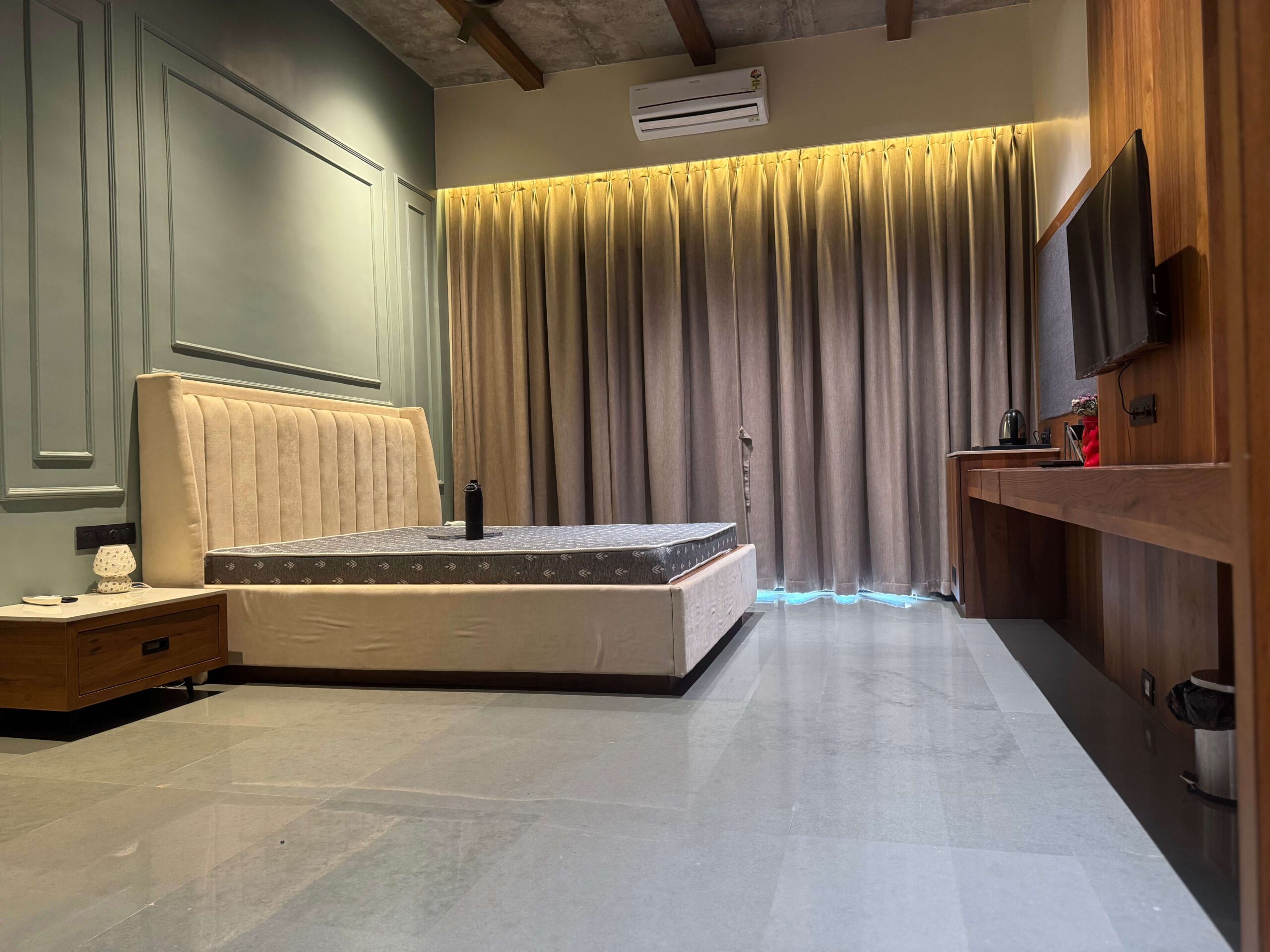
Therapy works best in a calm, private setting. Quiet rooms, open green space and an unhurried environment make it easier to reflect, focus and do the real work of change.





Living with it vs. treating it
Facing mental illness or addiction alone is one of the heaviest burdens there is. Group therapy changes that. This is the difference connection makes.
- You believe no one else could possibly understand
- Shame keeps the hardest things hidden and unspoken
- Isolation deepens the depression, anxiety or craving
- There is no one to reflect back what you cannot see
- You carry the whole weight entirely by yourself
- You discover others feel exactly as you do
- Shame loses its power once it is spoken and accepted
- Connection and belonging support your recovery
- Honest feedback shows you what you cannot see alone
- Helping others gives your own recovery meaning
A support group vs. professional group therapy
Peer support groups are valuable — but professionally led group therapy is different. For a diagnosable condition, a trained therapist makes the difference. Here is why.
Therapist-led group therapy
Recovery stories, in their own words
Some journeys are best heard from the people who lived them. Real stories from people whose lives changed through therapy at ZorbaCare.
After losing his wife suddenly, he struggled with alcohol addiction as a way to cope with grief. But over time, he chose to face his pain, seek support, and rebuild his life.
How does a normal working person end up homeless addicted to drugs. That is what happened to me.
I have lost my love, my job, my family, everything because of my addiction. I thought I would never heal, but now i am more than a year sober.
Started in college as a fun activity from beer to regular frequency drinking. From a life that i loved to out of control drinking.
Joining a group is simpler than you think
You do not need to be an extrovert or a big talker to benefit from group therapy. From your first call, the process is clear, confidential and judgement-free — in Mumbai, Pune, or anywhere in India.
One confidential call
Tell us what you are struggling with. We listen without judgement and explain how group therapy could help — with no pressure.
Assessment & goal-setting
We help you find the right group for where you are — and you are never made to share before you are ready.
We arrange everything
Admission is confirmed and the whole journey is arranged door to door — travel, timing and settling in, all handled for you.
Treatment begins
Your care team takes over from the moment you arrive — with family kept informed and involved throughout.
If there is any risk to life, act now. For thoughts of self-harm or suicide, call Tele-MANAS on 14416 (24×7) or reach us directly — please do not wait.
Groups led by qualified therapists
Our groups are led by experienced clinical psychologists and therapists, overseen by consultant psychiatrists — the training and skill that turn a room of people into a genuinely healing group.




Trusted by families across India
Real words from people who completed the programme with ZorbaCare. More than 250 five-star reviews on Google.
Our family is deeply grateful to ZorbaCare for the care and support they provided throughout our loved one’s recovery. The team was compassionate, professional, and always approachable. Dr. Sayantani Mukherjee ensured that every stage of treatment was clearly explained. Recovery coaches Sandy and Mel provided constant motivation, while psychologist Shamika helped address the emotional challenges behind the addiction. The positive changes have been remarkable.
Recovery is never easy, but my four months at Zorba gave me a strong foundation for a healthier and more positive future. I am grateful for the guidance, support, and encouragement I received throughout my stay. I would highly recommend Zorba to anyone seeking professional help for addiction recovery. Thank you, Zorba, for helping me start a new chapter in my life. 🙏
Zorbacare truly changed my life. The care, support, and guidance I received throughout my recovery journey were exceptional. The staff is compassionate, professional, and genuinely committed to helping people rebuild their lives. I am grateful for the positive impact they have had on me and my family. Thank you, Zorbacare, for giving me a new direction and a fresh start.
It has been 17 months now, i have been sober because of them and they still take regular updates and check ins. Can’t thank them enough specially Sandeep sir. They have been there for me in ways i couldn’t believe. I stayed there for 3 months and still being a part of AA and their aftercare program. They have become a family now.
Where we use group therapy
Group therapy is part of how we treat many conditions. Explore the areas where it makes the biggest difference — and the other therapies we combine it with.
Anxiety & Panic
Group therapy is especially powerful for social anxiety — a safe place to connect and practise.
Learn more → ConditionTrauma & PTSD
Unresolved trauma often underlies depression. We treat the root, not just the symptom.
Learn more → ConditionBipolar Disorder
Group support and psychoeducation help protect stability and reduce isolation.
Learn more → ProgrammeDual Diagnosis
Peer support and shared experience are cornerstones of lasting addiction recovery.
Learn more →The programmes behind your recovery
Depression is treated within our wider clinical programmes. Explore the levels of care that support it.
Residential Care
Immersive, structured treatment in a calm setting — ideal for moderate to severe depression.
Learn more → Level of CareDual Diagnosis
Integrated treatment for addiction alongside depression, anxiety or trauma.
Learn more → Continuing CareAftercare & Alumni
Relapse prevention and lifelong community support after the programme ends.
Learn more → SupportFamily Programme
Structured therapy and guidance so families heal alongside their loved one.
Learn more →Common questions about group therapy
Honest answers to what people most often ask us. Anything else — just reach out.
Group therapy is a form of psychotherapy where a small number of people meet regularly with a trained therapist to work on their mental health or recovery together. It works through what the psychiatrist Irvin Yalom called “therapeutic factors” — the healing that comes from realising you are not alone (universality), gaining hope from others, giving and receiving support, and learning about yourself through honest connection. It is not just talking in a room: a skilled therapist shapes the group into a genuinely therapeutic experience, backed by decades of strong evidence.
Yes — and this surprises many people. A major meta-analysis by Burlingame and colleagues (2016) found that when the same treatment is delivered in group and individual formats, the outcomes are statistically equivalent. A 2021 review spanning 11 meta-analyses and 329 studies confirmed group therapy’s effectiveness across depression, anxiety, PTSD, OCD, eating disorders and substance-use disorders. For some conditions — social anxiety in particular — the group format offers unique advantages, because the group itself becomes a safe place to practise. Group therapy is not a compromise; it is a powerful treatment in its own right.
Completely normal — almost everyone feels this way before their first group. The good news: you are never forced to speak. Many people spend their early sessions simply listening, and find that alone deeply healing. As trust builds, sharing becomes easier and often becomes the part people value most. A skilled therapist makes sure the group feels safe and no one is ever put on the spot. What feels intimidating at first usually becomes a source of real belonging.
Yes. Confidentiality is the foundation of group therapy. Every group begins with a clear agreement that what is shared in the room stays in the room, and the therapist upholds this firmly throughout. This shared commitment is exactly what makes it safe to be honest. Group members quickly come to protect one another’s privacy, because everyone depends on the same trust. It is what allows the group to become a genuinely safe space.
Absolutely — in fact, they work beautifully together, and this is how we most often use group therapy at ZorbaCare. Individual therapy gives you private, focused space to work on personal issues; group therapy adds connection, perspective and the chance to practise new ways of relating with others. Combined with psychiatric care where needed, they form part of complete, coordinated treatment. If you are ever in crisis, call Tele-MANAS on 14416, any time.
Group therapy is often more affordable than individual sessions, which makes it accessible as well as effective. It is a core part of our residential and day programmes, and also available as standalone groups in Mumbai and Pune, across India, and online. We give a clear breakdown of costs up front, with no hidden charges. The best first step is a confidential call to talk through which groups would suit you.
Completely. Confidentiality is central to how we operate, from the first call through admission and aftercare. For many families, that anonymity is the main reason they choose to travel for treatment.
Group therapy & mental health care across India
Our mental health and rehabilitation programmes serve every major Indian city. Wherever you are, admission and travel are fully coordinated for you.
Medically reviewed & evidence-based. This page is for general information and is not a substitute for professional medical advice, diagnosis or treatment. Efficacy figures are drawn from peer-reviewed meta-analyses and the APA. If you think group therapy could help you, speak with a qualified professional — you do not need a diagnosis to benefit. In a crisis, call Tele-MANAS on 14416 (24×7, India).
View research citations & sources →
Research Citations & A Note On Safety
- [1] Rosendahl J, Alldredge CT, Burlingame GM, Strauss B. Recent Developments in Group Psychotherapy Research. American Journal of Psychotherapy, 2021 — a review of 11 meta-analyses covering 329 studies, confirming group therapy’s effectiveness across depression, anxiety, PTSD, OCD, eating and substance-use disorders.
- [2] Burlingame GM, Seebeck JD, Janis RA, et al. Outcome Differences Between Individual and Group Formats When Identical and Nonidentical Treatments, Patients, and Doses Are Compared: A 25-Year Meta-Analytic Perspective. Psychotherapy, 2016 — found group and individual formats statistically equivalent for identical treatments.
- [3] Cuijpers P, et al. & Burlingame GM, et al. Meta-analyses of group vs. individual CBT for major depressive disorder — group CBT produces symptom reductions statistically indistinguishable from individual therapy.
- [4] Wersebe H, Sijbrandij M, Cuijpers P, et al. Efficacy of group psychotherapy for social anxiety disorder: a meta-analysis of randomized controlled trials. 36 RCTs, 2,171 patients — medium-to-large effects for group CBT (Hedges’ g = 0.84).
- Yalom ID, Leszcz M. The Theory and Practice of Group Psychotherapy. The foundational text defining the “therapeutic factors” of group therapy.
- American Psychological Association. Group therapy is as effective as individual therapy, and more efficient (2023).
This page is for general information and is not a substitute for professional medical advice, diagnosis or treatment. If you think group therapy could help you, speak with a qualified therapist — you do not need a diagnosis to benefit. In a crisis, call Tele-MANAS on 14416 (24×7, India).