
Music & Cathartic Writing Therapy in Mumbai, India.
Some feelings are too big, too raw or too buried for words alone. Music and cathartic writing give them another way out. These expressive therapies let you release emotion through sound, rhythm and the written word — and the science is real. A 2017 Cochrane review found music therapy added to standard care significantly reduced depression and anxiety, while decades of research on expressive writing (the “Pennebaker paradigm”) show it lowers stress, eases trauma symptoms and even improves physical health. ZorbaCare offers guided music and cathartic writing therapy in Mumbai, Pune and across India, as part of complete mental health and addiction care.

How expressive therapies heal: giving feelings an outlet
When emotions are held in — grief, shame, anger, fear — they do not disappear. They build pressure, and often come out sideways as depression, anxiety, or the urge to numb them with substances. Expressive therapies work by giving that pressure a safe release. Putting a feeling into music or onto a page moves it out of the body and into a form you can see, hear and begin to make sense of. The psychiatrist’s word for this is catharsis — the relief that comes from expressing what has been locked inside.
These therapies reach places talking cannot. Many people in recovery struggle to put their deepest pain into conversation — it feels too exposing, or they simply do not have the words. Music bypasses that barrier: a rhythm or melody can carry an emotion directly. And cathartic writing — writing freely and privately about your deepest thoughts — lets you be completely honest on the page in a way that can feel impossible face to face.
The evidence supports both. Expressive writing, studied for over 30 years since James Pennebaker’s pioneering work, has been shown to reduce anxiety, depressive symptoms and even improve immune function.[2] Music therapy is Cochrane-reviewed for depression.[1] We treat these as real, complementary therapies — part of how we treat both mental health conditions and addiction, in Mumbai, Pune and across India.

What music & cathartic writing can help with
Expressive therapies help wherever emotion is stuck, buried or hard to speak — giving it a safe way out. These are the areas we use them for most.
Depression
Cochrane-reviewed evidence shows music therapy eases depression — lifting mood and re-opening emotional expression when words feel impossible.[1]
Anxiety & stress
Both music and expressive writing are proven to reduce anxiety and stress — calming the mind and releasing built-up tension.[1][2]
Grief & loss
When loss is too painful to talk about, writing a letter to who or what you have lost, or expressing it through music, can begin to move grief that has been stuck.
Trauma & PTSD
Expressive writing can help process trauma — putting an experience into words on the page, at your own pace, in a safe and contained way.[2]
Addiction & recovery
In addiction recovery, expressing pain through music or writing offers a healthy release — a way to process feelings without turning to a substance.
Anger & self-worth
Expressive therapies give anger a safe outlet instead of a destructive one — and the act of creating something builds self-worth, confidence and a sense of achievement.
What actually happens in a session
You do not need to be a musician or a writer — there is no performance and no judgement. Sessions are gentle, guided and completely your own. Here is how they usually flow.
Settling in
Sessions begin gently, with no pressure to perform. The therapist creates a safe, private space where whatever comes up is welcome — there is no right or wrong way to express yourself.
Finding the feeling
With gentle guidance, you connect to what you are carrying — a mood, a memory, an emotion you cannot name. You do not have to explain it; you only have to be willing to express it.
Expressing & releasing
Through music — playing, singing, listening — or through free, private writing, you let the feeling out. This is the cathartic heart of the session: giving voice to what was locked inside.
Reflecting & making sense
Afterwards, if you wish, you and the therapist gently reflect on what came up — turning raw expression into insight. What you create is always yours; you choose what, if anything, to share.
No talent required. This is not about producing good music or good writing — it is about expression, not performance. Nobody judges what you create, and you are never made to share anything you would rather keep private.
See where recovery happens
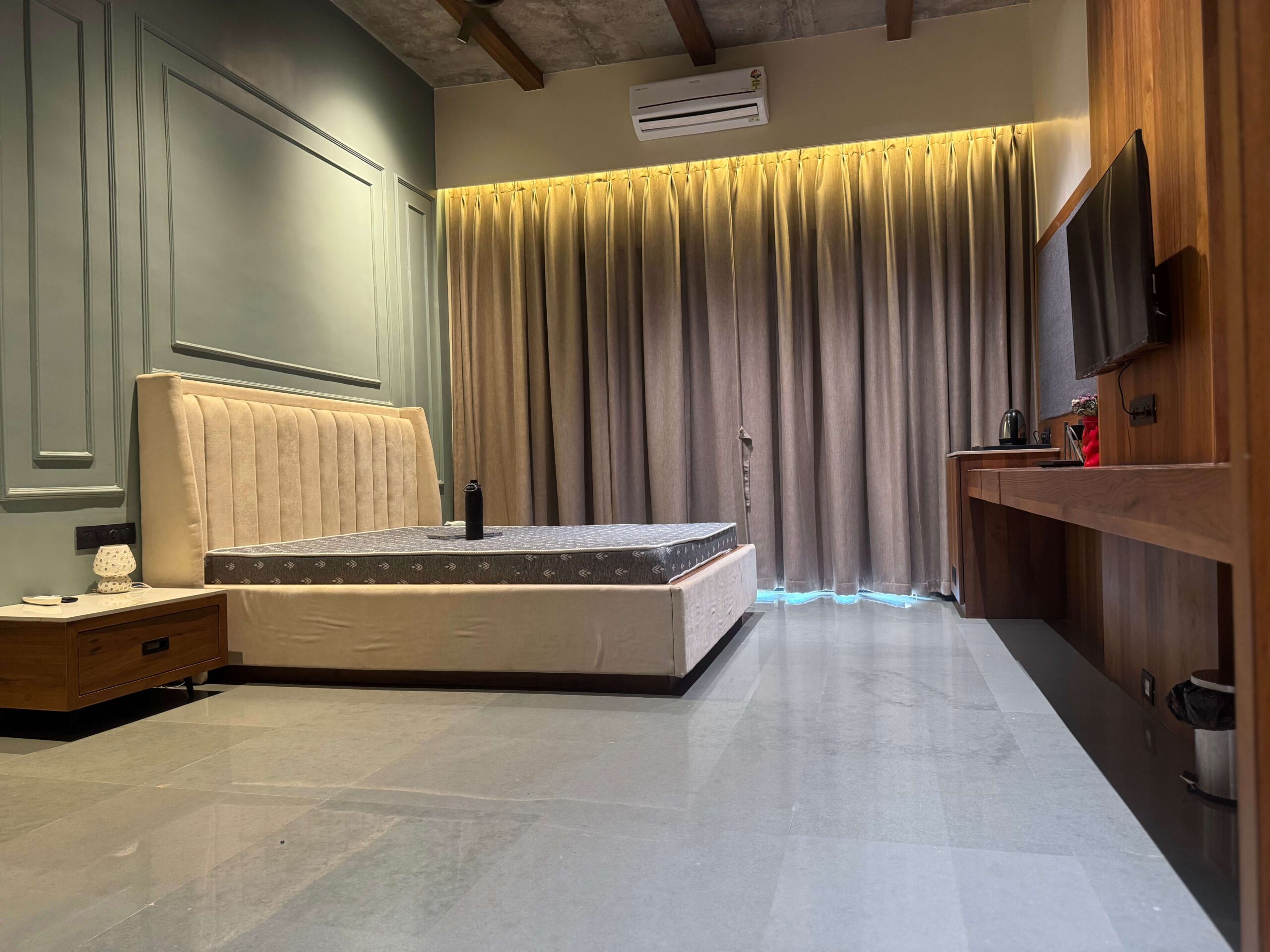
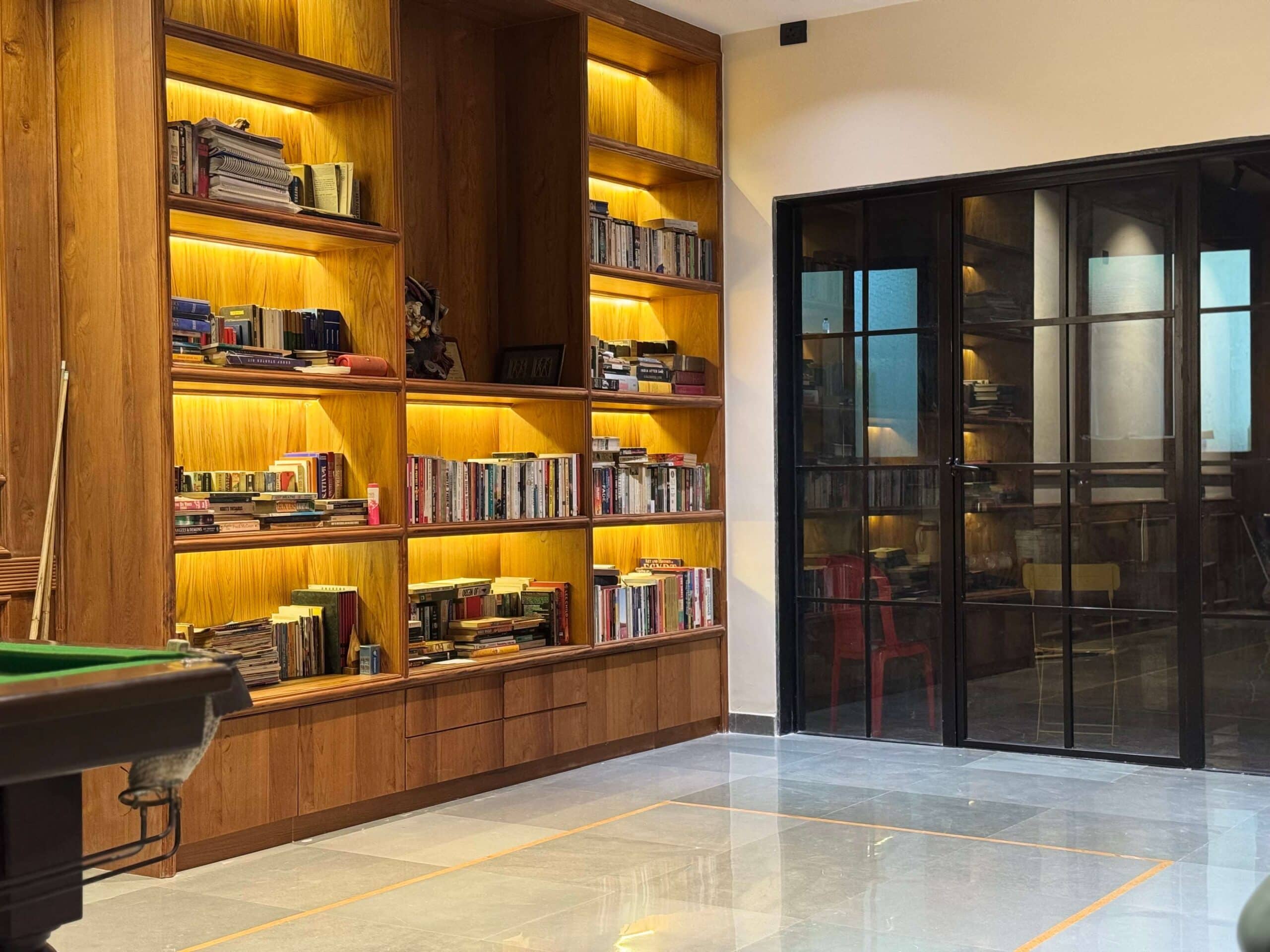
A private residential estate in the Sahyadri hills — the environment is part of the treatment, not a backdrop to it.
Two paths to release: music & the written word
Music and cathartic writing reach emotion in different ways — and both are backed by real research. Here is how each one heals, and what the evidence shows.
Through Music
- Bypasses words — carrying emotion directly, when talking feels impossible.
- Shifts mood — rhythm and melody can lift, soothe or energise.
- Active or receptive — playing and singing, or simply listening.
- Connects people — making music together builds bonds and belonging.
Through Writing
- Total honesty — the page holds what you cannot say aloud.
- Makes sense of chaos — writing organises tangled thoughts and feelings.
- Private & safe — nobody has to read it; the release is the point.
- Processes trauma — putting an experience into words, at your pace.
What Research Shows
- Music eases depression — Cochrane-reviewed, added to standard care.[1]
- Writing lowers distress — 30+ years of research since Pennebaker.[2]
- Reduces anxiety — both modalities calm the mind and body.[1][2]
- A complement — most powerful alongside talk therapy and medical care.
The methods we use
Expressive therapy takes many forms — some through sound, some through words. These are the methods we draw on, matched to what feels right for you.
Playing & making music
Using simple instruments, rhythm or the voice to express and release emotion — no musical training needed, just a willingness to make sound.
Receptive listening
Guided listening to music chosen for its emotional effect — to soothe, to lift, or to safely connect with a feeling you have been avoiding.
Cathartic free writing
The Pennebaker method — writing continuously and privately about your deepest thoughts and feelings, without worrying about grammar, spelling or who might read it.
Journaling & letter-writing
Reflective journaling to track your recovery, or writing unsent letters — to a person, a loss, or your addiction — to say what needs to be said and let it go.
Songwriting & lyrics
Putting your own story into words and music — a powerful way to give shape to your experience and reclaim your voice in recovery.
A practice for life
A journal or an instrument becomes a lifelong tool — a healthy, always-available outlet for difficult feelings, long after treatment ends.
A calm space to do the work
Therapy works best in a calm, private setting. Quiet rooms, open green space and an unhurried environment make it easier to reflect, focus and do the real work of change.



Living with it vs. treating it
Feelings held inside build pressure and come out sideways. Expressing them changes everything. This is the difference release makes.
- Emotions build with no way to let them out
- Some pain feels impossible to put into words
- Numbing or substances become the only release
- Bottled-up grief and anger fuel depression
- No creative outlet, no sense of achievement
- You have a safe outlet to let emotion out
- Music and words say what talking cannot
- A healthy release replaces numbing and escape
- Grief and anger move instead of staying stuck
- Creating something builds confidence and pride
Doing it alone vs. guided expressive therapy
Journaling or playing music on your own is good for you — but guided expressive therapy, within clinical care, goes further. For a mental health condition or addiction, that difference matters.
Guided expressive therapy
Recovery stories, in their own words
Some journeys are best heard from the people who lived them. Real stories from people whose lives changed through therapy at ZorbaCare.
After losing his wife suddenly, he struggled with alcohol addiction as a way to cope with grief. But over time, he chose to face his pain, seek support, and rebuild his life.
How does a normal working person end up homeless addicted to drugs. That is what happened to me.
I have lost my love, my job, my family, everything because of my addiction. I thought I would never heal, but now i am more than a year sober.
Started in college as a fun activity from beer to regular frequency drinking. From a life that i loved to out of control drinking.
Starting is simpler than you think
You do not need any musical or writing talent to benefit from expressive therapy. From your first call, the process is clear, confidential and judgement-free — in Mumbai, Pune, or anywhere in India.
One confidential call
Tell us what you are struggling with. We listen without judgement and explain how music and writing therapy could help — with no pressure.
Assessment & goal-setting
Your therapist gently introduces the methods that suit you — so it feels safe and natural from the very first session.
We arrange everything
Admission is confirmed and the whole journey is arranged door to door — travel, timing and settling in, all handled for you.
Treatment begins
Your care team takes over from the moment you arrive — with family kept informed and involved throughout.
If there is any risk to life, act now. For thoughts of self-harm or suicide, call Tele-MANAS on 14416 (24×7) or reach us directly — please do not wait.
Guided by trained expressive therapists
Our expressive therapies are guided by trained therapists and integrated by clinical psychologists and psychiatrists — so creative release works safely alongside your medical and psychological care.




Trusted by families across India
Real words from people who completed the programme with ZorbaCare. More than 250 five-star reviews on Google.
Our family is deeply grateful to ZorbaCare for the care and support they provided throughout our loved one’s recovery. The team was compassionate, professional, and always approachable. Dr. Sayantani Mukherjee ensured that every stage of treatment was clearly explained. Recovery coaches Sandy and Mel provided constant motivation, while psychologist Shamika helped address the emotional challenges behind the addiction. The positive changes have been remarkable.
Recovery is never easy, but my four months at Zorba gave me a strong foundation for a healthier and more positive future. I am grateful for the guidance, support, and encouragement I received throughout my stay. I would highly recommend Zorba to anyone seeking professional help for addiction recovery. Thank you, Zorba, for helping me start a new chapter in my life. 🙏
Zorbacare truly changed my life. The care, support, and guidance I received throughout my recovery journey were exceptional. The staff is compassionate, professional, and genuinely committed to helping people rebuild their lives. I am grateful for the positive impact they have had on me and my family. Thank you, Zorbacare, for giving me a new direction and a fresh start.
It has been 17 months now, i have been sober because of them and they still take regular updates and check ins. Can’t thank them enough specially Sandeep sir. They have been there for me in ways i couldn’t believe. I stayed there for 3 months and still being a part of AA and their aftercare program. They have become a family now.
Where we use music & cathartic writing
Expressive therapies support how we treat many conditions. Explore the areas where they make the biggest difference — and the other therapies we combine them with.
Anxiety & Panic
Music and writing calm the mind and release the tension that fuels anxiety.
Learn more → ConditionTrauma & PTSD
Unresolved trauma often underlies depression. We treat the root, not just the symptom.
Learn more → ConditionBipolar Disorder
A creative outlet and reflective journaling support emotional balance and self-awareness.
Learn more → ProgrammeDual Diagnosis
Expressing pain through music or writing offers a healthy alternative to using.
Learn more →The programmes behind your recovery
Depression is treated within our wider clinical programmes. Explore the levels of care that support it.
Residential Care
Immersive, structured treatment in a calm setting — ideal for moderate to severe depression.
Learn more → Level of CareDual Diagnosis
Integrated treatment for addiction alongside depression, anxiety or trauma.
Learn more → Continuing CareAftercare & Alumni
Relapse prevention and lifelong community support after the programme ends.
Learn more → SupportFamily Programme
Structured therapy and guidance so families heal alongside their loved one.
Learn more →Common questions about music & cathartic writing
Honest answers to what people most often ask us. Anything else — just reach out.
These are expressive therapies — ways of releasing and processing emotion through creativity rather than conversation alone. Music therapy uses playing, singing or listening to express feelings and shift mood; cathartic writing uses free, private writing to release what is held inside. Both are rooted in the idea of catharsis: the relief that comes from letting out emotion that has been locked away. They are especially powerful for feelings that are too big or too painful to put into ordinary words — and both are backed by real research.
Not at all — and this is the most important thing to understand. Expressive therapy is about expression, not performance. Nobody is judging whether your music sounds good or your writing reads well. You do not need to have ever played an instrument or kept a journal. The value is entirely in the release and the process, not the product. In fact, people who are convinced “I’m not creative” are often the ones who benefit most, because they have never had this outlet before.
Yes. A 2017 Cochrane review — among the most rigorous forms of evidence in medicine — found that music therapy added to standard care significantly reduced depression and anxiety and improved functioning. Expressive writing has been studied for over 30 years since James Pennebaker’s pioneering research, with findings showing reduced stress, lower anxiety and depressive symptoms, and even improved physical health. We are honest that these work best as part of complete treatment rather than on their own — but the science supporting them is real.
That is exactly why these are done with a trained therapist rather than alone. Expressing buried emotion can sometimes bring strong feelings to the surface — and that can be part of the healing. The difference is that in a guided session, a professional is right there to help you feel safe, hold what comes up, and make sense of it afterwards. You are always in control of how far you go and what you share. Nothing is forced, and you can pause at any time.
No — never, unless you want to. What you write or create is completely private and belongs to you alone. With cathartic writing in particular, no one has to read a single word; the release comes from the act of writing itself, and some people choose to tear it up afterwards. If you do want to share and explore what came up, your therapist is there for that too — but it is always your choice. If you are ever in crisis, call Tele-MANAS on 14416, any time.
Music and cathartic writing are a core, included part of our residential and day programmes — woven into the therapeutic day rather than charged as extras. Elements are also available within standalone therapy in Mumbai and Pune, across India, and online. We give a clear breakdown of costs up front, with no hidden charges. The best first step is a confidential call to talk through how these therapies would fit your care.
Completely. Confidentiality is central to how we operate, from the first call through admission and aftercare. For many families, that anonymity is the main reason they choose to travel for treatment.
Expressive therapy & mental health care across India
Our mental health and rehabilitation programmes serve every major Indian city. Wherever you are, admission and travel are fully coordinated for you.
Medically reviewed & evidence-based. This page is for general information and is not a substitute for professional medical advice, diagnosis or treatment. Efficacy figures are drawn from Cochrane reviews and peer-reviewed research. If you think music and cathartic writing therapy could help you, speak with a qualified professional — you do not need a diagnosis to benefit. In a crisis, call Tele-MANAS on 14416 (24×7, India).
View research citations & sources →
Research Citations & A Note On Safety
- [1] Aalbers S, Fusar-Poli L, Freeman RE, et al. Music therapy for depression. Cochrane Database of Systematic Reviews, 2017, Issue 11. CD004517 — 9 studies, 421 people; music therapy added to standard care significantly improved depressive symptoms, anxiety and functioning versus standard care alone.
- [2] Pennebaker JW, Beall SK, and subsequent research (1986 onwards); Smyth JM. Written emotional expression: effect sizes, outcome types, and moderating variables. Journal of Consulting and Clinical Psychology, 1998 — meta-analysis (13 studies) finding significant benefits of expressive writing for psychological and physical health (d = 0.47).
- Baikie KA, Wilhelm K. Emotional and physical health benefits of expressive writing. Advances in Psychiatric Treatment, 2005 — review of expressive writing outcomes.
- American Music Therapy Association; British Association for Music Therapy — professional standards and evidence for clinical music therapy.
This page is for general information and is not a substitute for professional medical advice, diagnosis or treatment. If you think music or writing therapy could help you, speak with a qualified professional — you do not need a diagnosis to benefit. In a crisis, call Tele-MANAS on 14416 (24×7, India).