
Yoga & Meditation Therapy For Addiction Recovery.
Born in India thousands of years ago, yoga and meditation are now among the most studied mind-body therapies in modern psychiatry — and the evidence is real. In a landmark 2021 JAMA Psychiatry trial of 226 people with generalised anxiety disorder, yoga produced a 54% response rate versus 33% for the control group. Meditation-based therapy has been shown to cut the risk of depression relapse by around a third — comparable to staying on antidepressants. These are not soft add-ons; they calm the nervous system, quiet the mind and rebuild the body. ZorbaCare offers clinically integrated yoga and meditation therapy in Mumbai, Pune and across India, alongside complete mental health and addiction care.

How yoga & meditation heal: calming the nervous system
Anxiety, depression and addiction all live in the body as much as the mind. When you are distressed, the nervous system’s “fight-or-flight” response floods you with stress hormones, the heart races and the mind spins. Yoga and meditation work directly on this system. Slow, conscious breathing and gentle movement activate the parasympathetic (“rest-and-digest”) response, lowering heart rate, blood pressure and cortisol — shifting the body out of survival mode and into calm.
Meditation trains the mind in a different but complementary way. Rather than fighting difficult thoughts, you learn to observe them without being swept away — noticing a craving, a worry or a wave of sadness as a passing event rather than an absolute truth. Over time this builds a crucial gap between stimulus and reaction: the space in which recovery, and real choice, become possible. This is the mechanism behind mindfulness-based therapies now recommended in clinical guidelines worldwide.
Crucially, we treat yoga and meditation as clinical therapies, not lifestyle extras — integrated with psychiatric care, psychotherapy and medical treatment, and taught by trained practitioners. The research is honest: for a condition like generalised anxiety, CBT remains the first-line treatment, but yoga is a genuinely effective, evidence-based support.[1] At ZorbaCare, yoga and meditation are part of how we treat both mental health conditions and addiction, in Mumbai, Pune and across India.

What yoga & meditation can help you with
Yoga and meditation support recovery across a wide range of conditions — especially those driven by stress, a racing mind and a body stuck in overdrive. These are the areas we use them for most.
Depression
Mindfulness meditation is proven to cut relapse in depression — teaching you to notice low mood early, before it spirals.[2]
Anxiety & panic
In a JAMA Psychiatry trial, yoga significantly reduced anxiety — breathwork directly calms the panic response in the body.[1]
Stress & burnout
Yoga and meditation are among the most effective tools for chronic stress and burnout — lowering cortisol and restoring a sense of calm and control.[3]
Trauma & PTSD
Trauma lives in the body. Gentle, trauma-sensitive yoga helps people with PTSD feel safe in their bodies again — a foundation for deeper healing.
Addiction & cravings
In addiction recovery, meditation builds the pause to ride out a craving without acting on it — and a healthy way to soothe the nervous system without substances.
Sleep & restlessness
Calming the nervous system is the natural route to better sleep — yoga nidra and evening meditation quiet a racing mind at bedtime.
What actually happens in a session
You do not need to be flexible, fit or experienced. Sessions are gentle, guided and adapted to every body and every level. Here is what a typical session involves.
Grounding & breath
Sessions begin by settling the body and turning to the breath. Simple breathing techniques (pranayama) calm the nervous system and bring you into the present moment.
Gentle movement
Slow, mindful postures (asana) release the physical tension that anxiety and stress lock into the body — always adapted to your ability, never forced or competitive.
Stillness & meditation
Guided meditation trains the mind to observe thoughts and feelings without being overwhelmed — building the calm, watchful awareness that protects against relapse.
Rest & integration
Sessions close with deep relaxation, often yoga nidra — a restorative practice that resets the nervous system and leaves you calm, clear and grounded.
No experience needed. You do not have to be flexible, fit, spiritual or religious. Our practitioners meet you exactly where you are, and every practice can be adapted — including seated and gentle options for any body.
See where recovery happens
A private residential estate in the Sahyadri hills — the environment is part of the treatment, not a backdrop to it.
What the science actually shows
Yoga and meditation are not just calming — they are studied in rigorous clinical trials. Here is what the evidence shows, honestly: real benefits, and a clear-eyed view of where they fit.
In The Body
- Lowers cortisol — reducing the stress hormone that keeps the body in overdrive.
- Slows heart rate — activating the calming parasympathetic response.
- Reduces blood pressure — easing the physical toll of chronic stress.
- Improves sleep — quietening a restless, over-aroused nervous system.
In The Mind
- Observe, don’t react — watching thoughts pass rather than being swept away.
- Space before response — the crucial pause between a craving and acting on it.
- Present-moment focus — less time lost to rumination and worry.
- Self-compassion — a kinder, less judgemental relationship with yourself.
In The Research
- 54% anxiety response — yoga vs 33% control in a JAMA Psychiatry RCT.[1]
- ~34% less relapse — mindfulness therapy for recurrent depression.[2]
- On par with medication — for preventing depression relapse.[2]
- A support, not a cure — most effective alongside therapy and medical care.
The practices we use
Yoga and meditation are a rich toolkit of practices, each working on the body and mind in a different way. These are the ones we draw on most.
Pranayama (breathwork)
Conscious breathing is the fastest way to calm the nervous system — slowing the heart, easing panic, and bringing an anxious mind back to the present in minutes.
Asana (postures)
Gentle, mindful movement releases the tension stress locks into the body, rebuilds the mind-body connection, and gives restless energy a healthy outlet.
Mindfulness meditation
The core of mindfulness-based therapy — learning to observe thoughts and feelings without being controlled by them, building calm awareness that protects against relapse.
Yoga nidra
“Yogic sleep” — a deep guided relaxation that resets an exhausted nervous system, eases insomnia, and restores a profound sense of rest and calm.
Guided visualisation
Using the imagination to move toward calm and safety — a gentle, accessible way into meditation for those who find sitting with the mind difficult at first.
Daily practice for life
The real goal — a simple, sustainable personal practice you carry home, so the calm you build in treatment keeps protecting your recovery long afterwards.
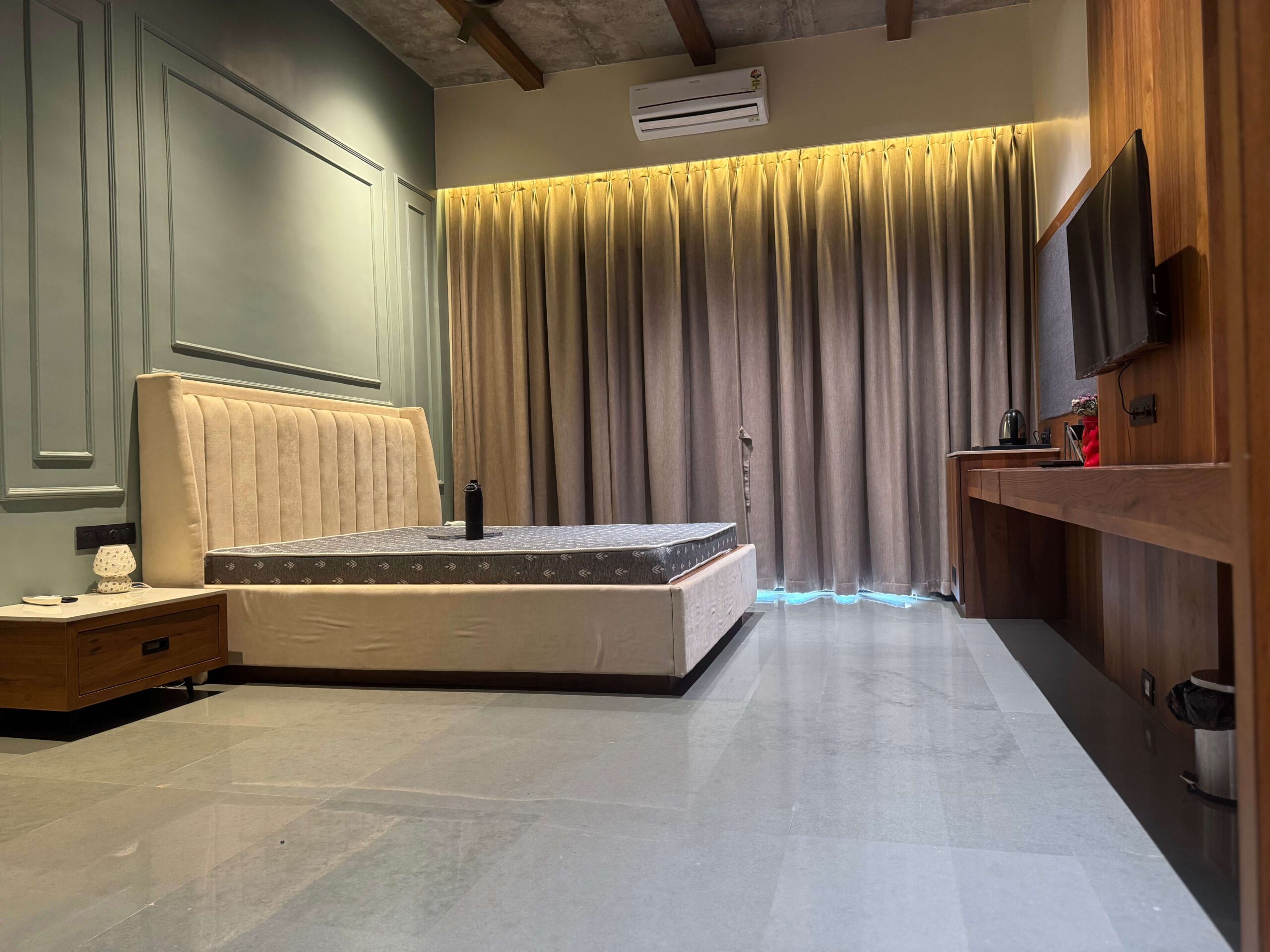
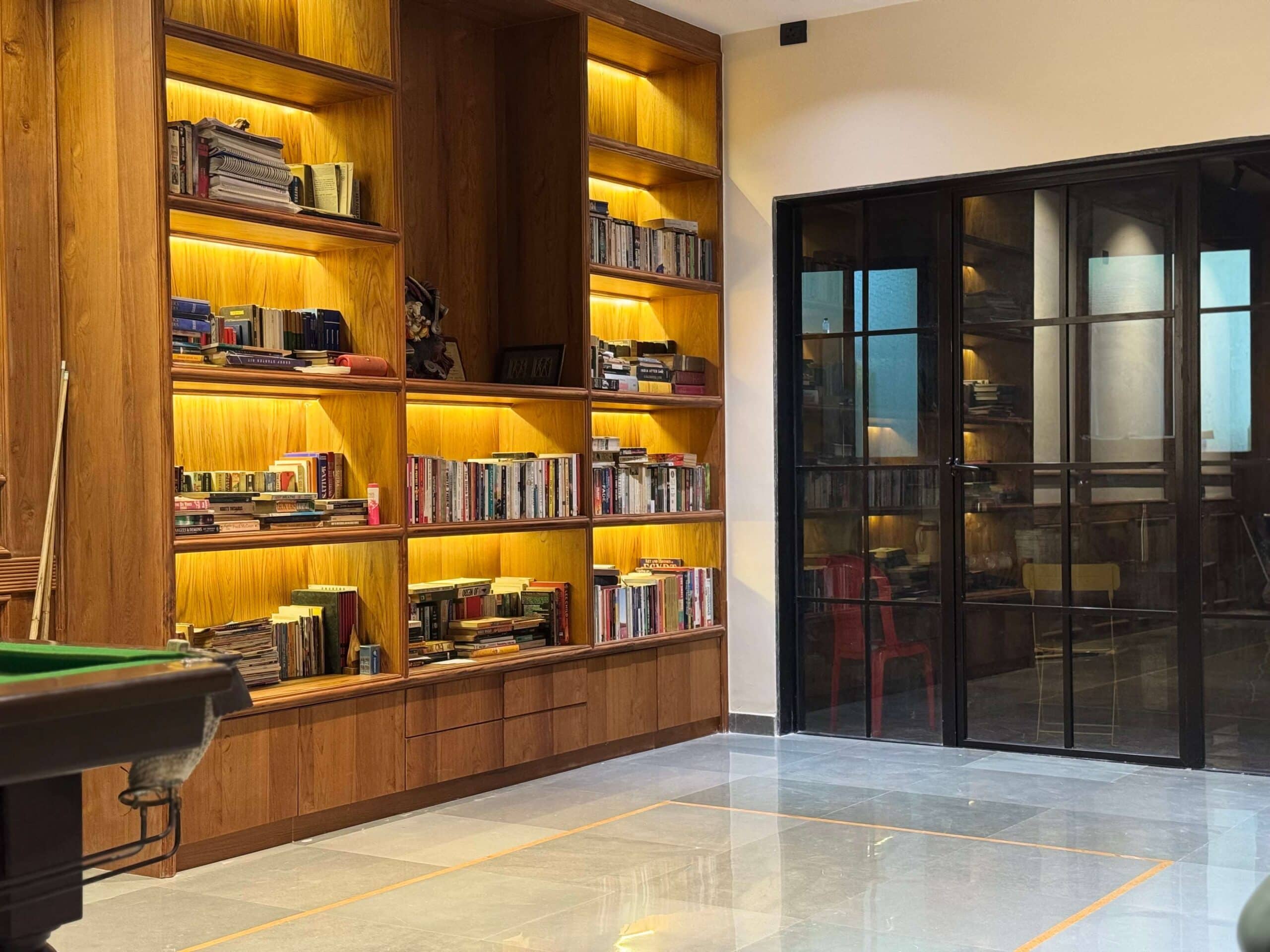
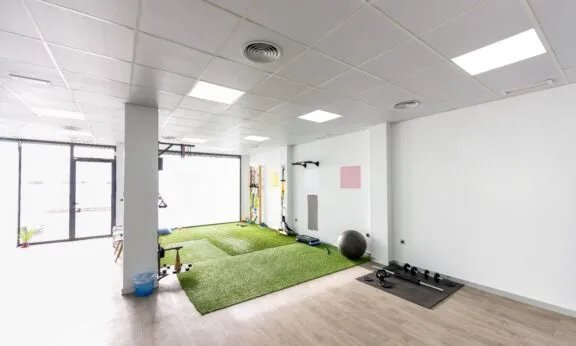
A calm space to do the work
Therapy works best in a calm, private setting. Quiet rooms, open green space and an unhurried environment make it easier to reflect, focus and do the real work of change.



Living with it vs. treating it
A nervous system stuck in overdrive keeps you anxious, exhausted and reactive. Yoga and meditation gently retrain it. This is the difference a calm body and mind make.
- Constant tension, racing heart and shallow breathing
- A mind that will not stop racing or ruminating
- Reacting instantly to every craving and trigger
- Poor sleep and a body that never fully relaxes
- No way to self-soothe except numbing or escape
- You can calm your body through breath, at will
- You observe thoughts without being ruled by them
- You have a pause between craving and action
- Deeper, more restful sleep and real relaxation
- A healthy, portable way to soothe yourself
A yoga class vs. therapeutic yoga & meditation
A regular yoga class is good for you — but therapeutic yoga and meditation, integrated into clinical care, is different. For a mental health condition or addiction, that difference matters. Here is why.
Therapeutic, clinically integrated
Recovery stories, in their own words
Some journeys are best heard from the people who lived them. Real stories from people whose lives changed through therapy at ZorbaCare.
After losing his wife suddenly, he struggled with alcohol addiction as a way to cope with grief. But over time, he chose to face his pain, seek support, and rebuild his life.
How does a normal working person end up homeless addicted to drugs. That is what happened to me.
I have lost my love, my job, my family, everything because of my addiction. I thought I would never heal, but now i am more than a year sober.
Started in college as a fun activity from beer to regular frequency drinking. From a life that i loved to out of control drinking.
Starting yoga & meditation therapy is simpler than you think
You do not need to be flexible, fit or experienced to benefit from yoga and meditation. From your first call, the process is clear, confidential and judgement-free — in Mumbai, Pune, or anywhere in India.
One confidential call
Tell us what you are struggling with. We listen without judgement and explain how yoga and meditation could help — with no pressure.
Assessment & goal-setting
Our practitioners assess your needs and adapt every practice to your body and condition — so it is safe and right for you.
We arrange everything
Admission is confirmed and the whole journey is arranged door to door — travel, timing and settling in, all handled for you.
Treatment begins
Your care team takes over from the moment you arrive — with family kept informed and involved throughout.
If there is any risk to life, act now. For thoughts of self-harm or suicide, call Tele-MANAS on 14416 (24×7) or reach us directly — please do not wait.
Guided by trained practitioners & clinicians
Our yoga and meditation therapy is guided by trained practitioners and integrated by clinical psychologists and psychiatrists — so it works safely alongside your medical and psychological care.




Trusted by families across India
Real words from people who completed the programme with ZorbaCare. More than 250 five-star reviews on Google.
Our family is deeply grateful to ZorbaCare for the care and support they provided throughout our loved one’s recovery. The team was compassionate, professional, and always approachable. Dr. Sayantani Mukherjee ensured that every stage of treatment was clearly explained. Recovery coaches Sandy and Mel provided constant motivation, while psychologist Shamika helped address the emotional challenges behind the addiction. The positive changes have been remarkable.
Recovery is never easy, but my four months at Zorba gave me a strong foundation for a healthier and more positive future. I am grateful for the guidance, support, and encouragement I received throughout my stay. I would highly recommend Zorba to anyone seeking professional help for addiction recovery. Thank you, Zorba, for helping me start a new chapter in my life. 🙏
Zorbacare truly changed my life. The care, support, and guidance I received throughout my recovery journey were exceptional. The staff is compassionate, professional, and genuinely committed to helping people rebuild their lives. I am grateful for the positive impact they have had on me and my family. Thank you, Zorbacare, for giving me a new direction and a fresh start.
It has been 17 months now, i have been sober because of them and they still take regular updates and check ins. Can’t thank them enough specially Sandeep sir. They have been there for me in ways i couldn’t believe. I stayed there for 3 months and still being a part of AA and their aftercare program. They have become a family now.
Where we use yoga & meditation
Yoga and meditation support how we treat many conditions. Explore the areas where they make the biggest difference — and the other therapies we combine them with.
Anxiety & Panic
Breathwork and meditation directly calm the body’s fear response — proven to reduce anxiety.
Learn more → ConditionTrauma & PTSD
Unresolved trauma often underlies depression. We treat the root, not just the symptom.
Learn more → ConditionBipolar Disorder
A calm, regular practice supports the routine and stability that protect against episodes.
Learn more → ProgrammeDual Diagnosis
Meditation builds the pause to ride out cravings — a healthy way to soothe without substances.
Learn more →The programmes behind your recovery
Depression is treated within our wider clinical programmes. Explore the levels of care that support it.
Residential Care
Immersive, structured treatment in a calm setting — ideal for moderate to severe depression.
Learn more → Level of CareDual Diagnosis
Integrated treatment for addiction alongside depression, anxiety or trauma.
Learn more → Continuing CareAftercare & Alumni
Relapse prevention and lifelong community support after the programme ends.
Learn more → SupportFamily Programme
Structured therapy and guidance so families heal alongside their loved one.
Learn more →Common questions about yoga & meditation therapy
Honest answers to what people most often ask us. Anything else — just reach out.
Yes — and increasingly so. A 2021 randomised controlled trial published in JAMA Psychiatry found that yoga produced a 54% response rate for generalised anxiety disorder, compared to 33% for the control group. Mindfulness-based therapies have been shown in meta-analyses to reduce the risk of depression relapse by around a third — comparable to staying on antidepressant medication. We are honest about the evidence: for many conditions these practices work best alongside therapy and medical care rather than replacing them. But the science supporting yoga and meditation for mental health is real and growing.
Not at all — this is the most common worry, and it is unfounded. Therapeutic yoga is nothing like the demanding poses you might see online. Every practice is gentle and fully adapted to your body, including seated and supported options for any age or fitness level. Meditation and breathwork require no physical ability at all. Our practitioners meet you exactly where you are. Many people who were sure “yoga isn’t for me” find it becomes one of the most valued parts of their recovery.
No. While yoga and meditation have roots in Indian philosophy, the way we use them at ZorbaCare is entirely secular and clinical — focused on the proven effects on the nervous system, stress and the mind. You do not need to hold any particular belief, chant, or follow any spiritual path. These are practical, evidence-based tools for calming the body and mind, open to people of every faith and none. If a spiritual dimension is meaningful to you, that is welcome too — but it is never required.
We are honest about this: for most mental health conditions and for addiction, yoga and meditation work best as part of complete treatment, not as a replacement for it. The research is clear that for a condition like generalised anxiety, CBT remains the first-line treatment — but yoga is a genuinely effective support. Never stop prescribed medication or therapy in favour of yoga alone without speaking to your doctor. Used together, these practices make the rest of your treatment more effective — which is exactly how we integrate them at ZorbaCare.
This is the biggest misunderstanding about meditation — and the good news is that you are not doing it wrong. The goal is not to have a blank mind. Meditation is simply the practice of noticing when your mind has wandered and gently bringing it back. That noticing is the exercise, and every time you do it you are strengthening the very skill that helps in recovery. A busy mind does not mean failure; it means you are human, and there is all the more reason to practise. If you are ever in crisis, call Tele-MANAS on 14416, any time.
Yoga and meditation are a core, included part of our residential and day programmes — woven into daily life rather than charged as extras. They are also available as standalone therapeutic sessions in Mumbai and Pune, across India, and online. We give a clear breakdown of costs up front, with no hidden charges. The best first step is a confidential call to talk through how these practices would fit your care.
Completely. Confidentiality is central to how we operate, from the first call through admission and aftercare. For many families, that anonymity is the main reason they choose to travel for treatment.
Yoga, meditation & mental health care across India
Our mental health and rehabilitation programmes serve every major Indian city. Wherever you are, admission and travel are fully coordinated for you.
Medically reviewed & evidence-based. This page is for general information and is not a substitute for professional medical advice, diagnosis or treatment. Efficacy figures are drawn from JAMA Psychiatry, Cochrane and other peer-reviewed research. If you think yoga and meditation therapy could help you, speak with a qualified professional — you do not need a diagnosis to benefit. In a crisis, call Tele-MANAS on 14416 (24×7, India).
View research citations & sources →
Research Citations & A Note On Safety
- [1] Simon NM, Hofmann SG, Rosenfield D, et al. Efficacy of Yoga vs Cognitive Behavioral Therapy vs Stress Education for the Treatment of Generalized Anxiety Disorder: A Randomized Clinical Trial. JAMA Psychiatry, 2021;78(1):13–20 — 226 patients; yoga response 54% vs 33% control (CBT 71%). Yoga effective; CBT remains first-line.
- [2] Kuyken W, Warren FC, Taylor RS, et al. Efficacy of Mindfulness-Based Cognitive Therapy in Prevention of Depressive Relapse: An Individual Patient Data Meta-analysis From Randomized Trials. JAMA Psychiatry, 2016;73(6):565–574 — MBCT reduced relapse risk (hazard ratio 0.69), comparable to maintenance antidepressants.
- [3] Piet J, Hougaard E. The effect of mindfulness-based cognitive therapy for prevention of relapse in recurrent major depressive disorder: a systematic review and meta-analysis. Clinical Psychology Review, 2011.
- Goyal M, Singh S, Sibinga EMS, et al. Meditation Programs for Psychological Stress and Well-being: A Systematic Review and Meta-analysis. JAMA Internal Medicine, 2014;174(3):357–368 — 47 trials; moderate evidence for reduced anxiety, depression and pain.
- Cramer H, Lauche R, Anheyer D, et al. Yoga for anxiety: a systematic review and meta-analysis of randomized controlled trials. Depression and Anxiety, 2018.
- Harvard Health Publishing, Harvard Medical School. Yoga for better mental health (2024).
This page is for general information and is not a substitute for professional medical advice, diagnosis or treatment. If you think yoga and meditation could help you, speak with a qualified professional — and never stop prescribed treatment without medical advice. In a crisis, call Tele-MANAS on 14416 (24×7, India).